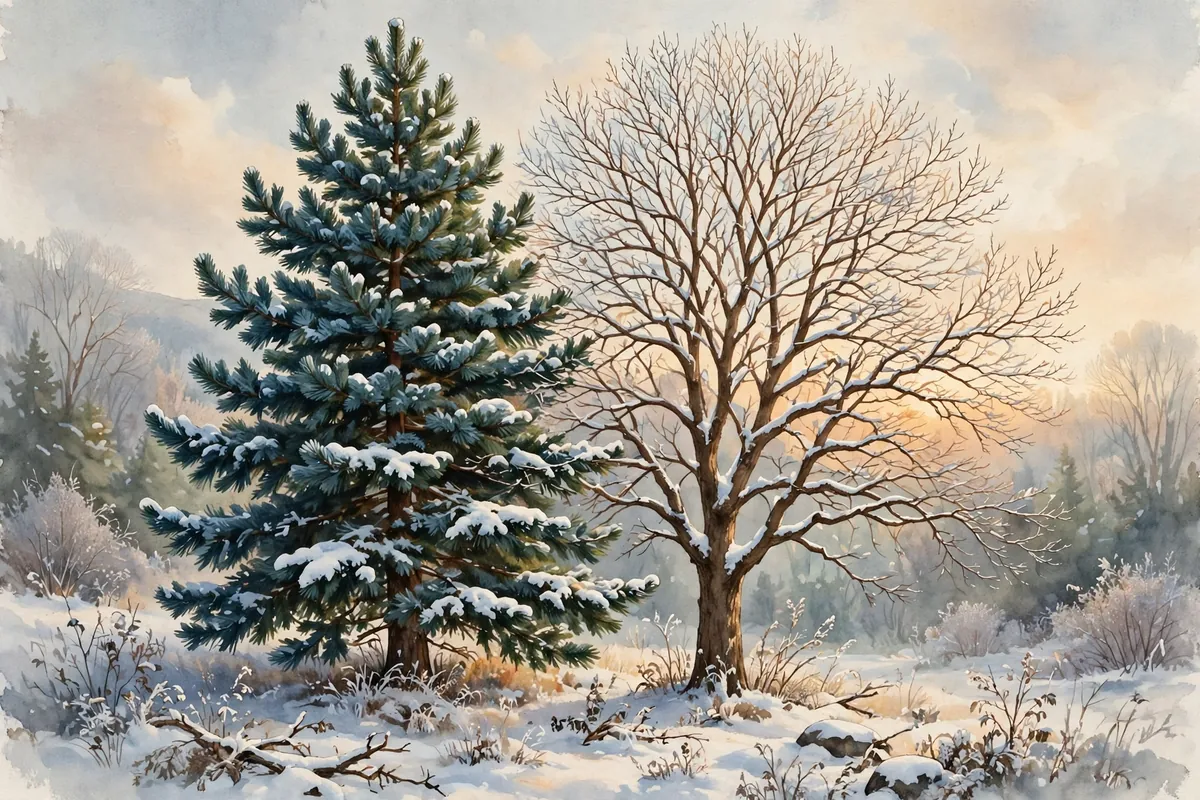
Every autumn, the same scene plays out in yards across America. The maples and oaks put on a blaze of color, then drop their leaves into piles for raking. Meanwhile, the pines and spruces nearby stay green all winter long. Why the difference?
The short answer is that trees use two different survival strategies. Deciduous trees, like maples, drop all their leaves for part of the year to save water and better survive harsh weather. Evergreens keep their leaves, but they do shed them too, just gradually rather than all at once. Each approach has its own costs and benefits.
The Case for Going Bare
Winter is tough on leaves. When the ground freezes, liquid water gets scarce, and leaves keep losing moisture to the air. Dropping them helps a tree cut its water loss.
Bare branches have other perks. Leafless trees suffer much less branch and trunk breakage in ice storms. Losing leaves may also reduce insect damage, because repairing old leaves can cost more than simply growing fresh ones.
Deciduous trees don't waste everything, either. Many pull nitrogen and carbon out of their leaves before dropping them, storing it in their roots and inner bark to use for new growth in spring.
How a Tree Lets Go
Leaf drop is surprisingly precise. Where each leaf stem meets the branch, the tree builds a special layer of cells that can separate. As long as a leaf sends out steady amounts of a plant hormone called auxin, that layer stays attached.
In autumn, the hormone flow slows or stops. The cells in that layer stretch, the connection breaks, and the leaf falls. The tree also seals the spot so it doesn't lose sap.
The fall colors come from this process too. As days shorten, the green chlorophyll breaks down, revealing yellow and orange pigments that were there all along. Reds and purples are produced in late summer, when sugars get trapped in the leaves. The brightest colors appear when days are short and nights are cool but above freezing.
The Case for Staying Green
Regrowing a full set of leaves every spring takes a lot of resources, and evergreens skip that cost. They're often found where soils are poor. In cold northern forests, for example, fallen material decays slowly, so nutrients are hard to come by. Keeping leaves helps evergreens hang on to what they've got. The tradeoff is that evergreens lose more water over the winter, and they can face more pressure from hungry animals, especially when they're young and small.
Evergreen leaves can last a long time. Depending on the species, a single leaf may live from a few months to several decades. Needles on the Great Basin bristlecone pine can last up to 45 years.
Rule Breakers
Nature loves exceptions. Most conifers are evergreen, but the larch is a conifer that drops its needles. And some oaks and beeches keep their dead leaves clinging on through winter until the wind finally tears them off, a habit called marcescence.
In the tropics, many trees shed leaves in the dry season rather than winter, while most rainforest trees replace their leaves gradually all year. So next time you rake up a mountain of maple leaves, remember that the tree isn't giving up for the year. It's simply resting, with a smart plan for spring.