It sounds like a trivia question with a trick to it. Did the United States ever have a queen? Not exactly, but one of its states did. Long before Hawaii joined the union, it was an independent kingdom with its own kings, its own palace and, at the very end, its own queen.
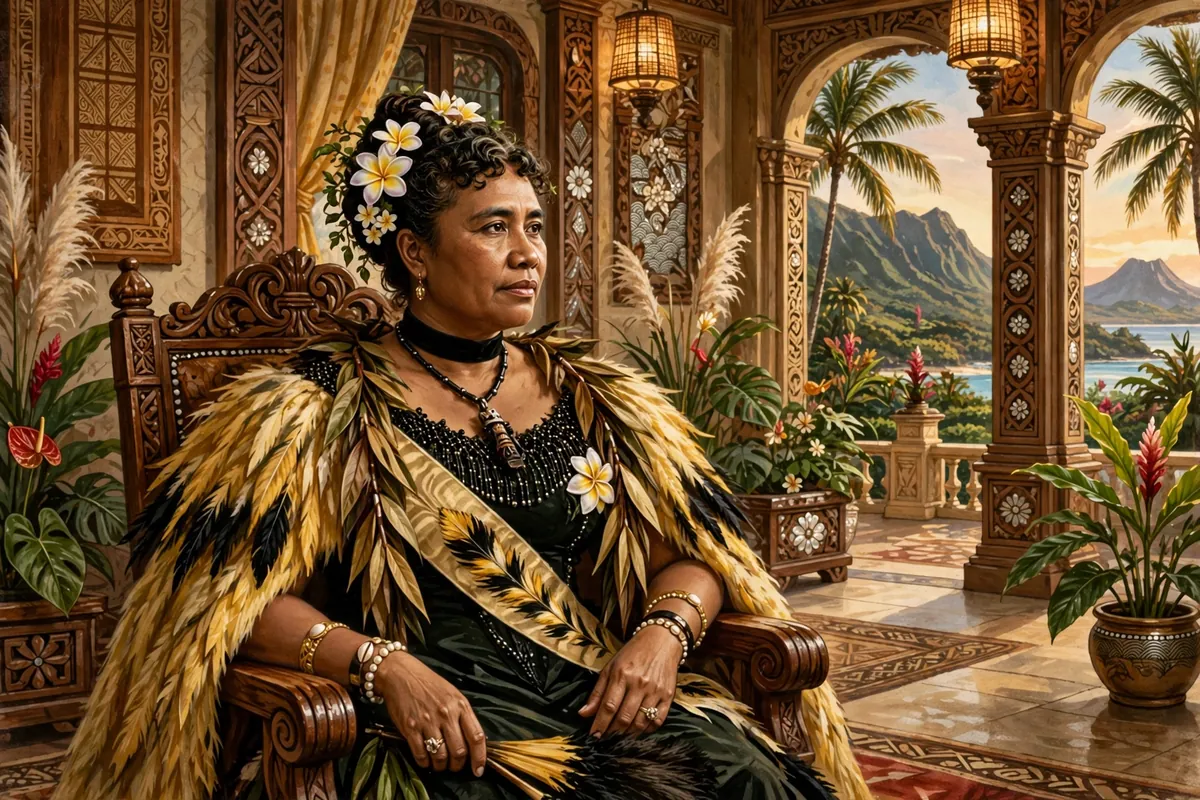
Her name was Liliʻuokalani, and she was the only queen regnant, meaning a queen who ruled in her own right, and the last monarch of the Hawaiian Kingdom. She took the throne in 1891 after her brother, King Kalākaua, died. Just two years later, in 1893, she was overthrown by a group backed by American business interests.
A Queen With a Plan
Liliʻuokalani was born in 1838 and became queen on January 29, 1891. Before she came to power, a document known as the Bayonet Constitution had stripped the monarchy of much of its power and limited voting rights for many people. Years earlier, two politicians had even offered to help put her on the throne if her brother were pushed aside. By her own account, she firmly turned them down.
As queen, she tried to put a new constitution in place that would restore power to the monarchy and to Native Hawaiians. That move alarmed a group of mostly American and European residents and businessmen, who formed what they called the Committee of Safety.
The Overthrow of 1893
On January 17, 1893, the committee overthrew the monarchy. The coup was bolstered by the landing of U.S. Marines, sent to protect American interests, which left the queen unable to defend her government.
The new leaders set up a provisional government that later became the Republic of Hawaii, with the goal of joining the United States. President Grover Cleveland temporarily blocked annexation. But after the Spanish-American War broke out in 1898, the United States annexed Hawaii.
A Prisoner in Her Own Palace
In January 1895, supporters launched a failed rebellion to restore her to the throne. Afterward, Liliʻuokalani was arrested and imprisoned in an upstairs bedroom of ʻIolani Palace, the very building where Hawaii's rulers had lived.
Six of her jailed supporters had been sentenced to hang. To save them, she signed a document giving up her throne. She was still put on trial and sentenced to five years of hard labor, though that was changed to confinement in the palace.
She didn't sit idle. During her confinement she composed songs, including "The Queen's Prayer," and worked with her companions on a patchwork crazy quilt filled with words, images and symbols of Hawaii's history and hopes. It became known as the Queen's Quilt.
The Song Everyone Knows
Liliʻuokalani was a gifted composer. Her best-known song is "Aloha ʻOe," a gentle farewell that's still sung today. She also wrote an autobiography, Hawaii's Story by Hawaii's Queen, published in 1898.
She spent her later years as a private citizen and died in Honolulu in 1917. Church bells tolled 79 times, once for each year of her life. As her funeral procession left the palace, a youth choir sang "Aloha ʻOe," and the crowds along the route joined in.
Today, ʻIolani Palace is a museum and the only royal palace on U.S. soil. Visit Honolulu and you can walk the halls where Hawaii's last queen once ruled, and remember the woman who answered losing a kingdom with music.