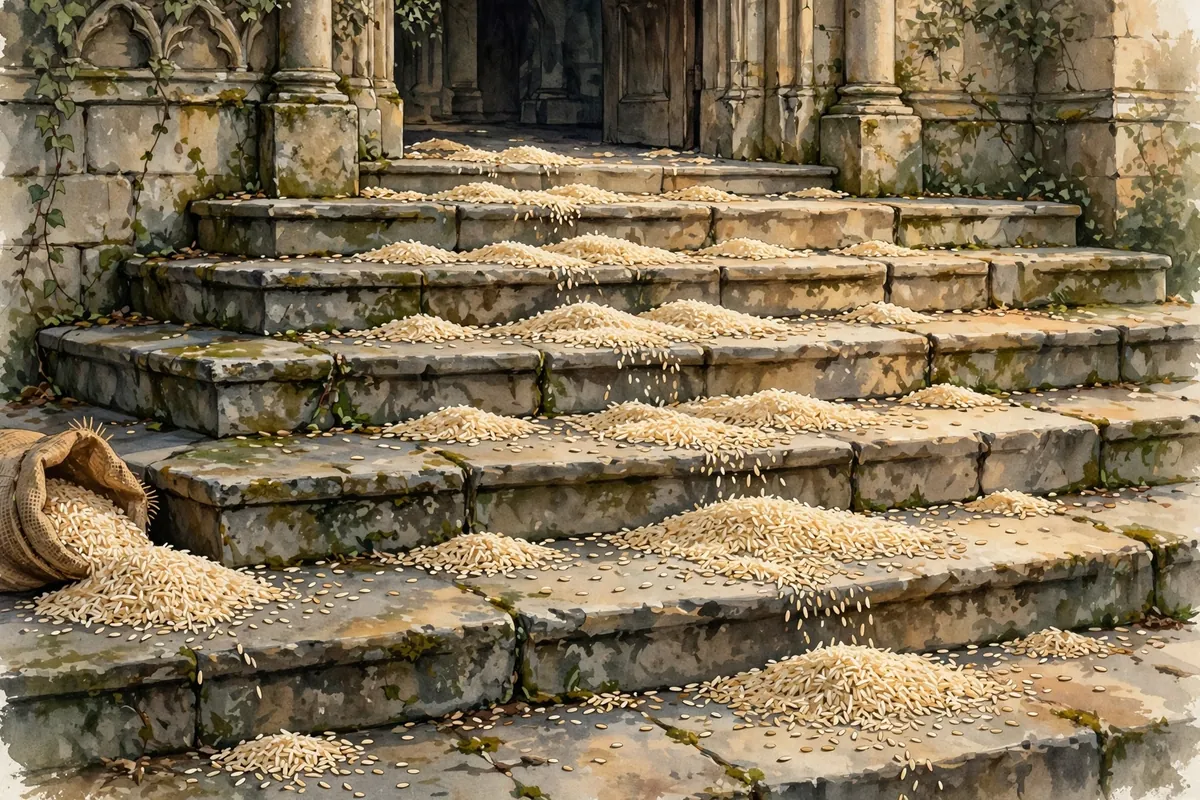
Picture a classic wedding photo. The bride and groom burst through the church doors, laughing, while friends and family toss handfuls of rice in the air. For decades it was as much a part of the big day as the cake. So why rice, of all things?
Rice has long been a symbol of prosperity and fertility. Throwing it, or other seeds, at newlyweds was a way of wishing them a fruitful life together, with plenty to eat and a family to fill the house. One traditional wedding superstition says it plainly: sprinkling the bride with wheat or rice brings fruitfulness.
An Ancient Custom With Many Versions
Tossing grains and sweets at special occasions is a very old custom found in many cultures, reaching back to pagan times. Seeds make a natural symbol for a new couple. Each tiny grain holds the promise of growth and abundance.
The tradition is still alive around the world. Rice is thrown at newlyweds in much of the Western world, as well as in countries such as India and Malaysia. At traditional Greek weddings, guests throw rice and flowers as the couple leaves the church, for fertility and happiness.
In some Chinese wedding customs, relatives scatter rice, red beans, and green beans in front of the bride as she leaves home with the groom. In Malay weddings, guests may be greeted with a sprinkling of yellow rice and scented water.
From Sweets and Grains to Paper
Over the centuries, the tossing tradition changed shape. The word confetti comes from the Italian confetto, meaning a small sweet. Modern paper confetti traces back to the old habit of throwing grains and sweets, which slowly shifted to paper.
In Italy, the original kind of confetti, sugar-coated almonds, is still handed out at weddings, usually with a white coating. At Greek weddings, close friends and family often receive sugar-coated almonds, traditionally in an odd number.
The Bird Myth That Changed Weddings
So why did rice disappear from so many American weddings? A popular belief claimed that birds would eat the uncooked rice, which would swell up in their stomachs and make them explode.
It's not true. Eating rice does not make birds explode and is rarely if ever harmful to them. Birds can pass gas and bring food back up, and some birds even eat wild rice as part of their normal diet.
Rice has a second reputation that doesn't hold up, either. Burying a soaked phone in a bowl of rice has not been shown to fix water damage.
Still, the myth stuck. Many weddings switched to tossing millet, birdseed, confetti, or other materials instead. Some couples now use bubbles or flower petals, and in several cultures, people throw shoes rather than rice.
Other Lucky Wedding Throws
Rice isn't the only thing tossed for luck. Old superstitions say throwing coins over the couple's heads ensures a good future, and throwing shoes over the newlyweds brings good luck.
The bouquet toss has a colorful history too. In medieval Europe, guests believed a scrap of the bride's dress was lucky and would sometimes tear at it. Tossing the bouquet reportedly began as a distraction so the couple could slip away.
Whether it's rice, birdseed, or petals, the meaning hasn't changed. Everyone gathered on those steps is wishing the couple the same thing: a long, happy, and abundant life together.