Picture a sticky July afternoon in the 1870s. No air conditioning, no electric fans, just open windows, shade trees, and maybe a paper fan in your hand. Staying cool took real effort. Within a few decades, that changed dramatically.
Here's the short answer. In the 1880s, inventors began powering fans with electricity. Philip Diehl created the first electric ceiling fan in 1882, and desk fans went on sale soon after. By the 1920s, mass-produced steel fans had become affordable, and ceiling fans were commonplace across the United States. For the first time, ordinary families could make their own breeze at the flip of a switch.
Before Electricity
People have been fanning themselves for thousands of years. Ancient Egyptians and Indians used fans made of leaves. In India, a large swinging ceiling fan called a punkah was pulled back and forth by hand.
Some early American ceiling fans, appearing in the 1860s and 1870s, didn't use electricity at all. A stream of running water turned a turbine, which drove belts connected to two-blade fans. These systems became popular in stores, restaurants, and offices, and some still survive in parts of the South.
The Electric Breeze Arrives
Philip Diehl had engineered the electric motor used in the first electric Singer sewing machines. In 1882, he adapted that motor for a ceiling fan. Each fan had its own motor, with no belts needed. It was a hit, and competitors quickly followed. Diehl kept improving his design and even added a light kit, combining a fan and a light in one fixture.
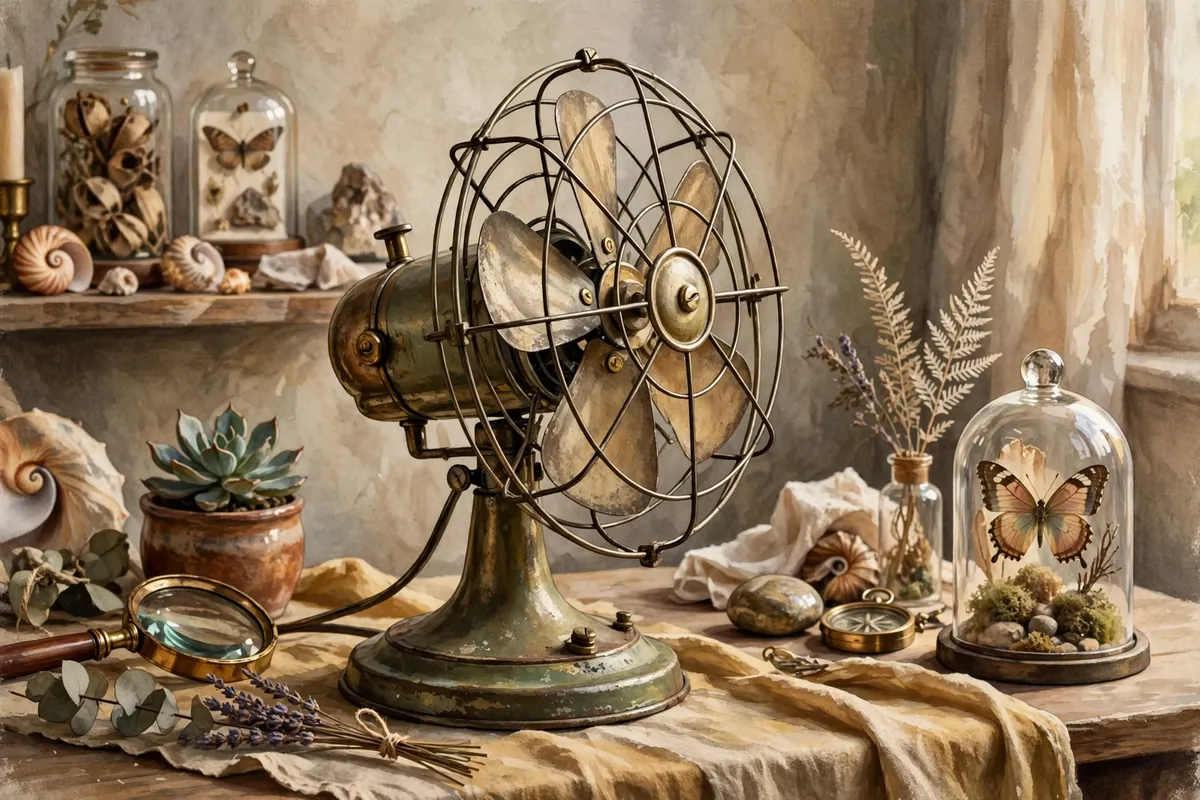
Around the same time, between 1882 and 1886, Schuyler Wheeler invented an electric fan that was sold commercially. In 1885, a desktop electric fan went on sale in New York. Electricity didn't win right away, though. Fans powered by alcohol, oil, or kerosene were also common around the turn of the 20th century.
By World War I, most ceiling fans had four blades instead of two, which made them quieter and moved more air. In the 1920s, steel fans were mass-produced in different shapes, bringing prices down so more homeowners could afford them. By the 1950s, table and stand fans came in bright, eye-catching colors.
How a Fan Cools You
Here's a surprise: a fan doesn't actually lower the temperature of a room. Instead, the moving air carries heat away from your skin faster, creating a wind chill effect. You feel cooler even though the air is just as warm.
Fans Versus Air Conditioning
Ceiling fans slowly fell out of fashion in the U.S. from the 1930s, and electric air conditioning arrived in the 1950s. By the 1960s, window and central air conditioning had led many companies to stop making fans.
Then came a comeback. In the mid-1970s, as people grew more aware of energy costs, old-fashioned ceiling fans became popular again for their style and efficiency. A Texas entrepreneur began importing ceiling fans from India in 1973, and they took off during the energy crisis of the late 1970s. Fans kept evolving, too. In 1998, inventors introduced high-volume, low-speed ceiling fans that use long, slowly turning blades to save energy.
In hot countries like India, ceiling fans remain a main way to cool homes. And in many American houses, a fan still hums away on summer nights. So the next time you flip on that switch, thank Philip Diehl and his sewing machine motor.