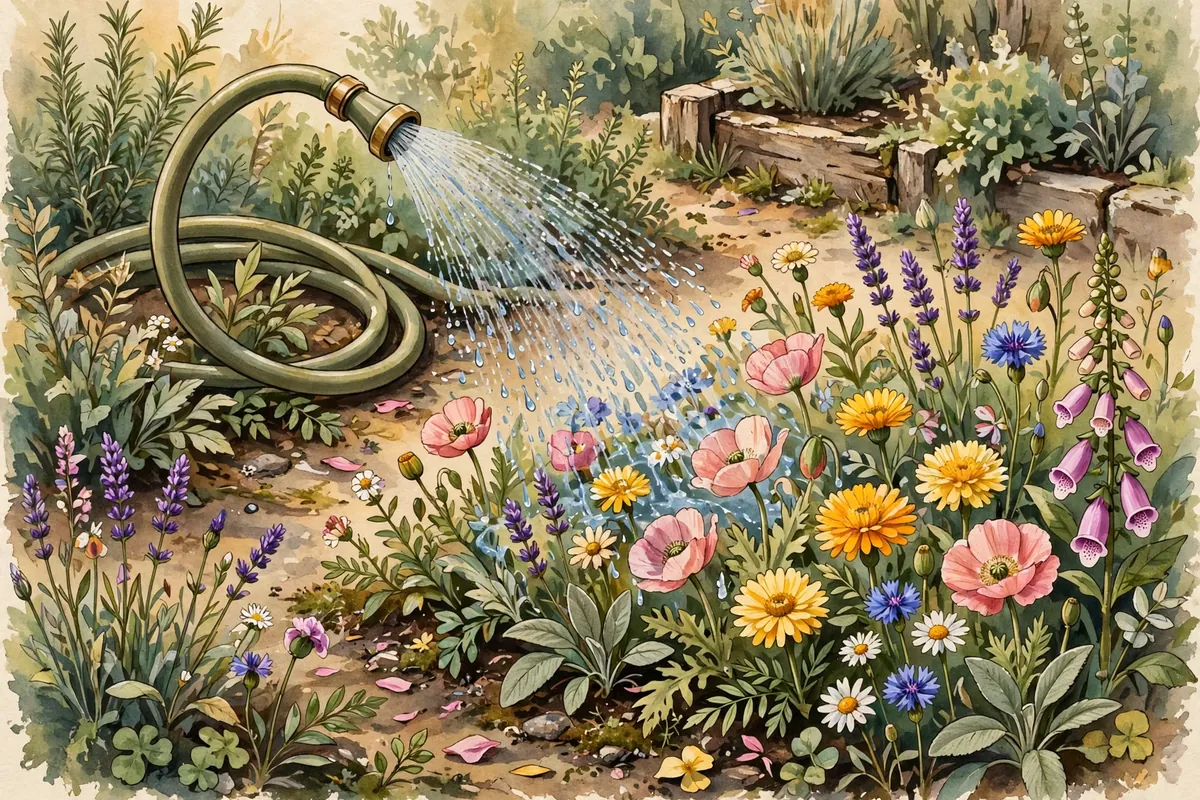
On a summer evening, few chores are as relaxing as watering the garden. You twist the spigot, aim the hose, and give the tomatoes a long drink. It's so easy that we rarely think about how gardeners managed before the hose came along, or where this handy tool came from.
Here's the short answer. For centuries, gardeners carried water by hand in watering pots. Flexible hoses first showed up in firefighting, made of sewn leather. The breakthrough for everyday hoses came with vulcanized rubber in the 1800s, and later synthetic materials made hoses lighter, tougher, and cheap enough for nearly every backyard.
The Days of the Watering Pot
Before the hose, the watering can was a gardener's best friend. It was originally called a watering pot. The term watering can first appeared in writing in 1692, in the diary of a keen cottage gardener in Cornwall, England.
Watering cans kept improving. In 1886, John Haws patented a design he said was easier to carry and tip than anything before it. The sprinkler head on the spout even has a pretty name: the rose. Still, every drop had to be carried by hand, one heavy trip at a time.
Born to Fight Fires
The hose's family tree starts with firefighters. In 1673, in Amsterdam, fire brigade superintendent Jan van der Heyden and his son created the first fire hose: 50-foot lengths of leather sewn together like the leg of a boot.
Fire hoses reached the United States in Philadelphia in 1794. A canvas version wore out too quickly, so sewn leather was used, but that tended to burst. Members of a Philadelphia fire company then invented a leather hose held together with copper rivets.
The Rubber Revolution
Leather was heavy and leaky. The real game changer was rubber, but raw rubber turned soft and sticky in the heat. In 1839, Charles Goodyear accidentally dropped a mix of rubber and sulfur onto a hot frying pan and found it stayed firm. He patented the process, called vulcanization, in 1844, and began producing rubber on an industrial scale.
Vulcanized rubber made hoses that didn't leak. Fire departments gradually moved from leather to rubber-lined hoses. World War II pushed things further, spurring industrial development and new synthetic rubbers.
The Hose in Your Backyard
Today's garden hoses are usually made of synthetic rubber or soft plastic, often reinforced with an inner web of fibers. They're flexible enough to drag around trees and posts, yet tough enough to survive being stepped on. Each male end can screw into the female end of another, so you can link hoses to reach the far corner of the yard.
Even the threads reveal the family history. In the U.S., the standard for garden hose threads was first defined in a fire hose connection standard, a quiet nod to the hose's firefighting roots.
Gardeners have also gained clever variations. Soaker hoses leak gently along their whole length, a simple, low-cost substitute for drip irrigation. Expandable hoses swell like balloons when filled, then shrink for easy storage.
A word of caution: most garden hoses aren't made for hot water, and some can burst if left pressurized in the sun. But treat yours kindly, and it will keep saving you hundreds of trips with a heavy watering can. Your back, and your tomatoes, will thank you.