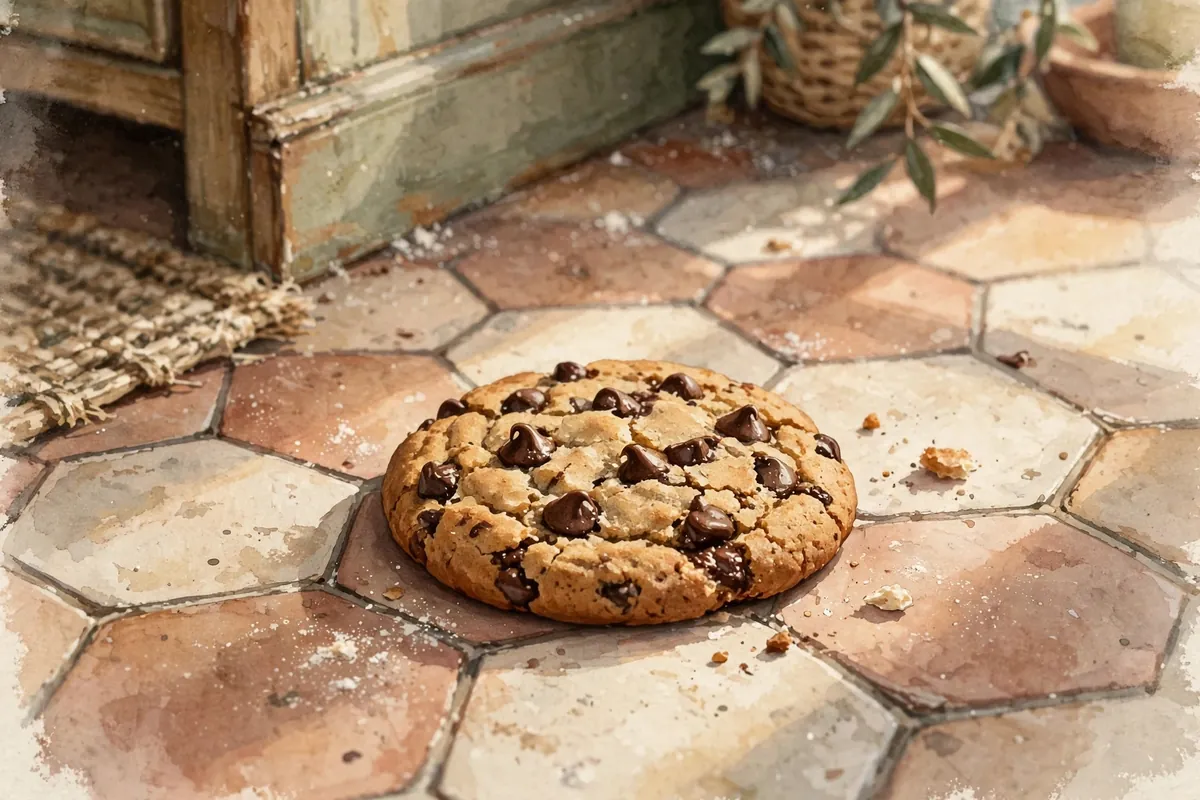
We've all done it. A cookie, a cracker, or a piece of toast hits the floor, and in a flash we scoop it up and announce, "Five-second rule!" The idea is that food picked up fast enough hasn't had time to get dirty. It's a bit of kitchen folklore nearly everyone knows. But does it hold up?
Not really. Scientists consider the five-second rule a debunked urban legend. Bacteria can transfer to food the instant it touches a contaminated surface. It's true that more germs tend to transfer the longer food sits there, and some floors are fairly clean. But there's no magic window during which dropped food is guaranteed to be safe.
Where Did the Rule Come From?
Nobody knows for sure. Two food scientists have traced the idea to legends about Genghis Khan, who supposedly had a rule at his banquets that food dropped on the floor could stay there as long as he allowed. The thinking was that food prepared for the Khan was so special it would be good for anyone to eat.
The first known mention of the rule in modern print came in 1995, in a novel that called it the "twenty-second rule." Some people say three seconds instead of five. The timing, clearly, has always been flexible.
The Teenager Who Won an Ig Nobel
One of the first scientific looks came in 2003 from Jillian Clarke, a high school student doing an apprenticeship at the University of Illinois. She found that 56 percent of men and 70 percent of women she surveyed knew about the rule. Then she tested it.
Foods dropped onto tile coated with E. coli became significantly contaminated after even brief contact. Interestingly, she found no significant contamination from public floors she sampled. Her work earned her the 2004 Ig Nobel Prize in public health, an award for research that first makes people laugh and then makes them think.
What the Bigger Studies Found
A 2007 study found that salmonella could survive on dry wood, tile, and carpet for up to four weeks. It could still transfer to bread and bologna in under five seconds, though leaving the food for a full minute increased contamination about tenfold.
In 2016, researchers at Rutgers University dropped watermelon cubes, gummy candies, plain bread, and buttered bread onto surfaces coated with bacteria. Wet foods picked up bacteria more readily than dry ones. Surprisingly, carpet transferred fewer bacteria than stainless steel or tile. One of the researchers put it plainly: bacteria can contaminate instantaneously.
Not everyone was so strict. A microbiologist at Aston University in England suggested in 2017 that food dropped on a seemingly clean floor for a moment can be eaten with minimal risk. He also found that moist food left down for 30 seconds or more picked up about ten times as many bacteria as food left for three.
So, Should You Eat It?
The takeaway is that the clock matters less than the floor and the food. A dry cracker on a clean kitchen floor is a very different story from a juicy slice of fruit on a dirty one. Moisture, the type of surface, and where the floor is all make a difference.
When in doubt, toss it out, and if you have health conditions that make food safety especially important, talk to your doctor. For everything else, at least now you know the science behind the snap decision.