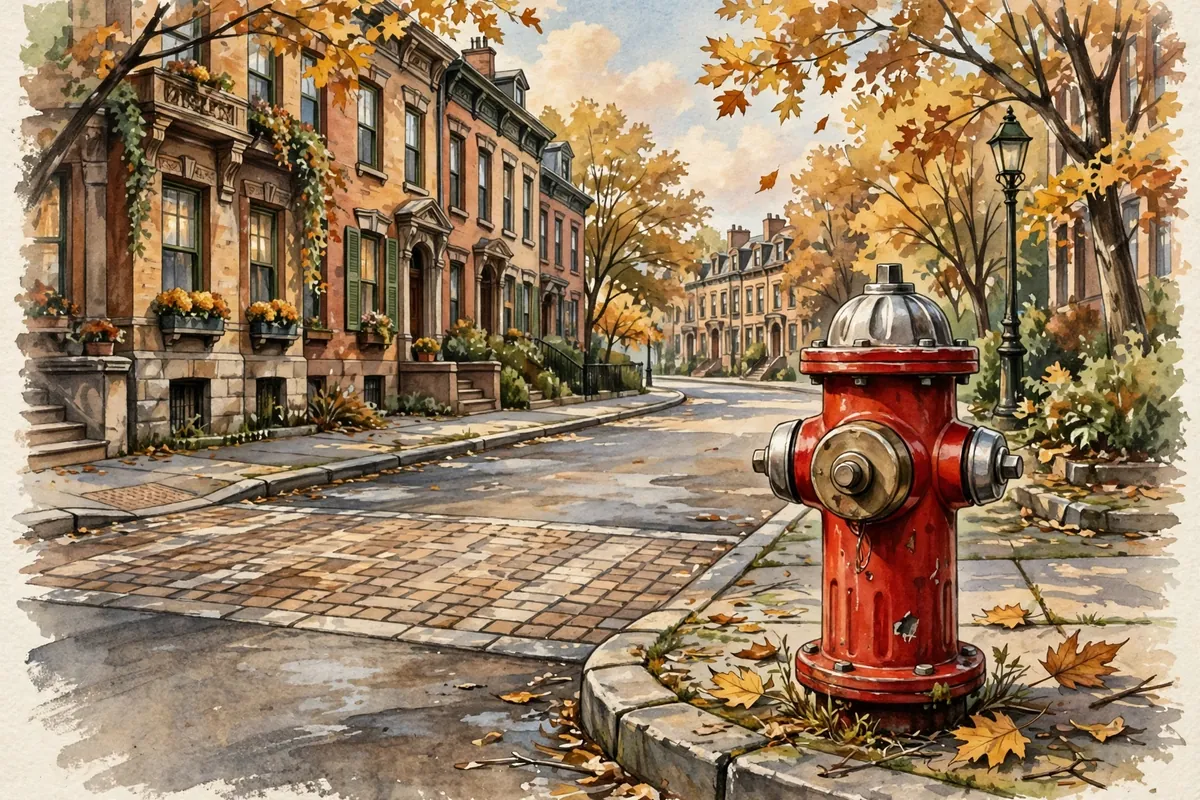
Draw a fire hydrant, and chances are you'll reach for the red crayon. Red is the color many of us picture, and plenty of real hydrants are painted that way. So it seems like an easy question: why are fire hydrants red?
The surprising answer is that there's no official rule that they should be. In fact, two major U.S. organizations, the American Water Works Association and the National Fire Protection Association, recommend that hydrants be painted chrome yellow so they're easy to spot. But most local water authorities don't follow those guidelines, so the color of a hydrant depends largely on where you live.
Painted to Be Seen
Above-ground hydrants are painted for a few reasons. The main one is visibility, so firefighters can find them fast. Some colors signal how the hydrant works, and in some places hydrants are painted for looks.
That's why you might see hydrants in red, in yellow, or even decorated like works of art, depending on the town. When looks come first, though, it can make hydrants a little less practical in an emergency.
A Secret Code on Top
Here's something most people never notice. Under the national guidelines, the top of a hydrant, called the bonnet, and its nozzle caps are color-coded to show how much water the hydrant can deliver.
Light blue means the highest flow, more than 1,500 gallons per minute. Green means 1,000 to 1,499 gallons per minute. Orange means 500 to 999. And red means less than 500 gallons per minute. A black top signals a hydrant that doesn't work or sits at the end of the system.
These colors help arriving firefighters decide whether a hydrant will supply enough water or whether they need to call for more help. In many places, a white or purple top means the hydrant supplies water that isn't safe to drink.
Some cities use their own systems. In Ottawa, Canada, a hydrant so corroded inside that it can't deliver good pressure gets a special paint scheme, telling firefighters to move on to the next one.
Why We Call Them Fireplugs
Hydrants grew out of a much messier system. Starting in the 1500s, as wooden water pipes were installed, firefighters would dig down to the pipes and drill a hole to get water for their buckets or pumps. Afterward, the hole had to be plugged. That's where the American nickname fireplug comes from.
Underground hydrants have been used in Europe and Asia since at least the 1700s. The familiar above-ground hydrant is a 19th-century invention. In cold places, the valve sits below the frost line so the hydrant won't freeze, a design known as a dry barrel hydrant. In warmer places, the valves can sit above ground instead, a style called a wet barrel hydrant.
Keep Your Distance
Hydrants only help if firefighters can reach them. That's why in most places it's illegal to park close to one. In North America, the no-parking zone is commonly 10 to 16 feet, often marked with yellow or red paint on the curb. If a car blocks a hydrant during a fire, firefighters may break its windows to run a hose through.
So the next time you pass a hydrant, check its color and peek at the top. Whether it's red, yellow, or something else, that little post may be quietly telling firefighters exactly what it can do.