Imagine a 1930s dance hall, with a big band in full swing. Trumpets blare, saxophones wail, drums pound away. Somewhere in the middle sits a guitarist, strumming hard, and you can barely hear a note. For years, that was simply life for guitar players.
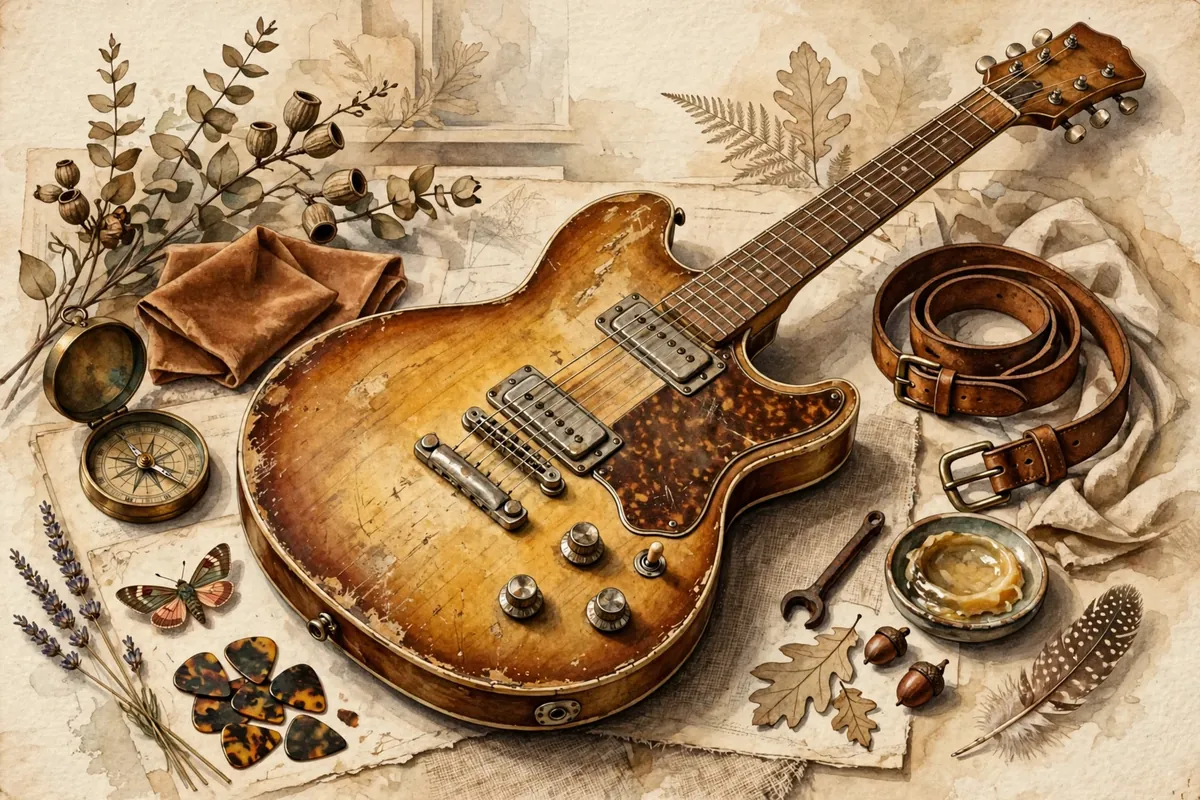
The electric guitar solved the problem. Instead of relying on a hollow wooden body to make sound, it uses a pickup, a magnet wrapped in wire, to turn the vibrating strings into an electrical signal. An amplifier and speaker make that signal loud. Suddenly the guitar could hold its own, and before long it was leading the band.
The Frying Pan
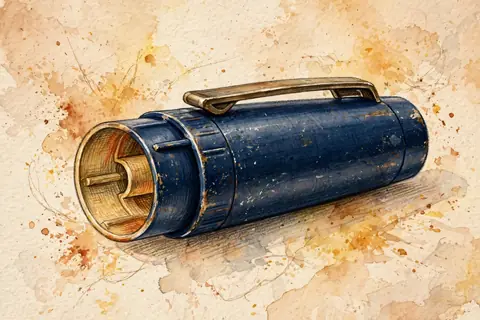
The first electrically amplified stringed instrument sold commercially was a cast-aluminum lap steel guitar designed in 1931 by George Beauchamp with Paul Barth. It earned a nickname that stuck: the Frying Pan. Beauchamp and Adolph Rickenbacker developed the electromagnetic pickup that made it work.
Production began in 1932 in Los Angeles, and the company later became Rickenbacker. Within a few years, Dobro, National, Epiphone, Gibson, and others were all making electric guitars of their own. The first publicly promoted performance with an electric guitar took place in Wichita, Kansas, in October 1932. Decades later, Guitar World magazine described the Frying Pan as the first fully functioning solid-body electric guitar to be manufactured and sold.
Jazz Players Take the Spotlight
The earliest fans were jazz guitarists who wanted to play single-note solos in big bands, something nearly impossible on an acoustic guitar. Early stars on record included Charlie Christian, T-Bone Walker, Sister Rosetta Tharpe, and Les Paul.
Les Paul was a tinkerer as well as a player. In 1940, he built an experimental solid-body guitar known as the log guitar, basically a wooden post with a neck attached and two hollow halves attached to the sides just for looks. Gibson wasn't interested at first, doubting the solid-body style would ever catch on, but the idea later inspired the famous 1952 Gibson Les Paul.
Solid Bodies and the Birth of Rock
Early electric guitars were often hollow, which could cause squealing feedback at high volume. A solid wooden body fixed that, because it doesn't vibrate like a soundboard. The pickups capture the strings alone.
Fender made the first mass-produced solid-body electric guitars, the Esquire and the Broadcaster, in 1950. The Broadcaster later became the Telecaster. In 1954, Fender introduced the Stratocaster, which became hugely popular in the 1960s and 1970s for its range of sounds and comfortable shape.
During the 1950s and 1960s, the electric guitar became the most important instrument in popular music. It was a key part of electric blues, rock and roll, rock, and heavy metal, and it found a home in country, pop, and jazz as well.
A Whole New Palette of Sounds
Because its sound is electric, a guitar's voice can be shaped in ways an acoustic never could. Players use effects like reverb, distortion, and overdrive, and the gritty sound of overdrive became central to electric blues, rock, and metal. Techniques like string bending, tapping, and even controlled feedback opened up new possibilities.
Not bad for an invention that started with a frying pan. The next time you hear a guitar solo soaring over the crowd, remember the jazz players who just wanted to be heard, and the tinkerers who found a way to help them.