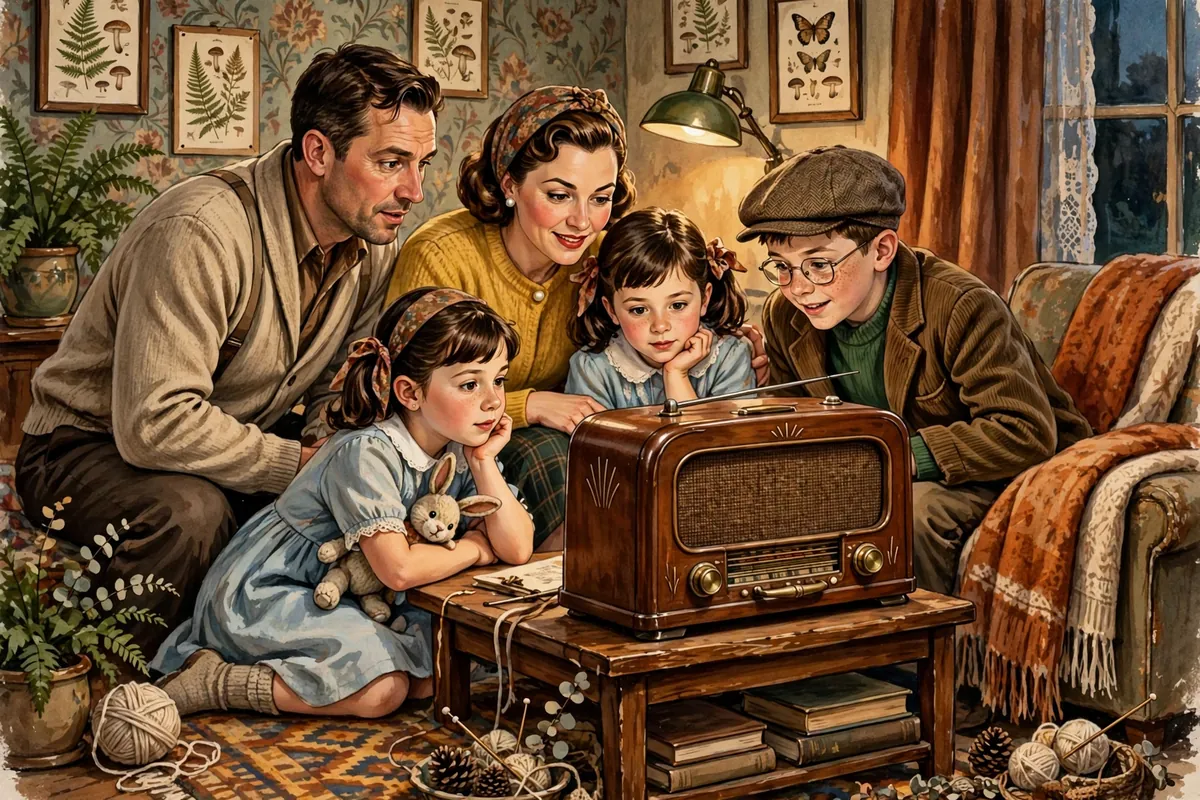
Picture an evening in the early 1940s. Supper dishes are done. Dad settles into his chair, Mom picks up her knitting, and the kids sprawl on the rug. All eyes turn not to a screen, but to a wooden cabinet with a glowing dial. For a few decades, that box was the center of family life.
Here's the short answer. From the early 1920s through the 1950s, radio was America's main source of home entertainment. Families regularly gathered to listen in the evening, and by 1940, 83 percent of American homes owned a radio. Comedies, dramas, music, news, and even presidential speeches came straight into the living room, shared by everyone at once.
From Curiosity to Must-Have
The first radio news program aired on August 31, 1920, in Detroit, covering local election results. That same year, KDKA in Pittsburgh became the first commercial radio station in the United States. By 1922, regular entertainment programs were on the air, and Variety announced that radio was sweeping the country with a million sets in use.
By the late 1920s, amplified vacuum tube radios were widely available, so several people in a home could easily listen at the same time. That changed everything. In 1925, about 19 percent of homes had a radio. By 1930, it was 40 percent. Even during the Great Depression, radio stayed at the center of American life.
Something for Everyone
Radio invented many kinds of entertainment we still enjoy. Soap operas got their name because many early daytime dramas were sponsored by soap and detergent makers. Quiz shows, talent shows, situation comedies, cooking shows, and play-by-play sports all got their start on the air. Radio even shaped the news as we know it, with headlines, live reports from the scene, sidewalk interviews, weather forecasts, and farm reports.
Big stars like Jack Benny, Bob Hope, Burns and Allen, and Red Skelton kept families laughing. Kids raced home for afternoon adventure serials like Captain Midnight and Jack Armstrong, the All-American Boy. They mailed in cereal boxtops to get decoder rings, badges, and other prizes.
The President in Your Parlor
Radio also changed how Americans heard from their leaders. Between 1933 and 1944, President Franklin D. Roosevelt gave a series of evening radio addresses known as fireside chats. He spoke to millions of people about the Great Depression, the banking crisis, and World War II in a calm, familiar tone.
For many families, it felt as though the president was talking with them personally. The Library of Congress later said the chats redefined the relationship between the president and the American people.
The Golden Age Fades, but Never Quite Ends
Radio's reach was enormous. A 1947 survey found that 82 out of 100 Americans were radio listeners. But in the 1950s, television took over as the country's favorite screen for dramas, comedies, and variety shows. Radio shifted to music, news, talk, and sports.
The last four daytime radio dramas on CBS ended on November 25, 1960. Yet a few programs from the old days are still going, including the Grand Ole Opry, which began in 1925.
So if you remember a living room radio, or heard stories about one from your parents, you know the magic. Before streaming and smartphones, one glowing dial brought the whole family together, and that might be the sweetest broadcast of all.