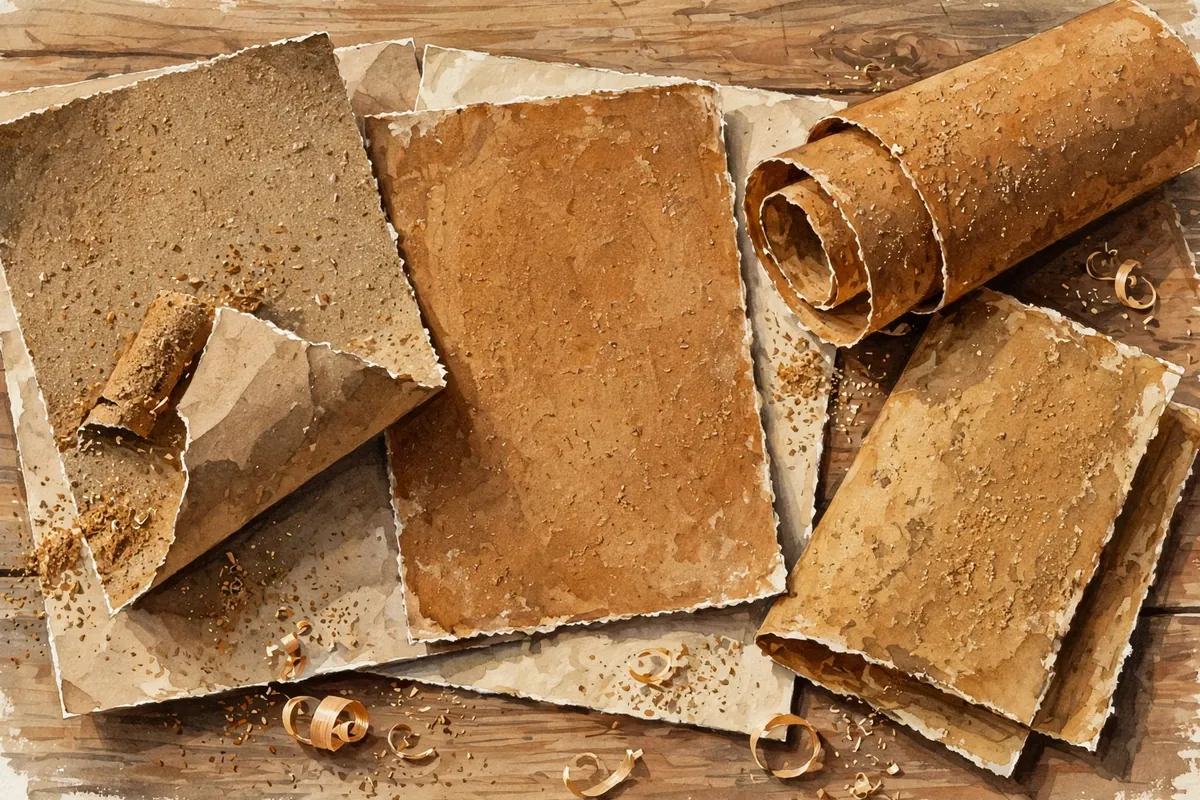
Sandpaper seems like the most straightforwardly named tool in the garage. It's paper, it's gritty, and it feels like sand. Case closed, right? Well, mostly. The story behind the name goes back more than seven centuries, and the stuff on today's sheets would probably surprise you.
The name comes from two things: paper is the cheapest and most common backing for this kind of abrasive, and early versions really did use sand and other gritty bits glued to a backing. But most modern sandpaper doesn't use sand at all. It's usually coated with tough, man-made grit like aluminum oxide or silicon carbide.
From Fish Scales to Gritty Parchment
People have always needed ways to smooth and polish things. Ancient civilizations used rough natural materials like fish scales and marble dust. The first recorded mention of something like modern sandpaper comes from 13th-century China, where crushed shells, seeds, and sand were glued onto parchment with natural gum.
During the Industrial Revolution, inventors in Britain and the United States kept improving the manufacturing process and testing new coatings. For a long time, the most common grit was flint. But flint turned out to be too soft for most sanding jobs, so flint paper is barely used anymore.
What's Really on the Sheet
Today most sandpaper uses synthetic grit. The most popular is aluminum oxide, which is strong, inexpensive, and works on both wood and metal. Silicon carbide is another common choice, especially in very fine grits for wet sanding. Premium ceramic grits stay sharp even longer, at a higher price.
A few natural minerals are still around. Emery is used for polishing metal, garnet for finishing wood, and a fine paper made from iron oxide, called crocus paper, for polishing soft metals. That's why professionals often call the product by its grit, like "aluminum oxide cloth" or "silicon carbide paper."
Some grits are even designed to break as you work. Heat from sanding makes these friable grains crack at a controlled rate, exposing fresh sharp edges, so the sheet lasts longer. Grit sizes are graded by different standards around the world, including the ANSI scale in the United States, the P grade in Europe, and the JIS grade in Japan.
Not Always Paper, Either
The paper part isn't guaranteed. Tougher sandpapers use cloth, plastic film, or a dense material called vulcanized fiber. Cloth holds up well on sanding belts, and fiber is used for heavy-duty sanding disks.
One clever twist came from a Philadelphia ink maker named Francis Gurney Okie. He came up with waterproof sandpaper, and the company 3M hired him to develop it. In 1921, it went on sale as "Wetordry." Using it wet helps wash away debris so the paper doesn't clog.
A Gritty Start for a Big Company
Speaking of 3M, the giant company started out in 1902 as the Minnesota Mining and Manufacturing Company. Its founders hoped to mine a valuable abrasive mineral, but their deposit turned out to be worthless. So the company moved to Duluth and started making sandpaper instead. It later became famous for many other products, including masking tape, invented by a 3M employee in 1925.
So the next time you smooth a rough board, take a closer look at that sheet. It may not be sand, and it may not even be paper, but the old name still does the job.