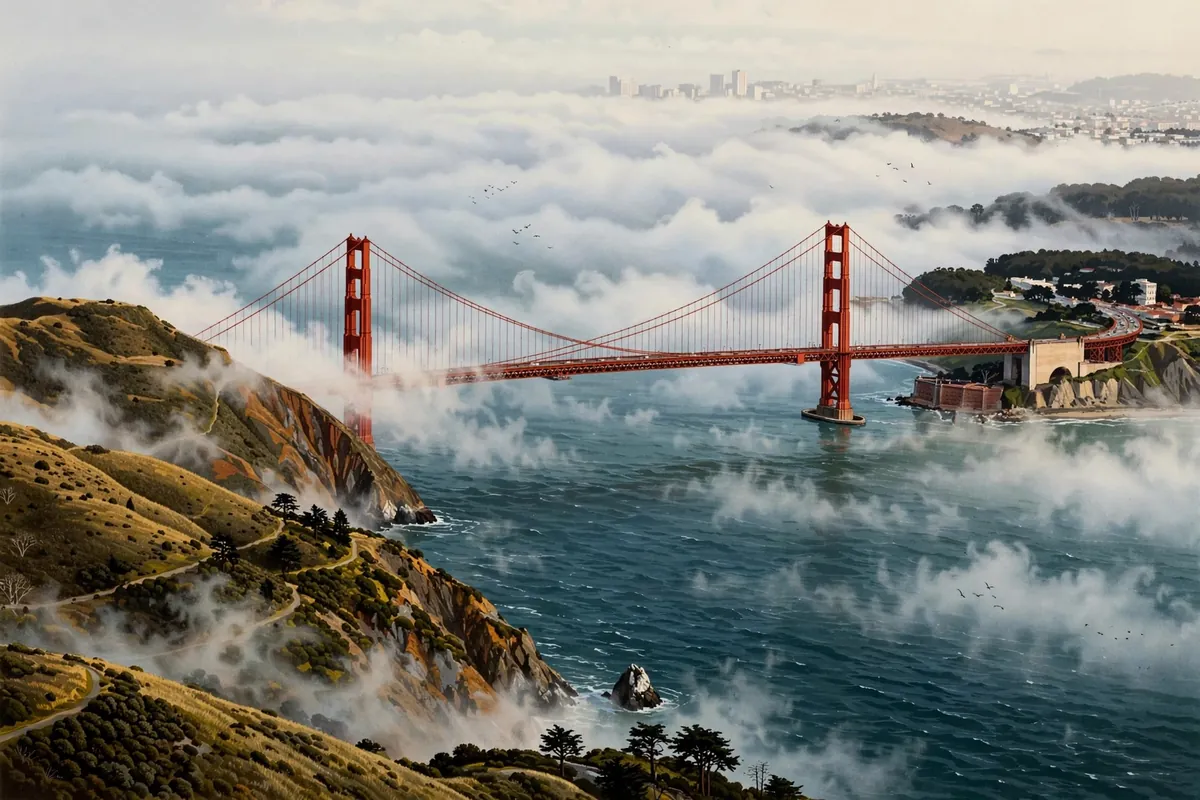
It's one of the most photographed bridges on Earth, and its color is a big part of the magic. That warm orange glows against blue water on a sunny day and peeks out of the fog on a gray one. But the name is a little misleading. The Golden Gate Bridge isn't golden at all.
Here's how it got its color. The bridge's consulting architect, Irving Morrow, personally chose a shade called International Orange. He picked it because it complements the natural surroundings and makes the bridge easier to see in fog. His choice beat out other options, including a U.S. Navy suggestion to paint it with black and yellow stripes so passing ships could spot it.
The Architect Behind the Look
Morrow was a relatively unknown residential architect when he joined the project. Chief engineer Joseph Strauss led the effort, with engineers like Leon Moisseiff and Charles Ellis handling much of the structural design. It was a bold project. Many experts had said a bridge couldn't be built across the strait at all, with its strong, swirling tides, deep water, fierce winds, and blinding fog.
Morrow shaped the look of the bridge. He designed the overall form of the towers, the lighting, and the Art Deco touches, including the tower decorations, streetlights, railing, and walkways. The color was his final signature.
What Is International Orange?
International Orange is a color used in aviation, space, and shipping to make objects stand out from their surroundings. It's a deeper, redder cousin of the bright safety orange you see on traffic cones. NASA astronaut escape suits use it, and so did the Bell X-1, the first airplane to break the sound barrier.
The bridge uses its own version. It's slightly lighter than the standard engineering shade, which helps ships see it, but darker than the aerospace version. The paint is also specially made to protect the steel from rust caused by salty ocean spray and the damp San Francisco fog.
So Why Is It Called "Golden"?
The bridge is named after the strait it crosses, not its color. That one-mile-wide channel connecting San Francisco Bay to the Pacific got its name in 1846, before the California Gold Rush. Explorer John C. Frémont called it "Chrysopylae," or Golden Gate, comparing it to the Golden Horn harbor of ancient Byzantium. He saw it as a golden gate to trade with Asia. Before that, the Spanish had called it the "Mouth of the Port of San Francisco."
A Paint Job That Never Ends
Keeping that famous color fresh is a full-time job. The bridge was first painted with a red lead primer and a lead-based topcoat. Starting in the mid-1960s, crews stripped the old paint and applied tougher coatings, finishing the project in 1995.
Today a team of 38 painters keeps it up, touching up spots where corrosion gets serious. Painting the bridge is an ongoing, never-ending task. Since 1990, crews have used acrylic topcoats, chosen for air-quality reasons, to keep that signature orange looking sharp.
When the bridge opened on May 27, 1937, it was the longest and tallest suspension bridge in the world. Other bridges have since passed it in size, but few can match its looks. One architect's eye for color turned a feat of engineering into an icon, and saved San Francisco from a bridge dressed like a bumblebee.