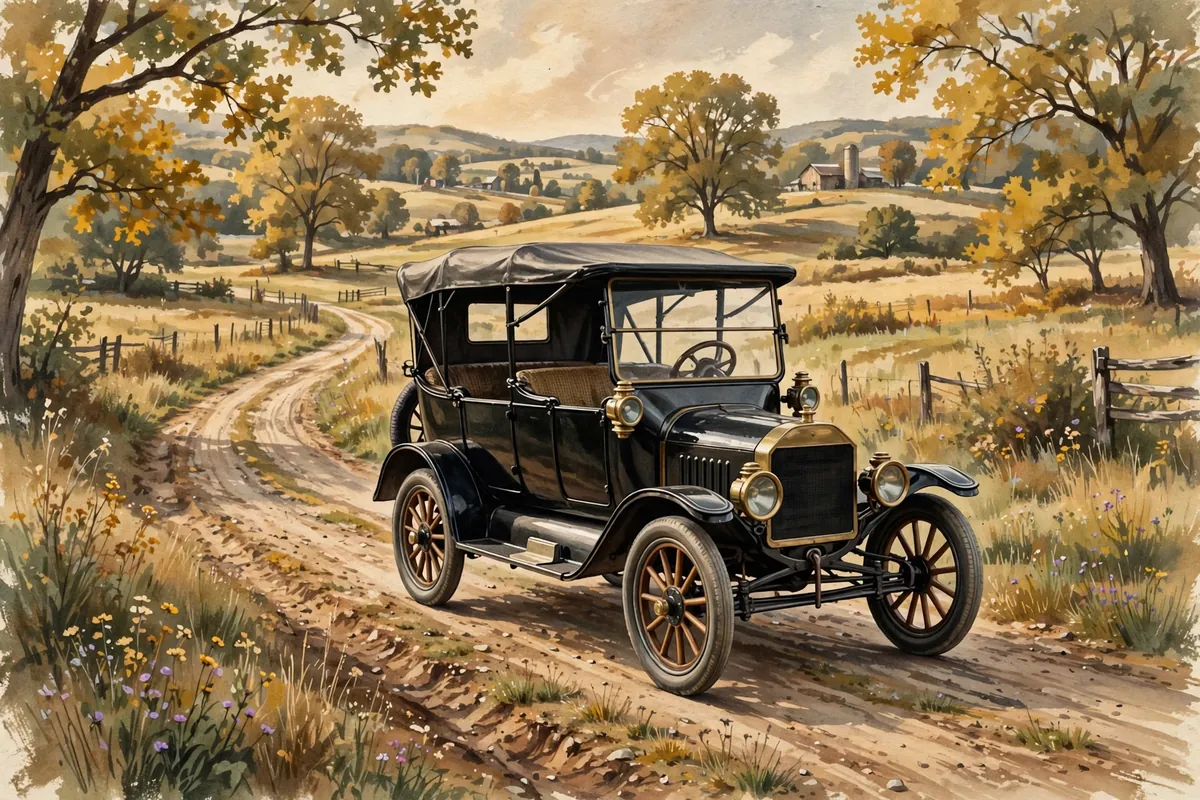
In the early 1900s, cars were mostly toys for the wealthy, built slowly by hand. Then a boxy little black car called the Tin Lizzie came along, and within a couple of decades, millions of ordinary American families had one parked out front. How did Henry Ford pull it off?
Here's the short answer: Ford made the Model T cheaper by making it faster. His factories switched from hand-building cars to moving assembly lines with completely interchangeable parts. Building a car went from more than 12 hours to about 93 minutes by 1914. Those savings let Ford drop the price from $780 in 1910 to $290 in 1924, putting cars within reach of the middle class.
A Car for the Great Multitude
The Model T went into production in 1908. Ford's goal was bold. He promised to build a motor car for the great multitude, so low in price that no man making a good salary would be unable to own one and enjoy hours of pleasure with his family. Ford's philosophy was to get the design right and then keep it the same. He believed the Model T was all the car a person would ever need.
At first, the Model T was built the old-fashioned way, by hand, and production was small. The Piquette Avenue Plant in Detroit turned out only 11 cars in its first full month of production. Demand quickly outran supply.
The Moving Assembly Line
Ford didn't invent the assembly line. Ransom E. Olds had used one for the Oldsmobile Curved Dash starting in 1901. But Ford and his engineers made huge leaps in efficiency. They broke the job into 84 defined areas and added more and more machines, so each worker needed fewer skills.
The results were astonishing. Cars rolled off the line every three minutes. In 1914, Ford built more cars than all other automakers combined. By 1925, the factories were producing 9,000 to 10,000 cars a day, and the price of a basic Model T had dropped as low as $260.
Paying Workers Enough to Buy One
Ford made another surprising move in 1914. He announced a $5 daily wage, more than doubling what most of his workers earned. One newspaper said the news shot like a blinding rocket through the dark clouds of the industrial depression.
The plan paid off. Instead of losing workers constantly, Ford attracted the best mechanics in Detroit. Higher wages also meant more people could afford the very cars they were building.
Any Color, So Long as It's Black
Ford famously said customers could have a car painted any color they wanted, so long as it was black. But early Model Ts actually came in gray, green, blue, and red. The black-only policy didn't start until 1914, and black pigment was among the cheapest available.
The Model T was so popular that Ford bought no advertising from 1917 to 1923. By 1918, half of all cars in the United States were Model Ts. When production ended in 1927, more than 15 million had been built, a record that stood until the Volkswagen Beetle passed it in 1972.
So the next time you pull out of your driveway, tip your hat to the Tin Lizzie. It turned the automobile from a rich man's toy into something an ordinary family could call its own.