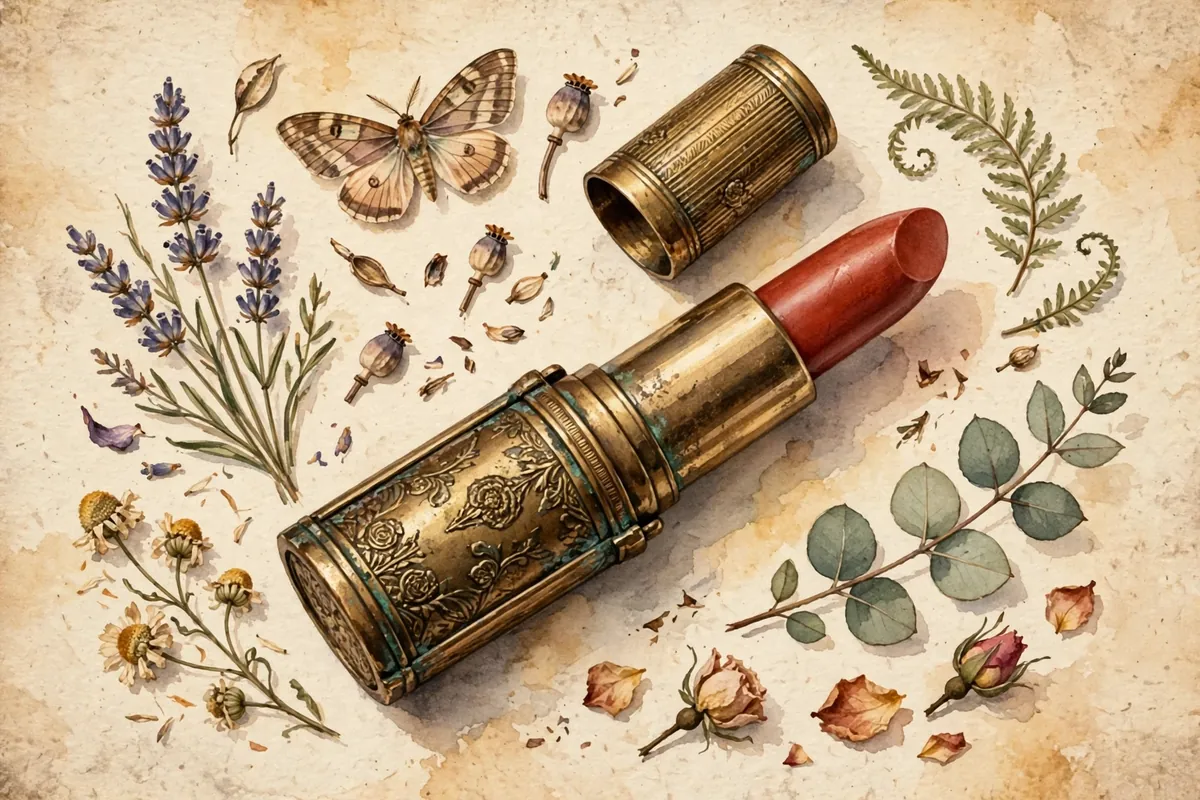
It's hard to imagine now, but the little tube in nearly every handbag once carried a whiff of scandal. You may have heard that lipstick was once forbidden. The real story is a bit different, and in some ways more interesting.
The short answer: the bigger obstacle wasn't a law. It was shame. Throughout most of the 19th century in Britain, openly wearing cosmetics was considered unacceptable for respectable women. Makeup was seen as brazen and was linked with actors and prostitutes. Social pressure did the work that a law might have done.
An Ancient Beauty Secret
Lipstick itself is ancient. People in Sumer and the Indus Valley may have been the first to wear it, about 5,000 years ago. Sumerians crushed gemstones to decorate their faces, especially the lips and around the eyes. Women in the Indus Valley used pieces of ochre as lipstick.
In ancient Egypt, both men and women wore lip color, which signaled social status rather than gender. Their red dye, though, could cause serious illness. Early shimmering lipsticks got their sparkle from a pearly substance found in fish scales.
From Royal Fashion to Disgrace
Lip color gained popularity in 16th-century England. During the reign of Queen Elizabeth I, bright red lips and a stark white face were the height of fashion. Lipstick was made from beeswax and red plant stains, and only upper-class women and male actors wore makeup.
By the 1800s, attitudes had flipped. Visible makeup became a mark against a woman's character. There were real dangers too: in the 1850s, reports warned women about lead and vermilion in face cosmetics.
The Invention of the Stick
Even as polite society frowned, lipstick was being reinvented. The Paris company Guerlain created a lipstick in 1870. The idea reportedly came when a Guerlain employee passed a candlemaker's shop and was inspired by the wax and colored pigments.
In 1884, Guerlain introduced the first commercial lipstick, wrapped in silk paper and made from deer fat, castor oil, and beeswax. Before that, women made lip color at home.
Flappers Turn the Tide
The 20th century changed everything, even though lipstick still came in only a limited number of shades. In the 1920s, flappers wore dark red lipstick to show their independence, often shaped into a Cupid's bow inspired by actress Clara Bow. In fashionable London, open use of cosmetics appears to have been fully accepted by 1921.
There were still rules. It was fine to touch up lipstick in public or at lunch, but never at dinner. And as late as the mid-1940s, some teen books and magazines warned girls that cosmetics could hurt their popularity and career chances.
World War II brought its own twist. Petroleum and castor oil, both key ingredients, were hard to get, so lipstick was scarce, and metal tubes were replaced with plastic and paper. In the late 1940s, chemist Hazel Bishop created the first long-lasting lipstick, called No-Smear. With help from advertiser Raymond Specter, her lipstick business thrived.
From Scandal to Everyday
Lipstick's journey runs from ancient gemstones to royal courts, from whispered disapproval to a symbol of independence. What was once enough to set tongues wagging is now an everyday choice.
So the next time you see a swipe of red lipstick, remember that it took a lot of bold women to make it so ordinary.