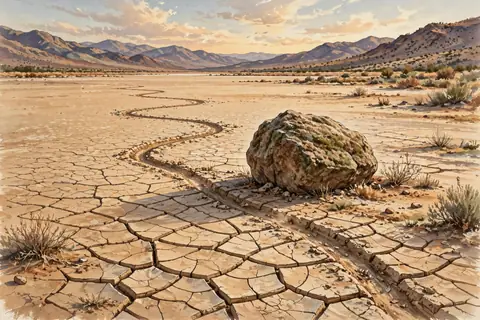
Picture a landscape so dry that some weather stations there have never recorded a single drop of rain. Bare rock, dust, and sand stretch to the horizon. Now picture that same ground covered in a carpet of pink, purple, and yellow flowers.
That's the desierto florido, or flowering desert, of Chile's Atacama Desert. In years when rainfall is unusually high, seeds and bulbs that have been lying dormant in the soil finally sprout and bloom, usually between September and November. More than 200 kinds of flowers take part, most of them found only in the Atacama region.
One of the Driest Places on Earth
The Atacama is the driest non-polar desert in the world. It sits between two mountain ranges, the Andes and the Chilean Coast Range, which block moisture from both the Pacific and the Atlantic. A cold ocean current along the coast adds to the effect.
Average rainfall is only about 0.6 inches a year, and some spots get far less. Evidence suggests the desert may have gone without significant rainfall from 1570 to 1971. Even where the bloom happens, the usual total is less than half an inch a year.
Seeds That Wait
The secret is patience. Seeds and bulbs lie dormant in the soil through the dry years, until enough rain finally soaks down to reach them. When an unusually wet year arrives, they germinate and flower in a burst of color.
Different species sprout at different times during the bloom, so the colors shift as the season goes on. Common ones include the garra de león, or lion's claw, and the pata de guanaco, which means guanaco's foot.
The flowers bring company, too. Insects, birds, and small lizards multiply during a bloom, turning the quiet desert into a busy place for a while. At its height, the bloom stretches from just south of the city of Vallenar to just north of Copiapó, through the coastal valleys and mountains.
Not Too Little, Not Too Much
The extra rain is often linked to El Niño, a band of unusually warm ocean water that sometimes forms off South America's west coast and can boost rainfall. In March 2015, parts of the area got almost an inch of rain in a single day, and the desert flowered that September and October.
But more isn't always better. In 1997, the city of Copiapó got about five inches of rain, more than ten times its usual amount, yet there was only minimal flowering. Too much water can actually hold the bloom back.
The bloom's popularity has a downside. Crowds of tourists, illegal trade in native flowers, and motorsports have raised concerns, and in 2022 Copiapó began fining people who damage the flowers.
Deserts That Bloom Elsewhere
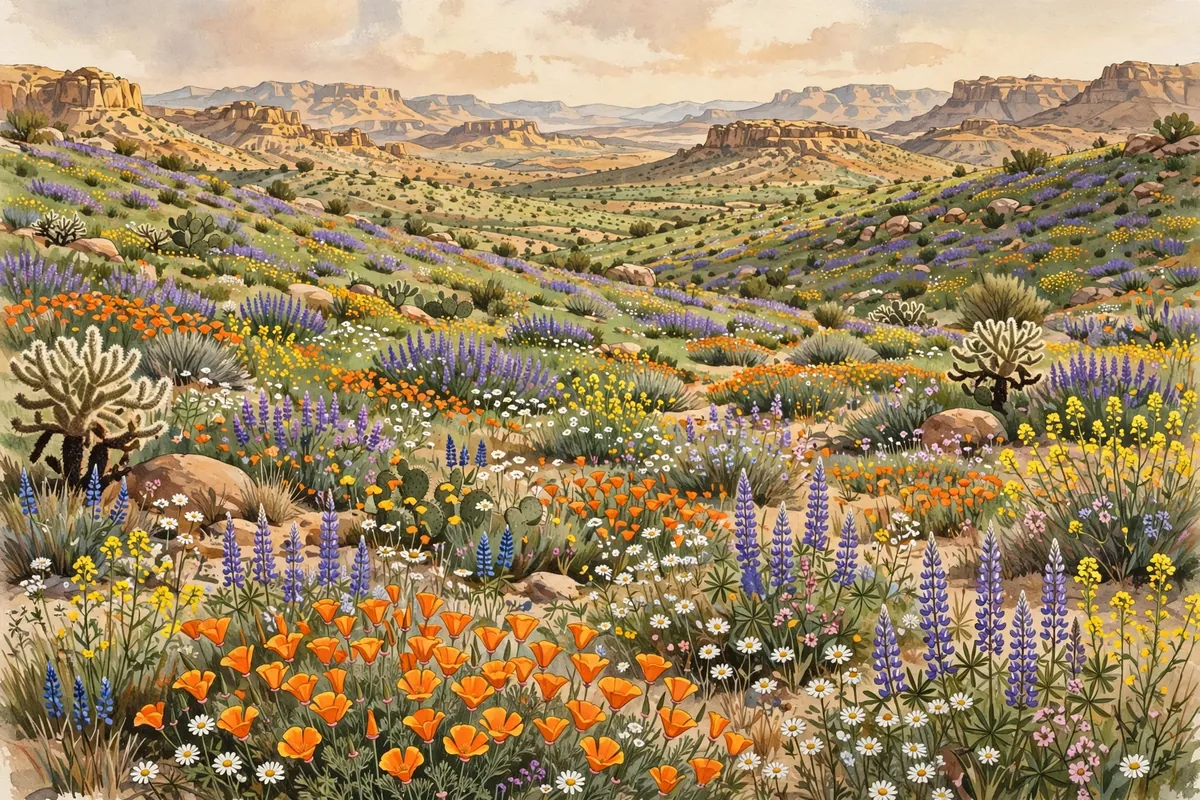
Chile isn't the only place with this spectacle. In California and Arizona, an unusually wet season can trigger what's called a superbloom, when huge numbers of dormant wildflower seeds sprout at roughly the same time. California poppies, desert bluebells, and lupines are among the stars.
Superblooms need a lucky chain of events: deep autumn rain, months of slow warming, enough cloud cover, and calm winds. In California, they typically happen about once every ten years, though 2017 and 2019 both brought big ones.
So the next time someone calls a desert lifeless, think of the Atacama. Beneath its dusty surface, countless seeds are simply waiting, ready to throw a party the moment the right rain comes.