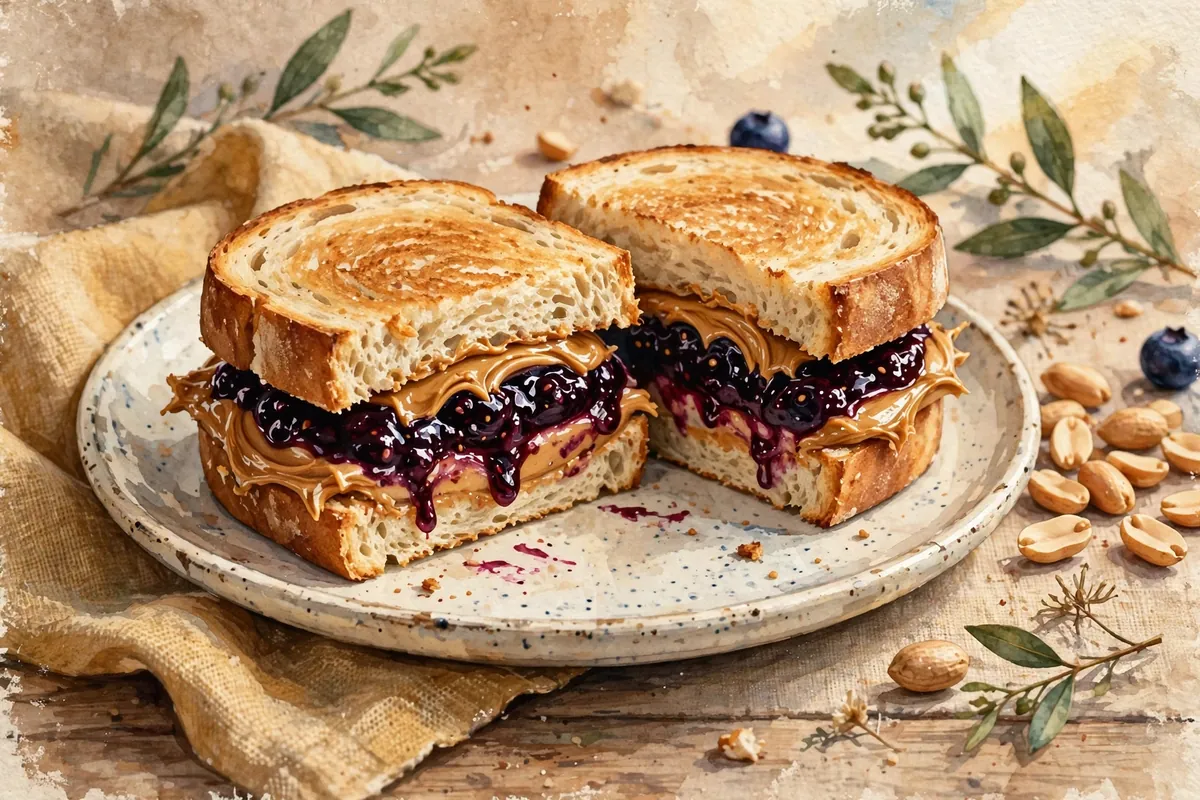
Few foods say childhood in America quite like a peanut butter and jelly sandwich. It's quick, cheap, and needs no refrigerator. So it may come as a surprise that the PB&J started life as a dainty treat for well-to-do grown-ups.
Here's the short answer. The sandwich first appeared in the early 1900s as a tearoom dish for wealthy Americans. It went mainstream once its three ingredients became cheap and easy to get, helped along by sliced bread and better peanut butter production in 1928. Hard times in the Great Depression and soldiers in World War II helped seal its place, and by the 1950s it was an American staple.
A Fancy Beginning
The first published mention of the sandwich came in 1901, in an article by Julia Davis Chandler in the Boston Cooking School Magazine. She suggested tea sandwiches made with peanut paste, as peanut butter was sometimes called, along with currant or crab-apple jelly. She believed the recipe was her own original idea. That came just five years after the first published mention of spreading peanut butter on slices of bread.
At the time, peanut butter itself was a fairly new luxury. John Harvey Kellogg, of breakfast cereal fame, received a patent in 1898 for a process that used boiled peanuts. His health institute served peanut butter to patients who needed protein they could eat without chewing. Because it first caught on at expensive health institutes like his, peanut butter started out as a food for the wealthy. Throughout that first decade of the 1900s, peanut butter was considered a delicacy.
Kids weren't far behind, though. By 1913, an article in The New York Times was recommending peanut and jelly spreads in sandwiches for children's school lunches.
Sliced Bread and Hard Times
The sandwich really took off in the 1930s, as industrial production and preservation made all three ingredients easier to get. The year 1928 was especially important, bringing both the invention of sliced bread and advances in making peanut butter.
During the Great Depression, PB&Js became a common choice for families in need. The ingredients were cheap and filling, and the sandwich offered good nutrition for the price.
Soldiers and the Postwar Boom
American soldiers in World War II sometimes ate peanut butter and jelly, since the ingredients kept for a long time. That led to a popular image of returning veterans bringing the habit home with them.
By the 1950s and 1960s, the PB&J was firmly part of American cooking. It even showed up at civil rights protests and 1960s music festivals, and vegetarians valued peanut butter as a source of protein. During the 1970s recession, it was widely recommended as an affordable meal.
A Sandwich With a Patent
Companies have found creative ways to sell the classic. Smucker's introduced Goober Grape, peanut butter and jelly together in the same jar, in 1968. In 1999, the company even received a patent for a sealed, crustless sandwich and began selling its frozen Uncrustables the following year. Their success helped Smucker's buy the Jif brand, making it the owner of both the largest peanut butter brand and the largest jelly brand.
The sandwich's place in school lunchrooms has shrunk in recent decades as awareness of peanut allergies has grown. Still, few foods carry as much nostalgia. Whether you like grape or strawberry, crusts on or off, the humble PB&J has quite a story behind every bite.