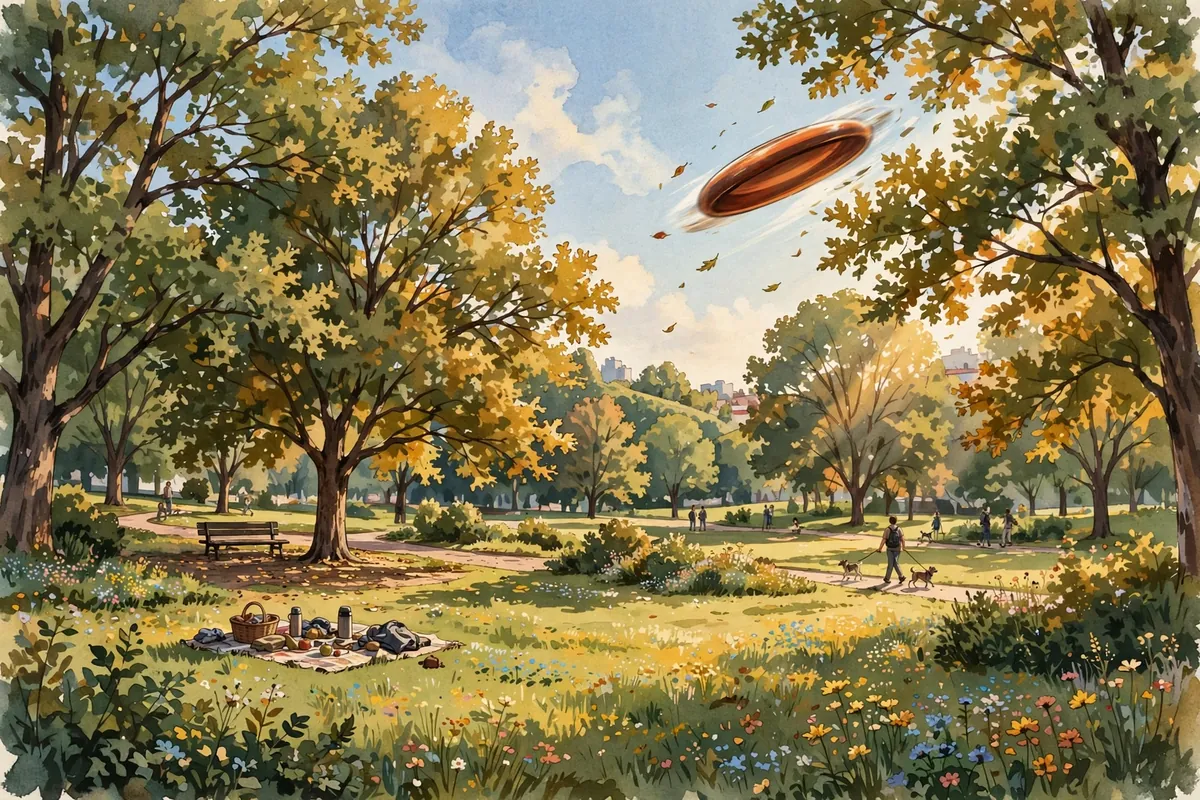
Most of us have tossed a Frisbee at a picnic or on the beach. Few of us know the name of the man who turned it into the smooth-flying disc we know today, or the remarkable way he chose to be remembered.
His name was Ed Headrick, known as “Steady Ed,” and he's often called the father of the modern Frisbee. He redesigned the disc at the toy company Wham-O and went on to invent the sport of disc golf. When he died in 2002, his ashes were mixed into a limited number of discs, just as he had requested. Some went to family and friends, and the rest were sold to help fund a museum of Frisbee history and disc golf.
Before the Frisbee Was a Frisbee
The flying disc started with another inventor, Walter Frederick Morrison. After a Thanksgiving dinner in 1937, he and his future wife tossed a popcorn can lid around for fun. Later, someone on a beach near Los Angeles offered them 25 cents for the cake pan they were throwing. Since a cake pan cost about five cents, Morrison saw a business.
After World War II, Morrison and a partner began making plastic discs. Later, he designed the Pluto Platter, the ancestor of all modern flying discs, and sold the rights to Wham-O. The company named it “Frisbee” after hearing that college students called it that, borrowing the name of the Frisbie Pie Company, whose empty pie tins students at Yale had tossed around for fun.
Enter “Steady” Ed
Ed Headrick was born in South Pasadena, California, in 1924. He fought in Europe during World War II and worked as a deep-sea welder and a water heater salesman before joining Wham-O in 1964. To prove his worth, he reportedly worked three months without pay.
Part of his job was finding a use for plastic left over from hula hoops, so he reworked the disc's mold. His version had a thicker, heavier rim, which made the disc more controllable and accurate. It also had raised ridges, nicknamed the “Rings of Headrick,” said to steady its flight. He earned a patent for the design in 1967.
Headrick pushed the Frisbee as a real sport, promoting trick throws and founding the International Frisbee Association, which grew to more than 85,000 members.
Inventing Disc Golf
The idea for disc golf came during lunch breaks, when Headrick and coworkers tossed discs at a trash can. He and friends turned trash cans, signs, and trees into targets, and sometimes snuck onto golf courses at night. His sharp aim earned him the nickname “Steady Ed.”
In 1975, he left Wham-O to focus on the game, which he named “disc golf.” That year he built the first course in Pasadena's Oak Grove Park. In 1977, he and his son Ken developed the metal basket target that catches a disc from any direction. Today, there are more than 14,000 disc golf courses around the world, many using his basket design.
One Last Flight
Headrick died on August 12, 2002. Following his wishes, he was cremated, and his ashes were molded into memorial discs. Money from the discs that were sold went toward a museum and disc golf center in Columbia County, Georgia.
It's hard to imagine a more fitting farewell. The man who spent his life making discs fly straight got to take one more trip through the air.