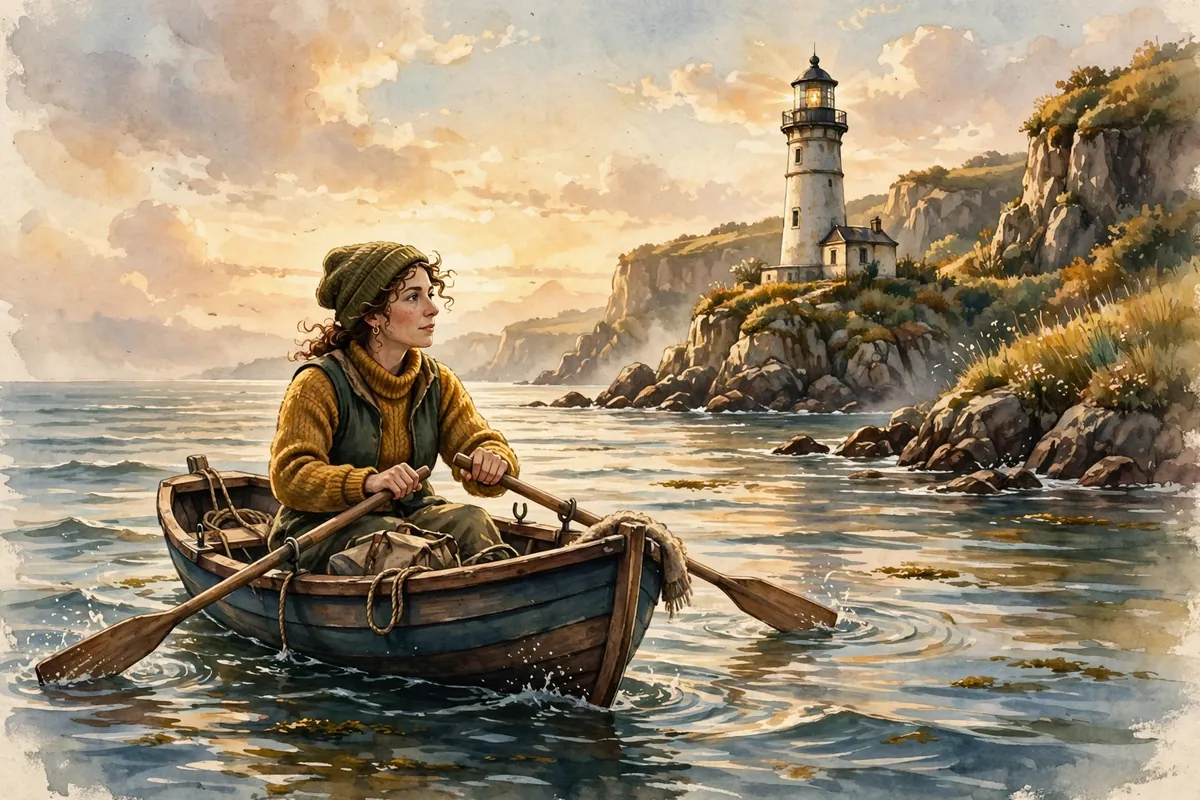
Some stories grow with each retelling. Ida Lewis, the famous lighthouse keeper of Newport, Rhode Island, is sometimes described as having saved hundreds of lives. Her real story doesn't need the exaggeration. It's dramatic enough as it is.
Here's the short answer. Ida Lewis is officially credited with saving 18 lives during her 54 years at Lime Rock Light, though unofficial reports suggest it may have been as many as 25. She kept no records of her own rescues. That's not hundreds, but it made her the best-known lighthouse keeper of her day, and newspapers called her the Bravest Woman in America.
Growing Up on a Rock
Ida's father became keeper of Lime Rock Light, on a tiny near-island in Newport's harbor, and moved the family there in 1857. Less than four months later, he suffered a stroke and was disabled. Ida, still a teenager, helped her mother keep the light burning, filling the lamp with oil at sundown and midnight, trimming the wick, and polishing the reflectors.
The rock was almost completely surrounded by water, so the only way to the mainland was by boat. By 15, Ida was known as the best swimmer in Newport. She rowed her younger siblings to school every weekday and became highly skilled with her heavy rowboat. When people said rowing was unladylike, she replied that only a donkey would consider it unfeminine to save lives.
The Rescue That Made Her Famous
On March 29, 1869, two soldiers headed for Fort Adams were crossing the harbor in a small boat during a snowstorm. The boat overturned. The young boy guiding them was lost, and the two men clung to the hull in the icy water.
Ida's mother spotted them and called out. Ida, who had a cold, ran to her boat without stopping for a coat or shoes. With her younger brother's help, she hauled both men aboard and brought them to the lighthouse. One later gave her a gold watch, and soldiers at the fort collected $218 for her.
A reporter from the New-York Tribune soon arrived, and her fame exploded. Visitors poured in, sometimes a hundred a day, and her father counted 9,000 in one summer. She met President Ulysses S. Grant, and leaders of the women's suffrage movement, including Elizabeth Cady Stanton, held her up as an example of women's strength.
Honors at Last
Ida did the keeper's work for years before getting the title. She was finally appointed official keeper in 1879, with help from an admirer, General Ambrose Burnside. Her salary of $750 a year made her, for a time, the highest-paid lighthouse keeper in the country.
In 1881, she became the first woman to receive the government's rare Gold Lifesaving Medal, for rescuing two soldiers who had fallen through the ice. Her last recorded rescue came at age 63, when she pulled a friend from the water.
A Lasting Legacy
When Ida died in 1911, ships' bells across Newport Harbor tolled for her. In 1924, Lime Rock was renamed Ida Lewis Rock, and the lighthouse became the Ida Lewis Rock Lighthouse, the only such honor ever paid to a U.S. keeper. Today it's the clubhouse of the Ida Lewis Yacht Club, whose flag shows 18 stars, one for each person she saved.
Eighteen lives may not be hundreds, but each one was real. And for a young woman rowing into freezing storms, that's a legacy worth remembering.