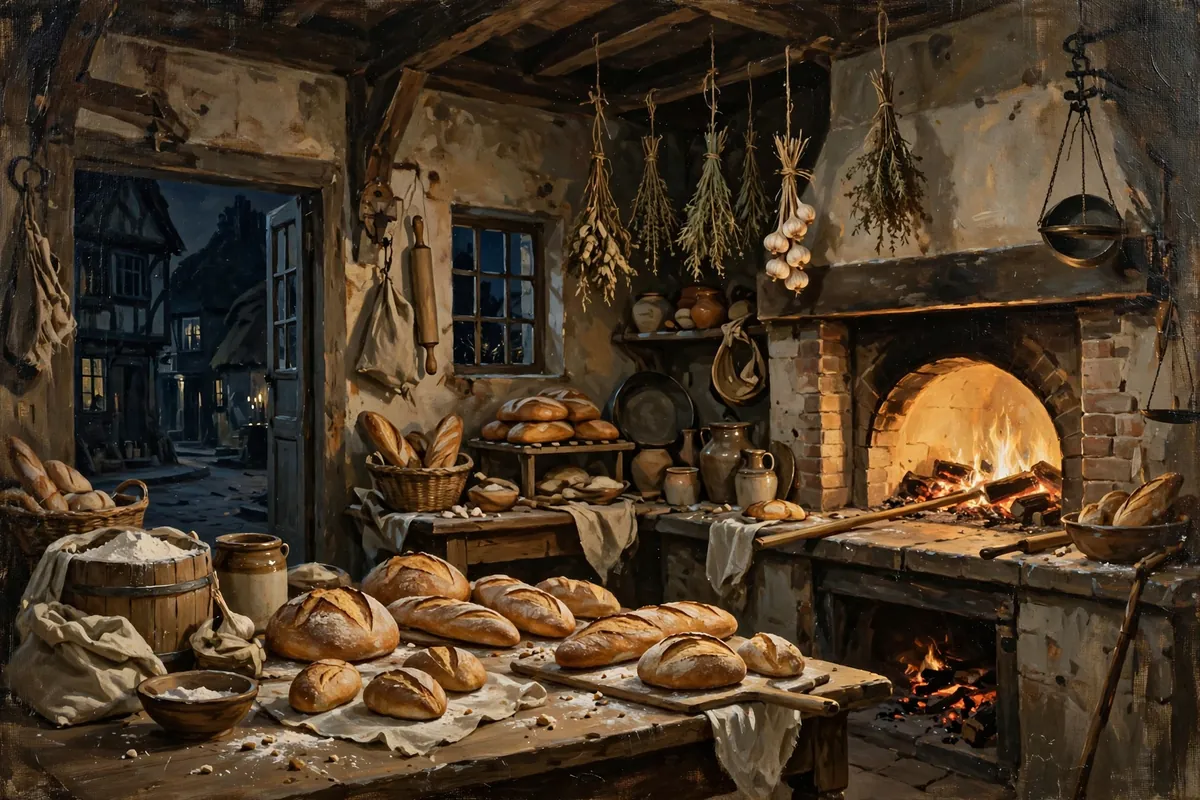
In the early hours of Sunday, September 2, 1666, a London baker named Thomas Farriner woke to smoke seeping under his bedroom door. His bakery downstairs on Pudding Lane was on fire. It looked like a disaster for one family. It turned into a disaster for an entire city.
Yes, the Great Fire of London started in a bakery. Farriner's shop on Pudding Lane is where the flames broke out shortly after midnight. Strong winds, crowded wooden houses, and a slow response turned it into a firestorm that burned for days and destroyed an estimated 13,200 houses, 87 parish churches, and St Paul's Cathedral.
A Baker With a Royal Customer
Farriner was a well-known baker who supplied bread to the Royal Navy during England's war with the Dutch. That night, he and his daughter escaped through an upstairs window to the house next door. Their maid was too frightened to follow. When the house burned down, she became the fire's first victim.
Neighbors tried to put out the blaze. About an hour later, local constables decided the houses next door should be torn down to stop the spread, a common firefighting method of the time. The owners protested, so the Lord Mayor, Sir Thomas Bloodworth, was called in.
The Mayor Who Shrugged
Bloodworth refused to order the demolitions, partly because most of the buildings were rented and their owners couldn't be found. He is famously quoted as saying, rudely, that a woman could put the fire out by relieving herself on it. Then he left.
Some historians argue he couldn't have done much anyway, given the firefighting tools of the time. Either way, by the time large-scale demolitions were ordered that Sunday night, the wind had already whipped the fire into a firestorm. The diarist Samuel Pepys watched from the Tower of London and later urged King Charles II to order houses pulled down.
A City Built to Burn
London was a tinderbox. Its street plan was essentially medieval, a maze of narrow, winding alleys. Wood and thatch had been banned for centuries, but builders kept using them because they were cheap. Many houses had upper floors that jutted out over the street, so the top stories nearly touched across the alleys.
The fire was finally beaten when the strong east wind dropped and soldiers from the Tower of London used gunpowder to blow up houses, creating firebreaks. About 15 percent of the city's housing was gone.
Officially, only a handful of deaths were recorded, which is why the toll is traditionally put in single digits. Some historians think the real number was much higher, counting poor residents whose deaths went unrecorded and refugees who died in the hard winter that followed.
Blame, Rebuilding, and a Monument
Frightened Londoners looked for someone to blame. A French watchmaker named Robert Hubert confessed to starting the fire at the bakery and was hanged. It later turned out he hadn't even arrived in London until two days after the fire began.
London rebuilt with wider streets, and a new law banned wood on the outside of buildings in favor of brick and stone. Farriner rebuilt his business on Pudding Lane. Near the spot stands the Monument, a column designed by Christopher Wren and Robert Hooke. It is 202 feet tall and stands 202 feet from where the fire started.
So the next time you pull a tray of cookies from the oven, spare a thought for a London baker whose bad night changed the shape of a great city.