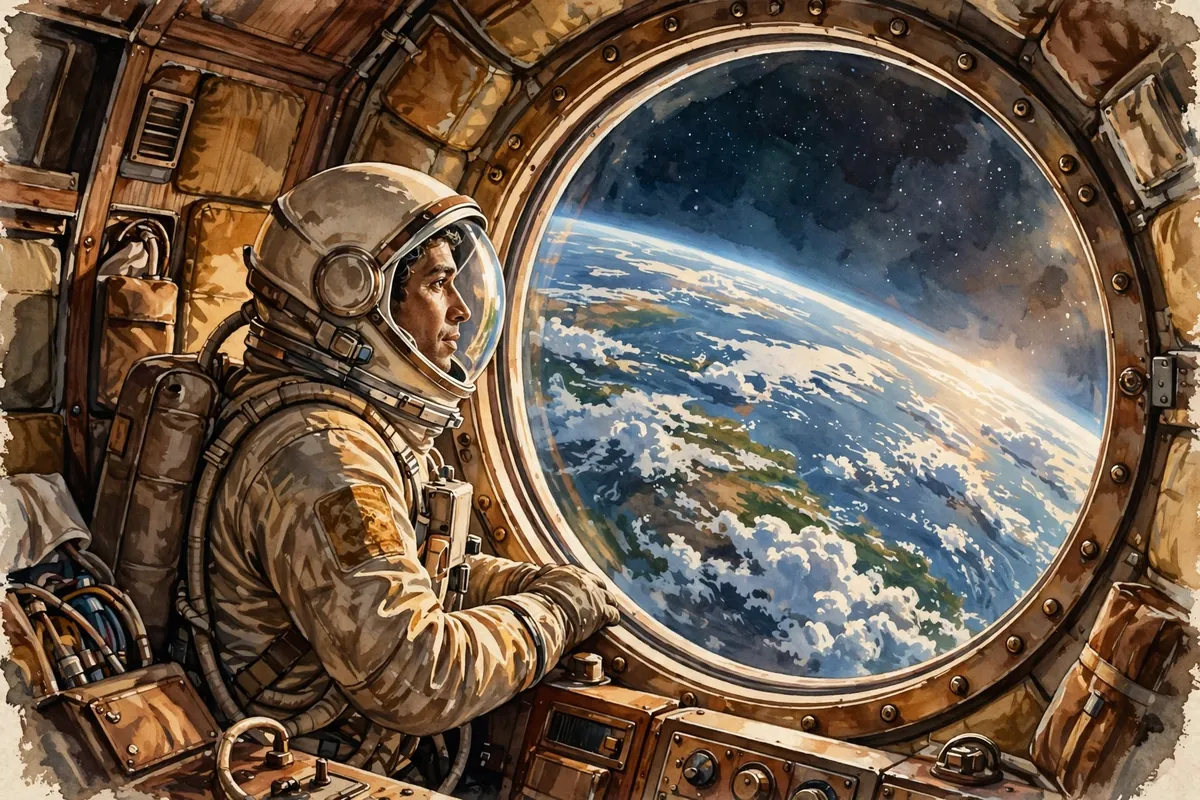
Seeing Earth from space has moved plenty of astronauts. It's easy to imagine someone floating by the window, watching oceans and clouds drift past, with a tear in their eye. But in orbit, that tear doesn't behave the way it does down here.
The short answer is that astronauts can produce tears, but they can't really shed them. On Earth, gravity pulls tears down your cheeks. In the weightlessness of orbit, there's nothing to make them fall, so the liquid sticks together and gathers into a ball around the eye.
Where Tears Normally Go
Your eyes make tears all day long, not just when you cry. Glands above the eyes release fluid, and every blink spreads it across the surface of the eye to keep it moist and clear.
That fluid then drains through tiny openings near the inner corners of your eyelids and down a passage into your nose. That's why a good cry often comes with a runny nose. When there are more tears than the drains can handle, the extra spills over and runs down your face, thanks to gravity.
Why Space Changes Everything
In orbit, gravity can't drag that overflow downward. Water clings to surfaces and to itself, which is why liquid in space tends to form wobbly blobs and spheres. So instead of rolling down a cheek, extra tears pool together into a growing bubble of liquid on the eye.
The liquid just sits there until it's wiped away. It's one of many small surprises that come with living without weight, and a good reminder of how much quiet work gravity does for us every single day on the ground.
More Strange Things Space Does to the Body
Tears aren't the only fluid that misbehaves. Without gravity pulling blood and other fluids toward the legs, those fluids shift upward. That's what gives astronauts the round, puffy moon-face look you often see in photos from orbit. Many also get stuffy noses.
Astronauts get taller, too. Within about a month, the spine fully stretches out in weightlessness, adding roughly an inch of height. After a couple of months, the thick skin on the bottoms of the feet can peel off from lack of use, while the tops of the feet get sore from hooking under handrails to stay in place.
Smells behave oddly as well. In microgravity, odors spread quickly through the cabin. In one test, NASA even found that the smell of cream sherry triggered the gag reflex.
The Serious Side of Weightlessness
Most of these quirks are harmless, but long stays in space do take a real toll. Weightlessness can weaken muscles and bones, slow parts of the cardiovascular system, affect eyesight, and change the immune system. That's why space agencies study astronauts so closely before, during, and after their missions.
Short trips bring their own challenges. Many astronauts experience space adaptation syndrome, a temporary nausea while the body gets used to weightlessness. Cosmonauts on very long missions have also described fatigue and listlessness, sometimes called asthenization syndrome, though the evidence for it is still inconclusive.
So if you ever find yourself floating above the planet and feeling a little emotional, go right ahead. Just keep a tissue handy, because those tears are going to stay right where they are until you wipe them away. Back on Earth, gravity will happily take over the job again.