Few foods feel as homey as macaroni and cheese. It shows up at potlucks, holiday tables, and school cafeterias, and it's been called the ultimate comfort food. But this humble favorite once had a much fancier reputation.
Here's the short history. Macaroni and cheese traces back to cheese and pasta casseroles in medieval England. A recipe appeared in an English cookbook in 1769, and the dish reached America's elite tables around 1800, with Thomas Jefferson serving "a pie called macaroni" at a state dinner in 1802. It became an everyday food much later, especially after boxed mac and cheese arrived in 1937.
An English Cookbook Classic
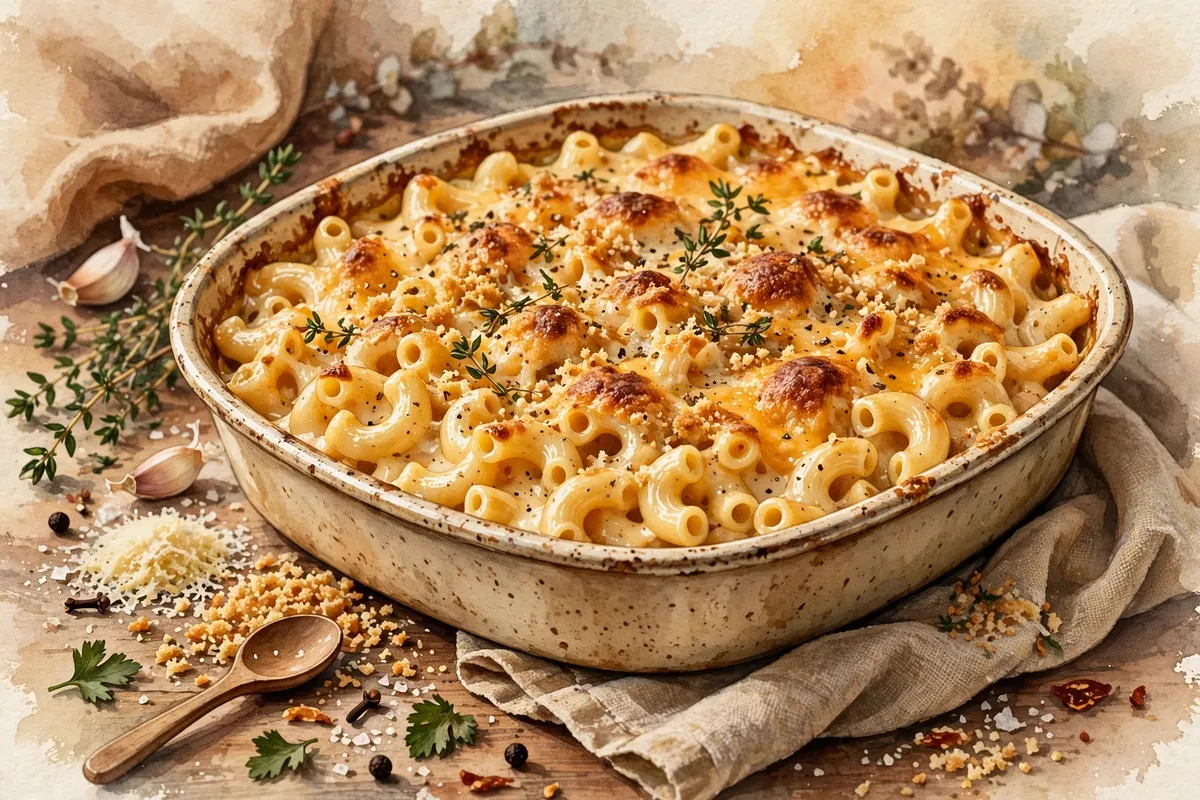
In 1769, Elizabeth Raffald's cookbook, The Experienced English Housekeeper, gave a recipe for macaroni boiled until tender, mixed with a creamy sauce, topped with Parmesan, and baked until bubbly and golden. That sounds pretty close to what many of us make today.
Other English cooks followed. Eliza Acton's 1845 cookbook had a version called "Macaroni a la Reine," with rich white cheese melted into cream and seasoned with cayenne pepper. In the UK, the dish is still called macaroni cheese.
A Dish Fit for a President
In America, the story is tied to Monticello. Thomas Jefferson was fascinated by pasta, and when he served as minister to France, he brought along James Hemings, an enslaved man from his household who was trained there as a French chef. Hemings is widely credited with introducing macaroni and cheese to the United States, along with other French dishes such as crème brûlée and meringues.
In France, Hemings learned a dish of pasta and cheese and prepared what was called a macaroni pie, the ancestor of the American version. In 1802, Jefferson served "a pie called macaroni" at a state dinner. One guest, the Reverend Manasseh Cutler, wrote down the menu and apparently wasn't a fan.
In 1824, Mary Randolph, a cousin of Jefferson, included a recipe called "macaroni and cheese" in her cookbook The Virginia House-Wife. It had just three ingredients, macaroni, cheese, and butter, layered and baked in a hot oven. Some culinary historians consider it the most influential American cookbook of the 1800s.
From Fancy to Everyday
By the mid-1880s, macaroni and cheese recipes had spread to cookbooks as far west as Kansas and Missouri. Factories made the pasta and cheese cheaper, and as more people could afford it, the dish lost its upper-class glow. Similar recipes showed up in an 1852 household guide and in Godey's Lady's Book in 1861.
The Blue Box Arrives
The boxed version began with a salesman in St. Louis named Grant Leslie, who used rubber bands to attach packets of Kraft processed cheese to boxes of pasta to help sell more noodles. Kraft hired him, and in 1937 the company launched its boxed mac and cheese with the slogan "make a meal for four in nine minutes."
It was an instant hit during the hard years of the Great Depression. During World War II rationing, it became even more popular, since two boxes could be had for one food ration stamp, or a single box for 19 cents.
In Canada, the same product is called Kraft Dinner, and some writers there even call it the national dish. So whether yours is baked with a crispy top or stirred up from a box, every forkful carries more than 250 years of history.