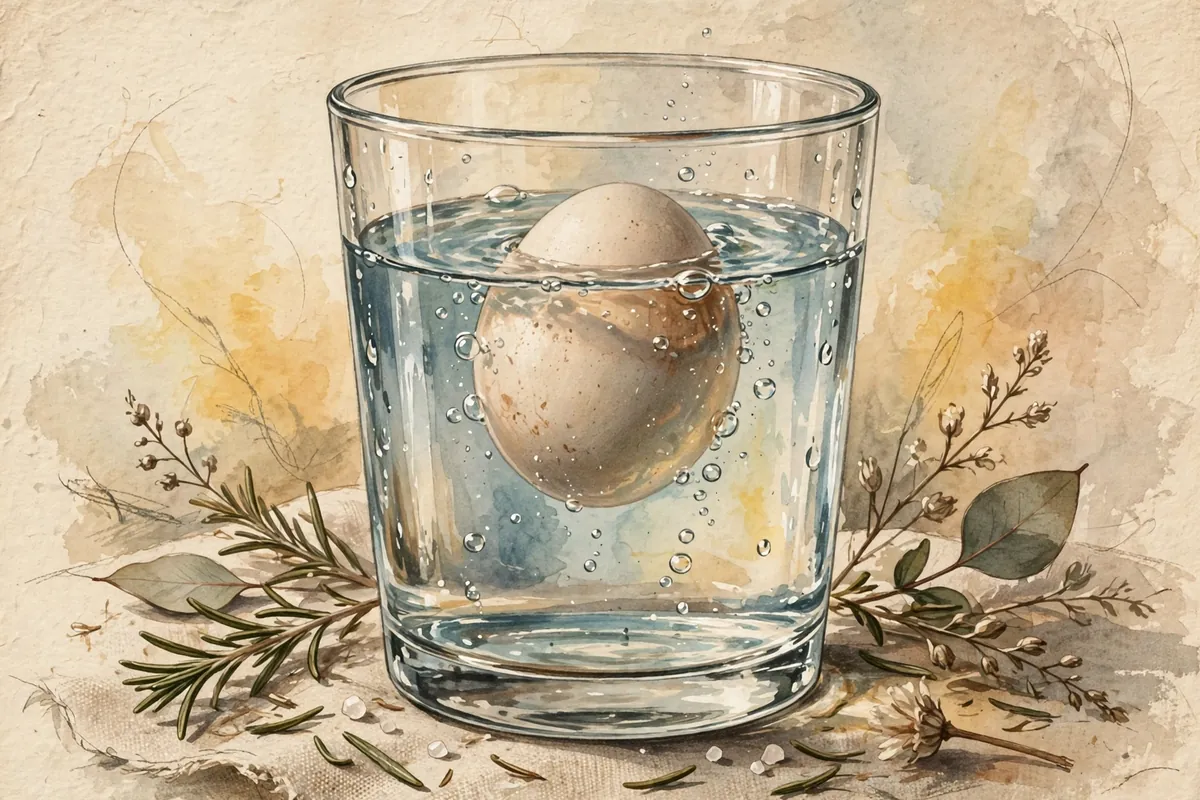
It's one of the oldest tricks in the kitchen. Not sure how old those eggs are? Set one gently in a bowl of water. If it sinks and lies on its side, it's fresh. If it bobs to the surface, something's changed. But how can a simple bowl of water tell you an egg's age?
Here's the short answer. Every egg has a small pocket of air at its wide end. As an egg ages, moisture slowly escapes through tiny pores in the shell, and air is drawn in to take its place. The air pocket grows, the egg becomes less dense, and it starts to rise in water. A very old egg will float, and it shouldn't be eaten.
The Air Pocket You Never Noticed
When an egg is first laid, it's warm. As it cools, the contents shrink a little and pull away from the shell, leaving a small air cell at the larger end. You've probably seen it as a little dent or hollow when you peel a hard-boiled egg.
The shell may look solid, but it isn't airtight. A chicken eggshell is made of about 95 to 97 percent calcium carbonate crystals, and between those crystals are narrow pores that let gases pass through. That's essential for a developing chick, which needs to breathe. But it also means an egg is slowly trading water for air every day it sits.
Sink, Stand, or Float
As the air cell grows, the wide end of the egg rises higher and higher in the water. A very fresh egg lies flat on the bottom. An older egg tips up so its wide end points toward the surface. A very old egg floats.
Egg producers use the same idea in a more precise way. Eggs are graded by the size of the air cell, measured by shining a bright light through the shell, a process called candling. A very fresh egg has a small air cell and earns a grade of AA. As the air cell grows and quality drops, the grade moves to A and then B.
A Freshness Test, Not a Safety Test
Here's an important point. The float test tells you about age, not about germs. Improperly handled eggs can contain Salmonella bacteria, which can cause serious food poisoning, and an egg can carry it whether it sinks or floats. A floating egg should be thrown out, especially if it smells bad when cracked, but a sinking egg still needs safe handling.
Health experts advise refrigerating washed eggs, using them within about two weeks, and cooking them thoroughly. If you have specific health concerns about eggs, talk to your doctor.
Why Americans Refrigerate Eggs
Ever notice that some European stores keep eggs on regular shelves? There's a reason. In the United States, eggs are washed before they're sold. That cleans the shell but wears away its natural protective coating, called the cuticle. So the USDA recommends keeping eggs in the refrigerator to keep Salmonella from growing.
In Europe, eggs usually aren't washed. The shells may look dirtier, but the cuticle stays intact, and they don't need refrigeration. In the United Kingdom, hens are vaccinated against Salmonella.
So the next time you find a forgotten carton in the back of the fridge, fill a bowl with water and let the eggs tell their story. That little air pocket has been keeping track of time all along.