The Moon looks like the driest place imaginable. No oceans, no rain, no clouds, just gray dust baking in the sunlight. After the Apollo astronauts brought back rock and soil samples, scientists largely concluded the Moon had no water at all. So how did ice end up becoming one of the hottest topics in lunar exploration?
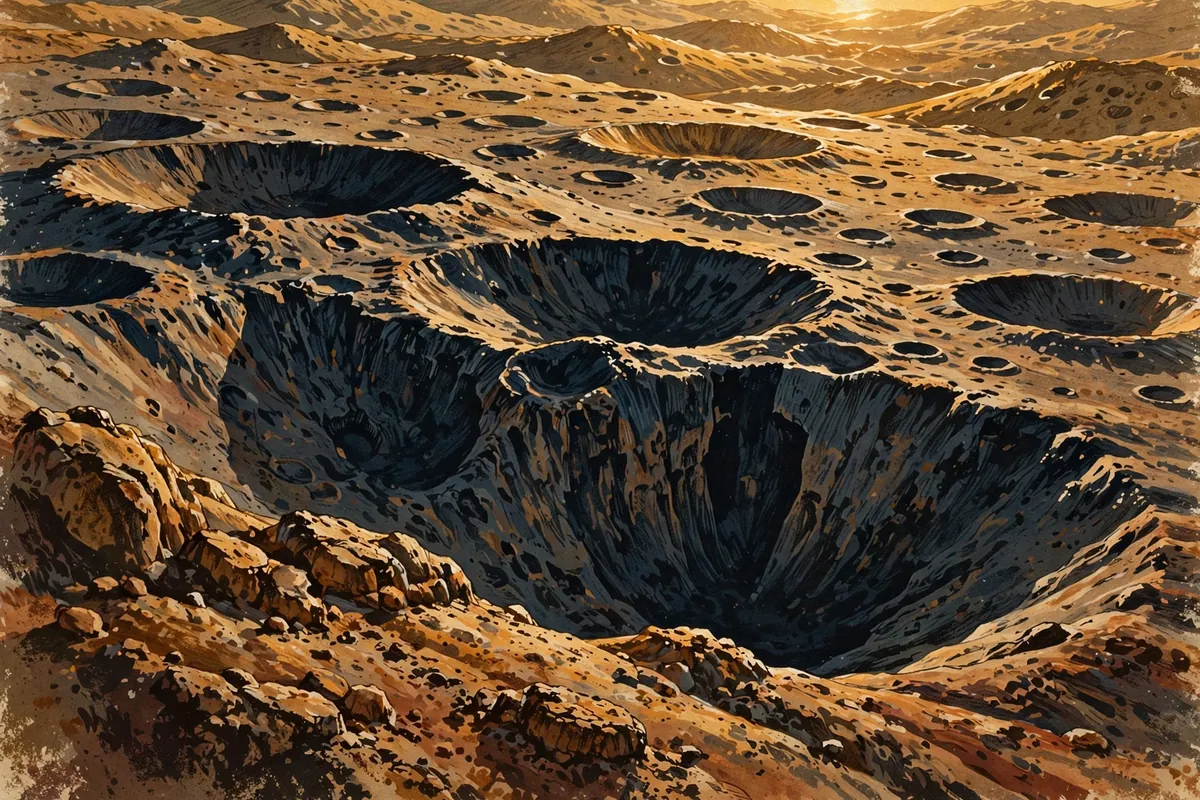
The answer lies in the shadows. Near the Moon's poles, some craters are so deep and the Sun sits so low that sunlight never reaches their floors. These permanently shadowed craters act as cold traps, and spacecraft have found water ice hiding inside them. In 2018, scientists confirmed water ice in multiple locations near the poles.
Cold Traps in the Dark
On most of the Moon, any water vapor at the surface gets broken apart by sunlight, and the hydrogen and oxygen escape into space. But in craters that never see the Sun, it stays cold enough for water to freeze and stay frozen. Scientists believe these cold traps collect water that drifts there over time.
The idea isn't new. In 1961, researchers at Caltech first suggested that ice might be lurking in the floors of polar lunar craters. Later radar measurements estimated thousands of square miles of permanent shadow near the poles, with more of it around the south pole than the north.
Crashing a Rocket to Find Water
One of the most dramatic experiments came on October 9, 2009. NASA steered a spent rocket stage into Cabeus crater near the Moon's south pole. Right behind it flew the LCROSS spacecraft, which passed through the plume of debris and measured what was inside.
It found signs of water. A later analysis put the water concentration in the debris at around 5.6 percent by mass. The plume also contained a mix of other substances, including carbon monoxide, ammonia, and even mercury.
In 2018, another analysis using an instrument aboard India's Chandrayaan-1 spacecraft found more direct evidence of ice near the surface around both poles. At the north pole the ice is scattered in patches, while around the south pole it's more concentrated.
Not Skating Rinks
Before you picture frozen lakes, the Moon's ice isn't in thick sheets. Scientists think it's mostly in small chunks, less than about 4 inches across, mixed into the lunar soil, or bonded with minerals. Thick deposits of pure ice near the surface appear unlikely.
Water even shows up beyond the poles in tiny amounts. Researchers have found water molecules trapped in volcanic glass beads from the Moon, and traces in the Moon's thin atmosphere and on its sunlit surface.
Why Astronauts Care So Much
Water is heavy and hugely expensive to launch from Earth. If there's enough ice on the Moon, future explorers could mine it for drinking water and to grow plants. Using electricity, the water could also be split into hydrogen and oxygen, providing air to breathe and the ingredients for rocket fuel.
That's why the lunar south pole is considered a prime spot for a future outpost. Nearby mountain peaks get sunlight for long stretches, which could power solar panels, and NASA's Artemis program has its sights on the region for crewed landings. The ice could also hold clues about the early solar system, since these cold traps preserve material from long ago.
So the next time you see the Moon glowing in the night sky, remember that its brightest face hides some very dark corners, and in them, a little frozen treasure.