It sounds like the setup to a joke: a flood of beer pouring through the streets of London. But on October 17, 1814, it really happened, and the result was no laughing matter. A giant wooden vat burst at a brewery, and a wave of dark beer swept into the homes of some of the city's poorest people.
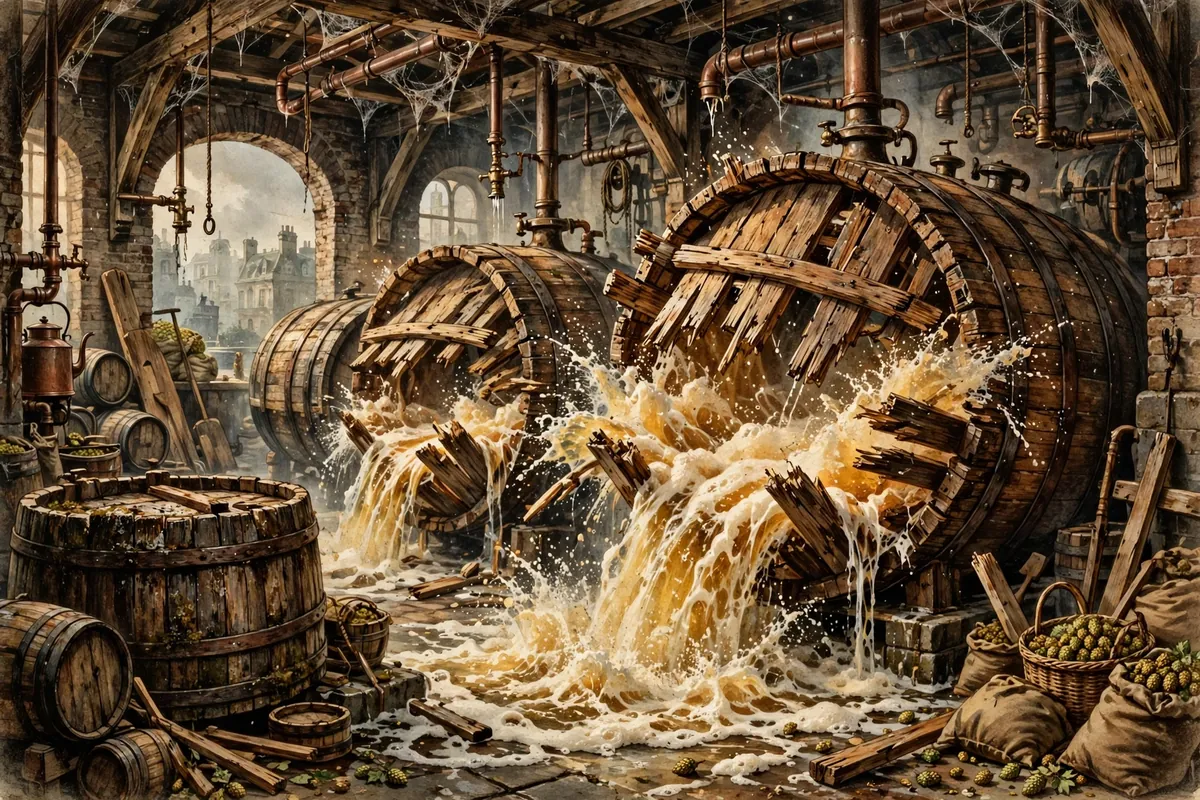
The disaster struck at Meux & Co's Horse Shoe Brewery, near the corner of Tottenham Court Road and Oxford Street. A 22-foot-tall vat of fermenting porter burst, knocking open another vessel and smashing several barrels. Somewhere between about 154,000 and 388,000 U.S. gallons of beer escaped. Eight people were killed.
A Brewery Built for Giant Vats
In the early 1800s, Meux was one of the two largest breweries in London. It made only porter, a dark beer first brewed in London and the city's most popular drink. Porter was left to mature in enormous vessels for months, sometimes up to a year.
Sir Henry Meux built a wooden vat 22 feet tall, strengthened with about 80 tons of iron hoops. He was following his father's lead. His father had built the largest vat in London at another brewery.
The Hoop That Slipped
Around 4:30 that afternoon, storehouse clerk George Crick noticed that one of the 700-pound iron bands around a vat had slipped. The vat was filled almost to the top with ten-month-old porter. Bands slipped a few times a year, so Crick wasn't alarmed, and his supervisor told him no harm would come of it.
About an hour later, as Crick stood nearby holding a note asking for repairs, the vat burst without warning. The rush of beer knocked out the brewery's back wall, which was 25 feet high. A wave of porter about 15 feet high swept into New Street, destroying two houses and badly damaging two others. Bricks from the wall were thrown upward and came down on the roofs of houses on nearby Great Russell Street.
Tragedy in St Giles
Behind the brewery lay the St Giles rookery, a crowded slum. The land was low and flat, with poor drainage, so the beer poured into cellars where people lived. Some had to climb onto furniture to keep from drowning.
The victims included a four-year-old girl having tea with her mother, a 14-year-old servant girl buried under the collapsed wall, and five mourners at a wake an Irish family was holding for a two-year-old boy. The public came to pay respects and donated money for the funerals.
Myths and Aftermath
Stories later spread of crowds scooping up free beer and mass drunkenness. But brewing historian Martyn Cornell notes that newspapers of the time reported nothing of the kind. Instead, they described the crowds as well-behaved. Cornell also points out that the popular press of the day disliked the Irish immigrants living in St Giles, so any misbehavior would surely have been reported.
The coroner's jury ruled the deaths accidental, so the brewery didn't have to pay compensation. Still, the disaster cost it about £23,000, and it was saved from bankruptcy when the government refunded about £7,250 in taxes on the lost beer. Afterward, the brewing industry gradually moved away from huge wooden vats. Today, London's Dominion Theatre stands where the brewery once was, a quiet spot with a very strange story.