Imagine sailing across the ocean to check on your family, only to find their village empty. No people, no houses, no boats. Just a single word carved into a wooden post. That's what happened to John White in 1590, and the mystery he found has puzzled Americans for more than four centuries.
The short answer is that nobody knows for certain what happened to the roughly 115 English colonists left on Roanoke Island, in what is now North Carolina. The leading theory is that at least some of them moved and joined nearby Native American communities, possibly on Croatoan Island. But no one has found conclusive proof.
A Colony Left Behind
The colony was backed by Sir Walter Raleigh, with John White as governor. In 1587, about 115 people signed on, mostly middle-class Londoners, including women and children. White's pregnant daughter Eleanor came along with her husband, Ananias Dare.
Soon after arriving, Eleanor gave birth to Virginia Dare, the first English child born on what would become U.S. soil. White then sailed back to England for more supplies, planning to return in 1588. But war between England and Spain delayed him until 1590.
The Word on the Post
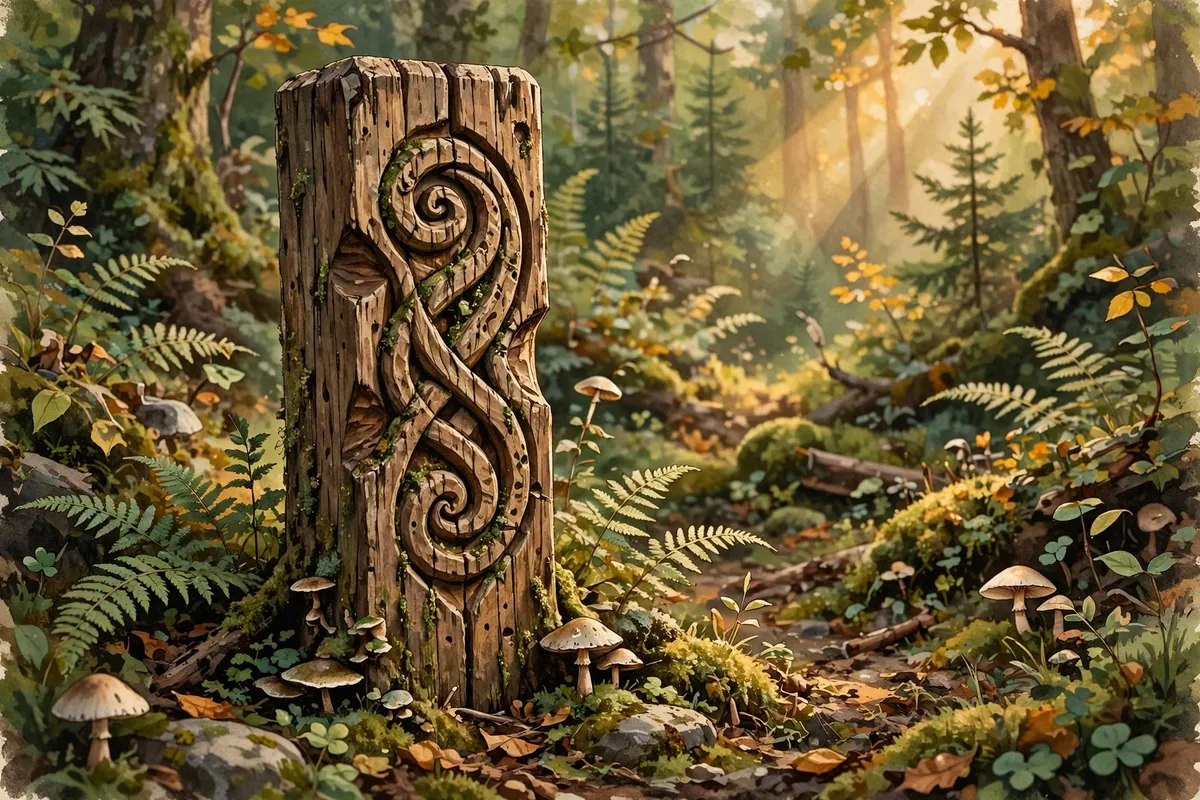
White landed on August 18, 1590, his granddaughter's third birthday. His party found footprints in the sand and the letters CRO carved into a tree. At the settlement, the houses had been taken apart and anything portable was gone. Carved into one of the posts near the entrance was the word CROATOAN.
White felt hopeful. Before leaving, the colonists had agreed to carve a secret token showing where they had gone, and to add a cross if they were in danger. There was no cross. Croatoan was the home of friendly people, including Manteo, who had helped the English.
Then bad luck struck. Rough seas and a snapped anchor cable made it too risky to keep searching, and the ship eventually returned to England. White never found his family.
Clues, Theories, and Dead Ends
Talk of the colonists joining Native tribes appears in writing as early as 1605. In the early 1700s, explorer John Lawson met the Hatteras people, who said some of their ancestors had been white. He noted that some of them had gray eyes.
Archaeologists have since found European items at a Native village site on Hatteras Island, which formed when the old Croatoan Island merged with its neighbor. The finds include part of a sword and part of a gun. Other experts caution that no clear evidence shows English people actually lived there.
Another clue came from a map. In 2011, researchers noticed patches on one of White's maps. Under one was a symbol for a fort inland. Diggers at that spot, nicknamed Site X, found Tudor pottery and weapon fragments, though it's hard to rule out other sources for them.
A Brutal Drought
Nature may have played a part, too. Scientists studying tree rings from old bald cypress trees found an extreme drought in the region between 1587 and 1589. The year 1587 was the worst growing season in an 800-year record, a hard time for any newcomers trying to grow food.
Today, Virginia Dare's birthday has been celebrated on Roanoke Island since the 1880s, and the play The Lost Colony has been staged there since 1937. The mystery may never be fully solved, but each new clue keeps the story of those brave families alive.