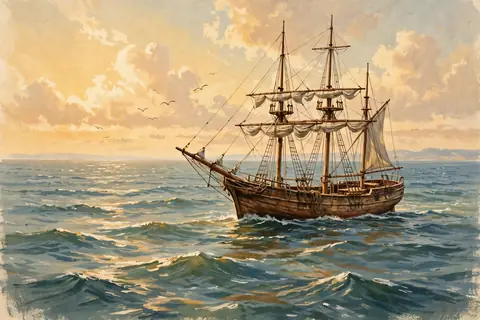
Every November, millions of American families gather around a turkey and give thanks. Most of us learned in school that the tradition started with the Pilgrims and their Native neighbors in 1621. That's partly true, but the real event looked quite different from the picture in our heads.
The short version: in the autumn of 1621, after bringing in a good harvest, the Plymouth colonists held a three-day celebration, and the Wampanoag leader Massasoit arrived with about 90 of his men. The people there didn't call it a Thanksgiving at all. It was a harvest feast, and only much later did it get the famous nickname.
A Hard First Year
The Pilgrims had settled in eastern Massachusetts, on land once home to the Patuxet people, who had died in a devastating epidemic between 1614 and 1620. The colonists' own first winter was brutal. Half of them died.
In the spring, two Native men who spoke some English came to the settlement at Massasoit's request: Samoset and Tisquantum, better known as Squanto, the last living member of the Patuxet. They helped arrange a peace treaty and trade. Squanto taught the Pilgrims to catch eel and grow corn and served as their interpreter. Massasoit also gave the colonists food when their supplies from England ran short.
Massasoit had his own reasons. His people had also been weakened by disease, and he hoped for an alliance against a rival group, the Narragansett, who had largely been spared.
What Actually Happened at the Feast
Only two colonists wrote about it. Edward Winslow described how the governor sent four men out hunting birds, and they brought back enough to feed the group for almost a week. Massasoit came with some 90 men, and for three days they were entertained and feasted. The Wampanoag went out and killed five deer, which they gave to the colonists' leaders.
Nobody knows the exact date. One historian at Plimoth Plantation put it somewhere between late September and early November 1621, most likely around Michaelmas, a traditional harvest holiday on September 29.
What Was on the Menu
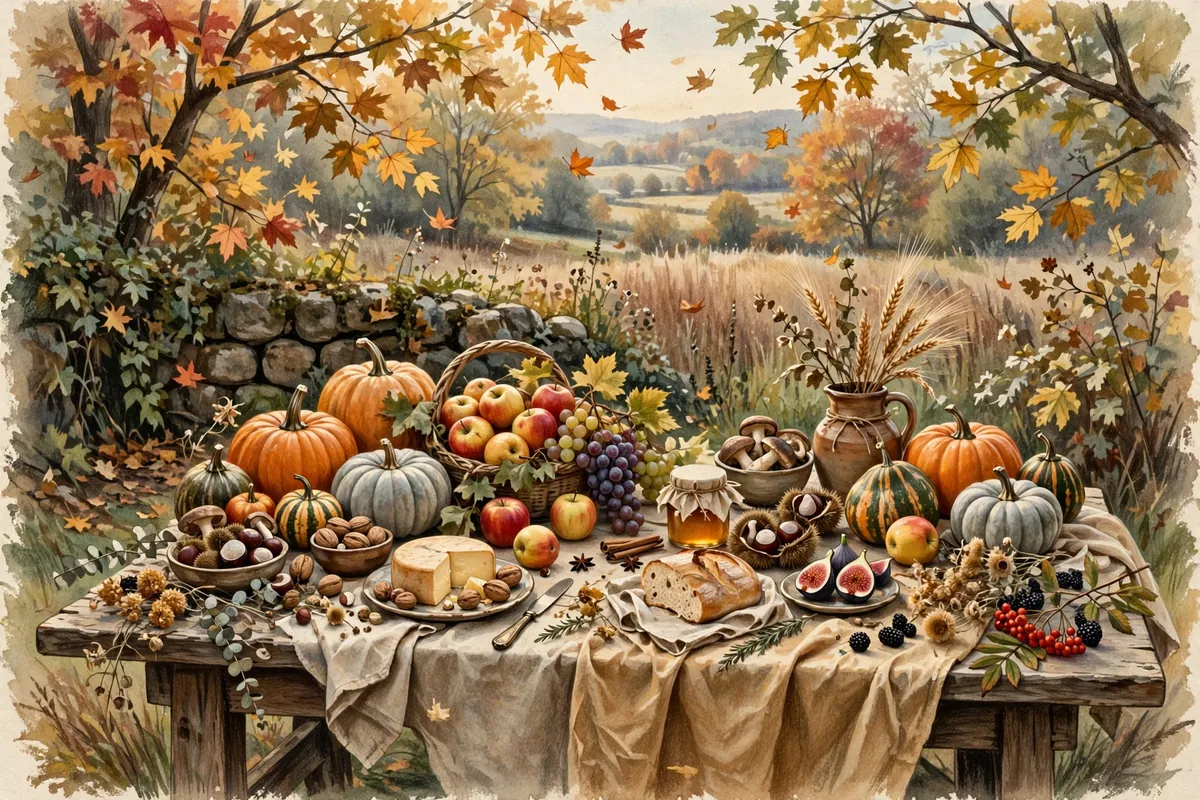
Governor William Bradford wrote that there was plenty of cod, bass, waterfowl, and wild turkeys, plus venison and corn. So turkey may well have been there, but it was far from the only thing. The local diet also included fish, eels, shellfish, and a Wampanoag dish called nasaump, boiled cornmeal mixed with vegetables and meat.
Some favorites were missing entirely. There were no potatoes, which hadn't yet spread from South America, and no pies, because there was no butter, wheat flour, or sugar.
How It Became "The First Thanksgiving"
Here's the surprising part. The 1621 feast was largely forgotten for more than a century. Bradford's history wasn't published until the 1850s, and Winslow's booklet seemed lost until a copy was found in Philadelphia in 1820. When it was reprinted in 1841, the editor, Alexander Young, was the first to call the feast "the first Thanksgiving."
Meanwhile, New England towns had been holding their own days of thanksgiving for generations. The first known official one at Plymouth was declared in 1623. Then a magazine editor named Sarah Josepha Hale spent years campaigning for a national holiday. In the middle of the Civil War, prompted by her editorials, President Abraham Lincoln proclaimed a national Thanksgiving in 1863.
So the next time you pass the mashed potatoes, you can share a little history with the table. The first feast had deer, eels, and corn mush instead of pie, but the spirit of gathering together after a hard year is something those early diners would recognize.