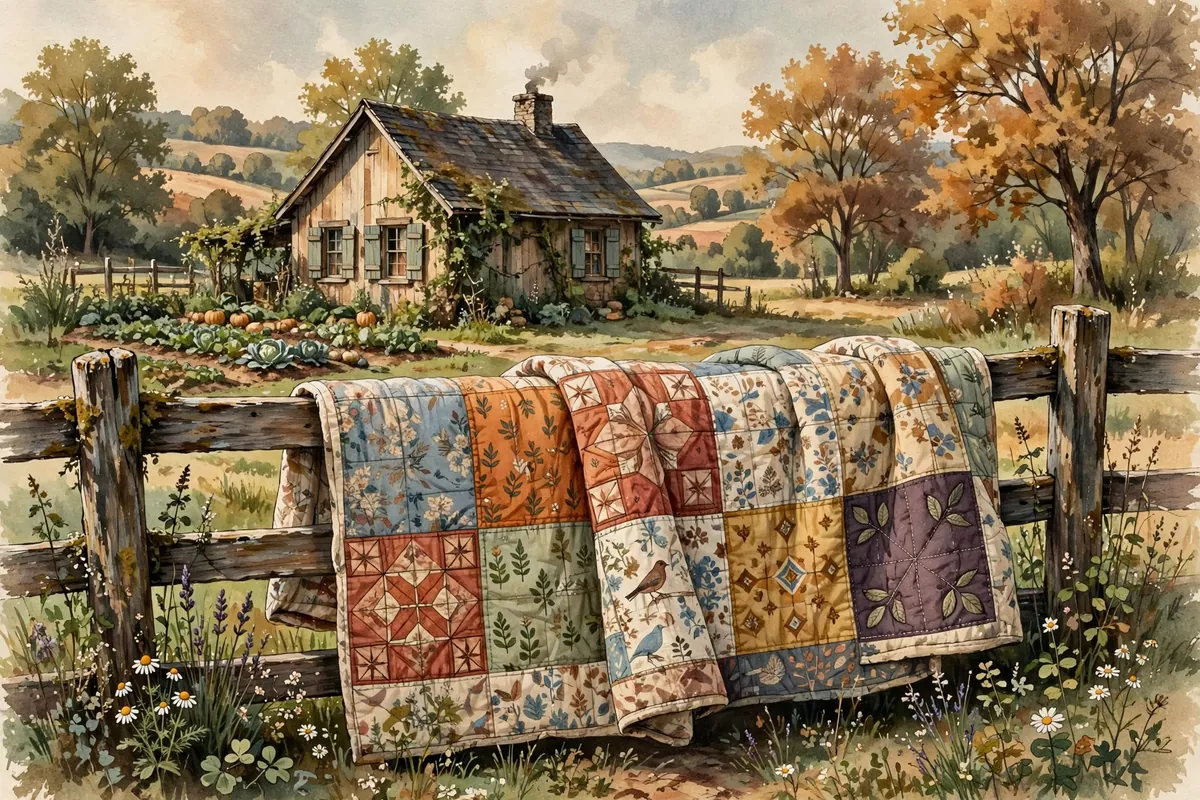
Picture a patchwork quilt draped over a farmhouse fence. A popular story says quilts like this once carried secret directions for people escaping slavery, each pattern a hidden message. It's a moving image. But how much of it is true, and what secret signals did the Underground Railroad really use?
Here's the short answer: the Underground Railroad did rely on secret language. Helpers used railroad code words and disguised messages, and at least one famous safe house used a light to signal when it was safe to cross a river. But the well-known quilt code is disputed by historians. There's no evidence from the time that it existed, and it first appeared in print in the late 20th century.
A Railroad That Wasn't
The Underground Railroad was neither underground nor a railroad. Abolitionist John Rankin explained that it got its name because people who took passage on it vanished from public view as if they'd gone into the ground.
Its language borrowed from the trains of the day. Safe houses were stations or depots, run by station masters. Guides were conductors, and stockholders donated money or supplies. Freedom seekers used biblical names, too, calling Canada the Promised Land and the Ohio River, the line between slave and free states, the River Jordan.
There was no headquarters, and no published maps or guides. Information about routes and safe houses was mostly passed along by word of mouth, although an 1896 account mentions a number code used to scramble messages.
Hams on the Two O'Clock Train
Written messages were carefully disguised. Philadelphia abolitionist William Still, who helped at least 649 people to freedom, described one: I have sent via at two o'clock four large hams and two small hams. It meant four adults and two children were coming by train from Harrisburg.
The little word via mattered. It signaled that the travelers were taking a different route, through Reading, Pennsylvania. Authorities went to the usual station to intercept them, while Still met them at the right one and guided them to safety.
A Light on the Hill
In Ripley, Ohio, John Rankin's family lived in a house atop a hill about 540 feet high, overlooking the Ohio River and the Kentucky shore. Folklore says a candle in the window guided freedom seekers. A formerly enslaved person's account recalls something more practical: a lantern raised on a pole, signaling when it was safe to cross. Rankin also built a staircase up the hill to his home.
What About the Quilts?
The quilt code story gained attention through a 1999 book based on one family's oral tradition. It described ten quilt patterns, starting with a monkey wrench, meaning gather your tools, and ending with a star, meaning head north. One of the book's own authors later called it informed conjecture.
Historians point out that no memoirs, diaries, or 1930s interviews with formerly enslaved people mention quilt codes, and leading quilt historians don't accept the theory. Claims about coded songs such as Follow the Drinking Gourd face similar doubts.
The real story is more remarkable anyway. One historian notes that most people who escaped were enterprising and well informed. An estimated 30,000 to 40,000 freedom seekers settled in Canada, and their courage, along with the clever code words that protected them, deserves to be remembered just as it happened.