We've all been there. Someone has bad news, or a favor to ask, and they talk about the weather, the traffic, and their cousin's new car before finally getting to it. Sooner or later, somebody says it: 'Quit beating around the bush.' But what bush? And why were we beating it?
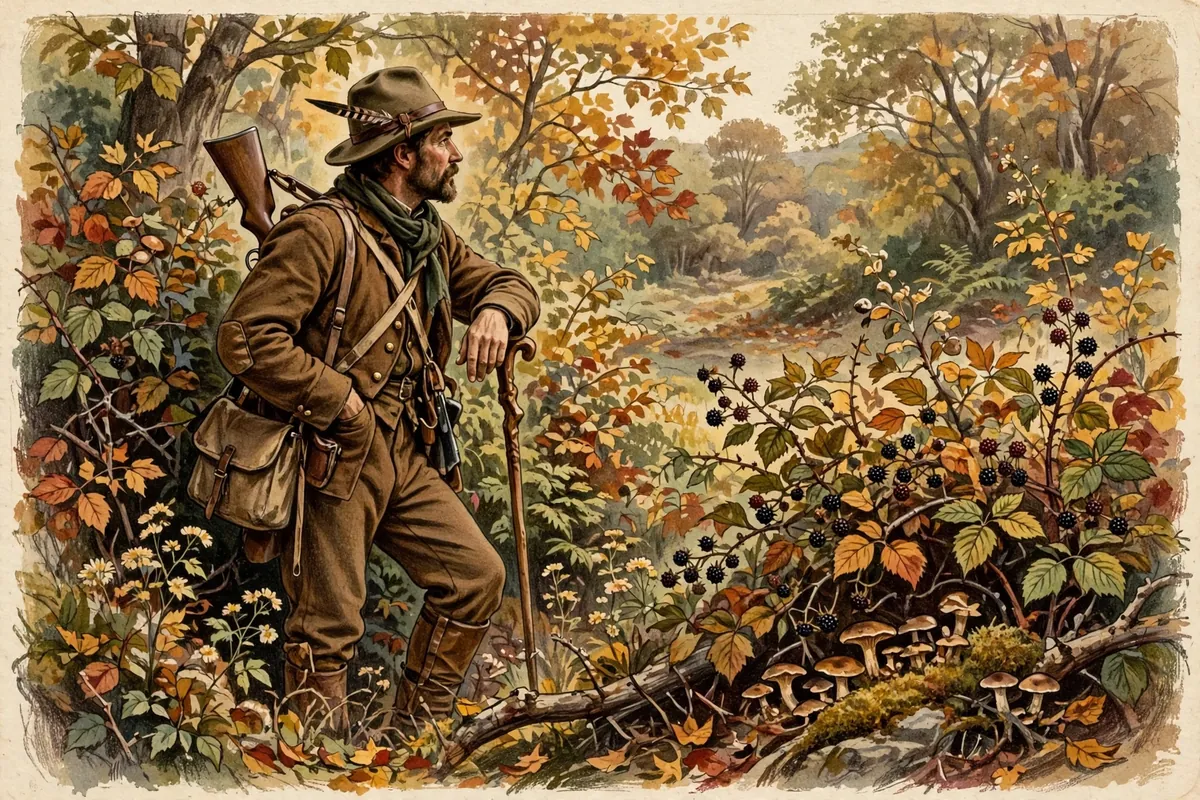
Here's the answer. The phrase comes from bird hunting. Hunters used helpers called beaters, whose job was to beat the bushes where a flock of birds was roosting, making noise so the birds would fly out toward the hunters. The beaters did the warm-up work; the hunters got the birds. Over time, 'beating around the bush' came to describe dancing around a topic instead of getting to the point.
Meet the Beaters
In hunting, beaters are assistants who drive animals out of hiding and toward the people with the guns. They do it by making as much commotion as possible. They shout, beat trees and bushes with sticks, use rattles and clappers, and sometimes fire shots into the air. They usually carry no weapons, though dogs often come along.
Some beaters even wave flags at the ends of their line to keep the birds flying within range of the hunters. It's a style of hunting still practiced today. In Britain's driven grouse shooting, for instance, beaters encourage the birds to fly over hunters waiting in fixed positions.
The expression 'beat about the bush,' or 'beat around the bush' as Americans usually say it, comes from this method of fowling, the old word for hunting birds. In places like the Fens of eastern England, fowling was a familiar part of life, and a well-equipped estate might even keep a decoy to lure in ducks.
Not the Main Event
Think about the beaters' role and the meaning makes sense. They weren't the ones catching the birds. They circled the bushes, making noise and stirring things up, while the real action happened somewhere else. That's exactly how it feels when someone circles a subject without ever landing on it.
Being a beater wasn't always voluntary, either. In the Holy Roman Empire, people could be required to serve as beaters during hunts held by nobles, a duty known as beater duty.
A Field Full of Hunting Phrases
Bird hunting has given English several familiar sayings. 'A bird in the hand is worth two in the bush' is one of the best-known proverbs in the language, reminding us that something certain is better than something we only hope to get.
Then there's the snipe hunt, an American prank known since at least the 1840s. A newcomer is led into the dark woods with a bag and told to wait for a 'snipe' while the others chase it toward him. The others simply go home, leaving the victim alone, literally 'holding the bag.' The snipe is a real bird, but in the prank it's an imaginary creature. It became a classic summer camp hazing ritual in the early 1900s.
A snipe hunt is a kind of wild-goose chase, another phrase that means a pointless errand. Clearly, chasing birds has left its mark on how we talk.
Getting to the Point
So the next time someone tells you to stop beating around the bush, you can picture a line of beaters in an old English field, whacking the shrubs with sticks while the hunters wait for the birds to fly. Then, of course, you'll want to get straight to the point.