After a long day, plenty of us announce, "Well, I'm going to hit the hay." It's a cozy, old-fashioned way to say it's bedtime. But unless you live on a farm, you probably sleep on springs or foam, not hay. So where did the saying come from?
The short answer: no one has pinned down exactly who said it first, but the most likely explanation is the simple one. For much of history, mattresses were stuffed with straw and other dried plant material. Going to bed really did mean lying down on a sack of the stuff. The phrase was well known by 1945, when Hollywood released a musical comedy called Hit the Hay.
When Beds Really Were Straw
The earliest beds were little more than piles of straw or other natural materials, such as palm leaves, animal skins, or dried bracken. One big improvement was raising them off the ground to avoid drafts, dirt, and pests. Even millions of years before humans, some apes had started building sleeping platforms instead of just resting on branches.
In Europe, mattresses were stuffed with straw, chaff, horsehair, coarse wool, or down feathers. People often stacked several mattresses, with the softest on top. That whole pile, plus the sheets, blankets, and pillows, was what early Europeans called a "bed." The frame underneath wasn't really considered part of it.
By the 15th century, beds could be enormous, reaching 7 to 8 feet long and 6 to 7 feet wide. Their mattresses were often filled with pea shucks, straw, or feathers.
Hay or Straw?
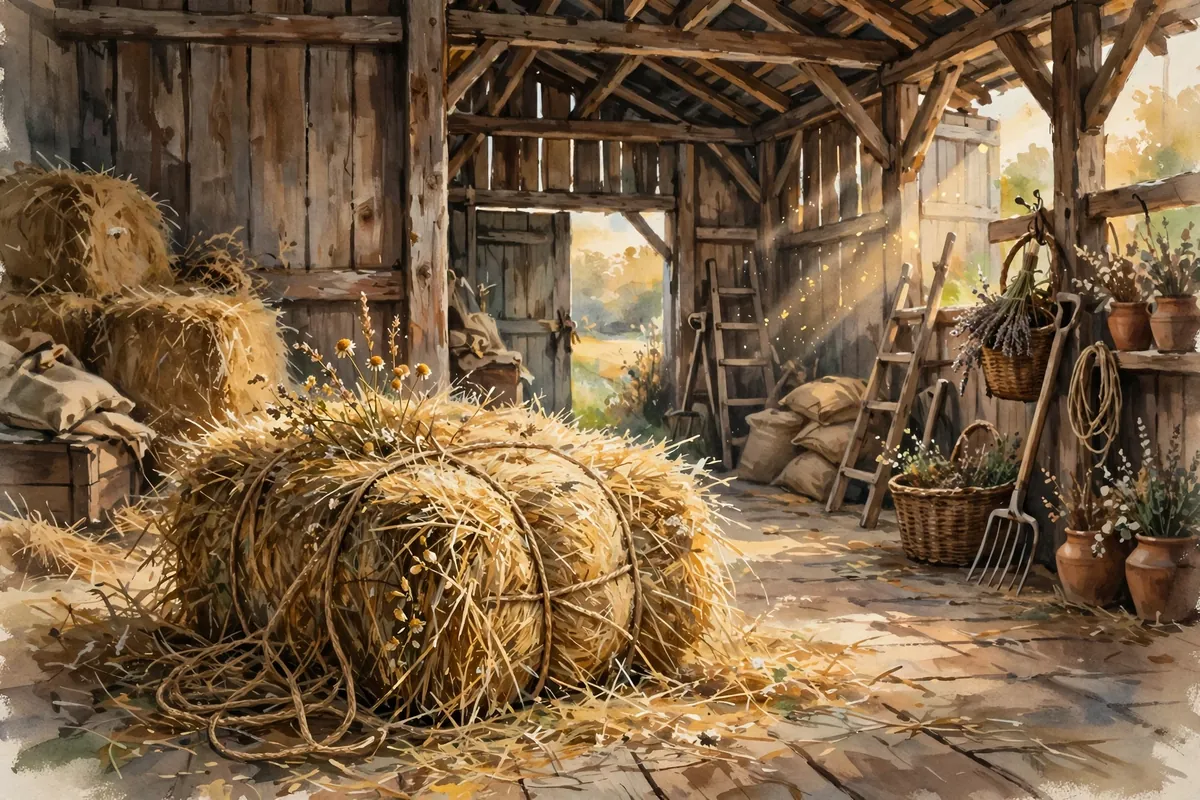
Here's a little farm-life detail. Hay is dried grass grown as animal feed, while straw is the dry stalks left over after grain is harvested. Historical accounts of old bedding usually mention straw, not hay. Whether the saying began with real hay or people just liked the sound of it, nobody can say for sure. Either way, the meaning came through loud and clear.
The Humble Homemade Mattress
For generations, many families made their own mattresses. A tick mattress is a bag made of sturdy cloth called ticking, filled with whatever material was on hand. These mattresses were simple, thin, and light, so they were often layered to make a comfortable bed.
The word mattress itself has a long journey. It comes from an Arabic word meaning something thrown down, like a mat or cushion. During the Crusades, Europeans picked up the Middle Eastern habit of sleeping on cushions on the floor, and the word eventually made its way into English.
From Straw to Springs
Mattresses changed dramatically in the last century and a half. In 1899, James Marshall introduced the first individually wrapped pocket spring mattress. By the first half of the 20th century, a typical North American mattress had an innerspring core with cotton padding. Today, foam and latex are common, and some beds are filled with air or water.
People have been making beds for a remarkably long time. The oldest known mattress, found in South Africa, dates back about 77,000 years. It was made of layers of twigs and leaves, including a plant that may have kept mosquitoes away.
So the next time you say you're going to hit the hay, you're keeping alive a little piece of history. Your mattress may be memory foam, but your words still remember the barn.