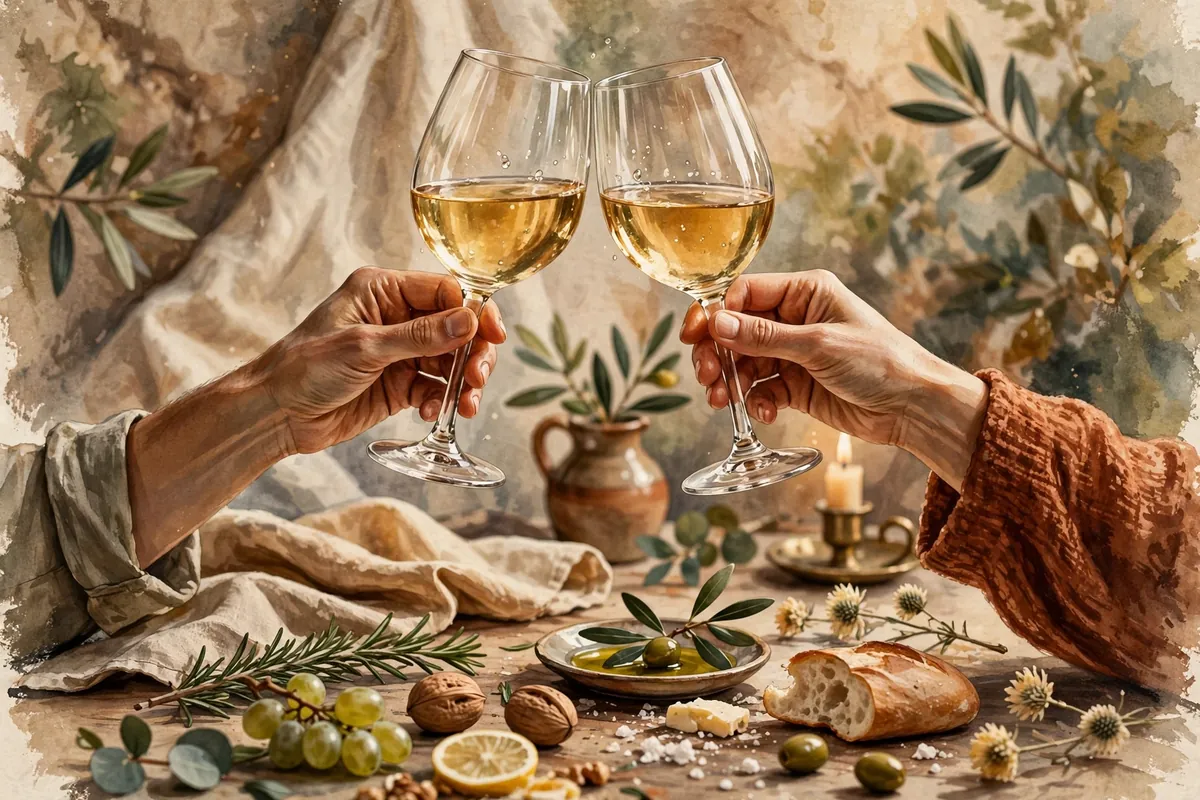
The speeches are done, the glasses are full, and someone stands up and says, let's have a toast. Everyone raises a glass, there's a cheerful clink, and we all drink. It's such a familiar ritual that we never stop to ask the obvious question: what does any of this have to do with toasted bread?
Here's the short answer: quite a lot, it seems. According to accounts of the custom, the word toast became linked to drinking in someone's honor in the 17th century, when people liked to flavor their drinks with pieces of spiced toast. The person being honored, originally a lady, was said to figuratively flavor the drink, just as the toast did. Over time, the word stuck to the whole ritual.
A Slice in Your Cup
Dropping a bit of spiced toast into a drink was a way to add flavor. When a gentleman raised his glass to a lady, her name was thought of as the special ingredient that made the drink sweeter.
That's why the word toast can mean several things. It can be the drink, the words spoken, or the person being honored. Someone who's admired by everyone might be called the toast of the evening, or the toast of the town.
What About the Clinking?
You may have heard that people started clinking glasses to guard against poison, supposedly because the drinks would splash into one another. It's a fun story, but there's no real evidence for it.
The roots of toasting may be far older. One reference work on alcohol and culture suggests that toasting is probably a leftover from ancient offerings, when a sacred liquid was poured out for the gods in exchange for a wish, often summed up in words like long life or to your health.
Toasts Around the World
Many languages toast to good health. The German word prost comes from the Latin prosit, meaning roughly may it be good for you. It caught on among university students in the early 1700s before spreading into everyday speech. In Estonia, people say terviseks, meaning for the health. In English-speaking countries, guests often show agreement with a hearty hear, hear.
Toasting Manners
Toasts turn up at all sorts of occasions, from New Year's Eve and weddings to retirements, housewarmings, and births. And toasting has its own etiquette. Except at small, casual gatherings, toasts are given standing. The host gets the first chance to toast the guest of honor. And the person being honored traditionally shouldn't drink to themselves, but should rise afterward to say thank you.
Some authorities consider tapping a glass to get everyone's attention a bit rude, even though it's common. Many are fine with toasting with water, but sailors may disagree. In the Royal Navy and the U.S. Navy, there's a superstition that toasting with water dooms the person honored to a watery grave.
At weddings, the father of the bride often gives the first toast, and a best man's toast is usually a short speech of three to five minutes, mixing humor with sincere praise. One classic wedding toast goes: may you both live as long as you want, and never want as long as you live.
So the next time you raise a glass to the happy couple, picture a little slice of spiced bread floating in a 17th-century cup. It's a delicious bit of history hiding in one of our happiest traditions.