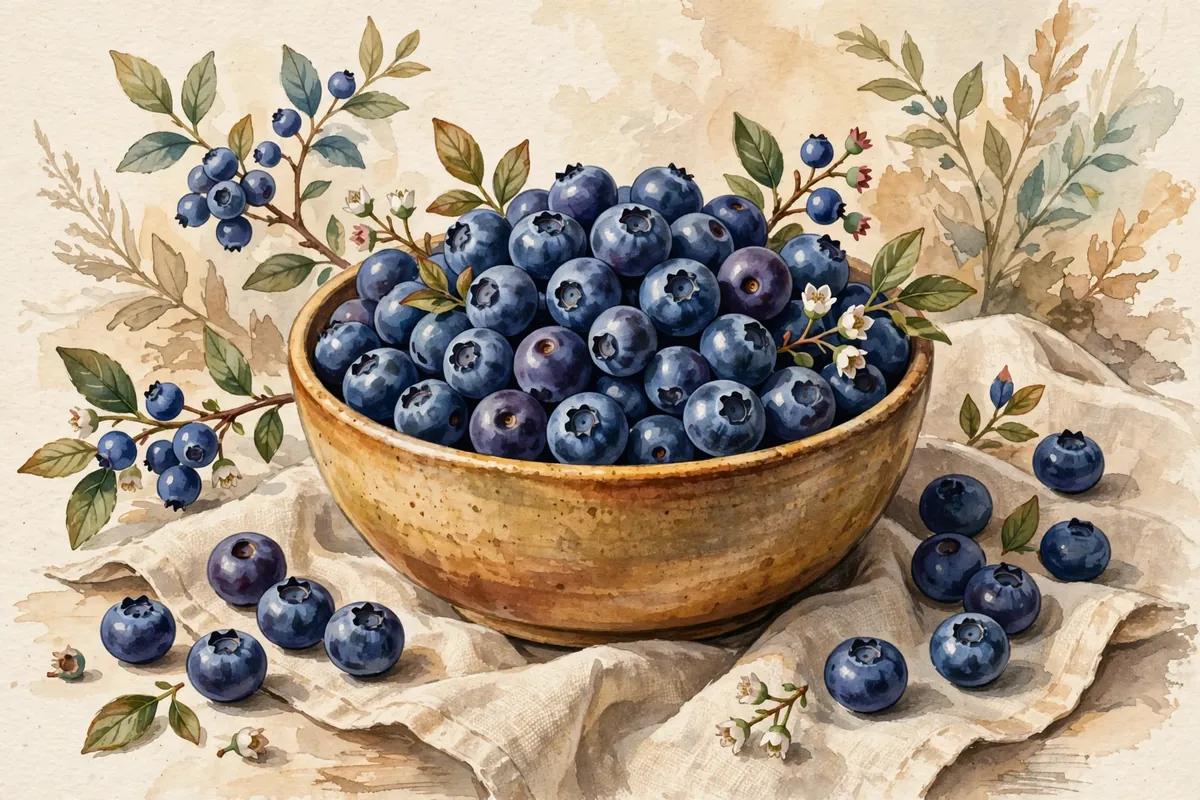
Blueberries are one of the few foods named after their color. Pile them in a bowl and they look unmistakably blue, with a soft, dusty sheen. But bake them into a muffin or squish one between your fingers and the color that comes out isn't blue at all. It's a deep purple, sometimes leaning toward red.
Here's the short answer. Two things are going on. The outside of a blueberry is covered in a pale, powdery wax called the bloom, which gives the fruit a frosty, bluish look. Inside, the color comes from natural pigments called anthocyanins, which change shade depending on acidity. In acidic conditions they lean red or pink, and around neutral they look purple.
The Frosty Coat on the Outside
Look closely at a fresh blueberry and you'll see a whitish dusting on its skin. That's a natural waxy coating that botanists call bloom. Plants make this kind of wax to repel water, reduce moisture loss, and even reflect ultraviolet light.
Coatings like this give fruits such as plums and grapes a pale, bluish-gray, frosted appearance. Botanists describe that look as glaucous, from an old Greek word meaning blue-green or blue-gray. The coating rubs off easily, which is why a well-handled blueberry looks darker and shinier than one fresh from the carton. These coatings also shed water, helping keep rain from soaking the fruit.
The Shape-Shifting Pigment Inside
Under that waxy coat, the color comes from anthocyanins. The name comes from ancient Greek words for flower and dark blue. These water-soluble pigments can appear red, pink, purple, blue, or even black, depending on the acidity around them.
They're so sensitive that scientists use them as natural pH indicators. In acidic solutions they turn red or pink. In neutral ones, they look purple. In alkaline solutions they shift toward greenish-yellow.
When you crush a blueberry, the pigments spill out of the plant cells and into the juice, where the surrounding acidity helps decide their shade. That's why the juice can look purple or reddish rather than sky blue.
A Color That Changes as They Ripen
Blueberries put on a little color show as they grow. They start out pale green, turn reddish-purple, and finally become evenly blue when they're ripe. Wild lowbush blueberries tend to contain even more anthocyanins than the cultivated highbush kind.
Anthocyanins aren't just in blueberries. They also color raspberries, black rice, and black soybeans, and they help paint the reds and purples of autumn leaves. Oddly, beets get their deep red from a different family of pigments called betalains. Scientists have never found anthocyanins and betalains together in the same plant.
An All-American Berry
Commercial blueberries, both wild and cultivated, are native to North America. The big, juicy berries in today's stores owe a lot to two people. In the early 1900s, Elizabeth Coleman White of New Jersey offered local residents cash for wild bushes with unusually large fruit.
She teamed up with Frederick Coville of the U.S. Department of Agriculture, who discovered that blueberries need highly acidic soil. By 1916, they had succeeded in cultivating blueberries, and some strains' fruit had doubled in size.
So the next time a blueberry pie leaves a purple stain on your shirt, you'll know who to blame. It's not the blue you see on the outside. It's the color-changing pigment hiding inside.