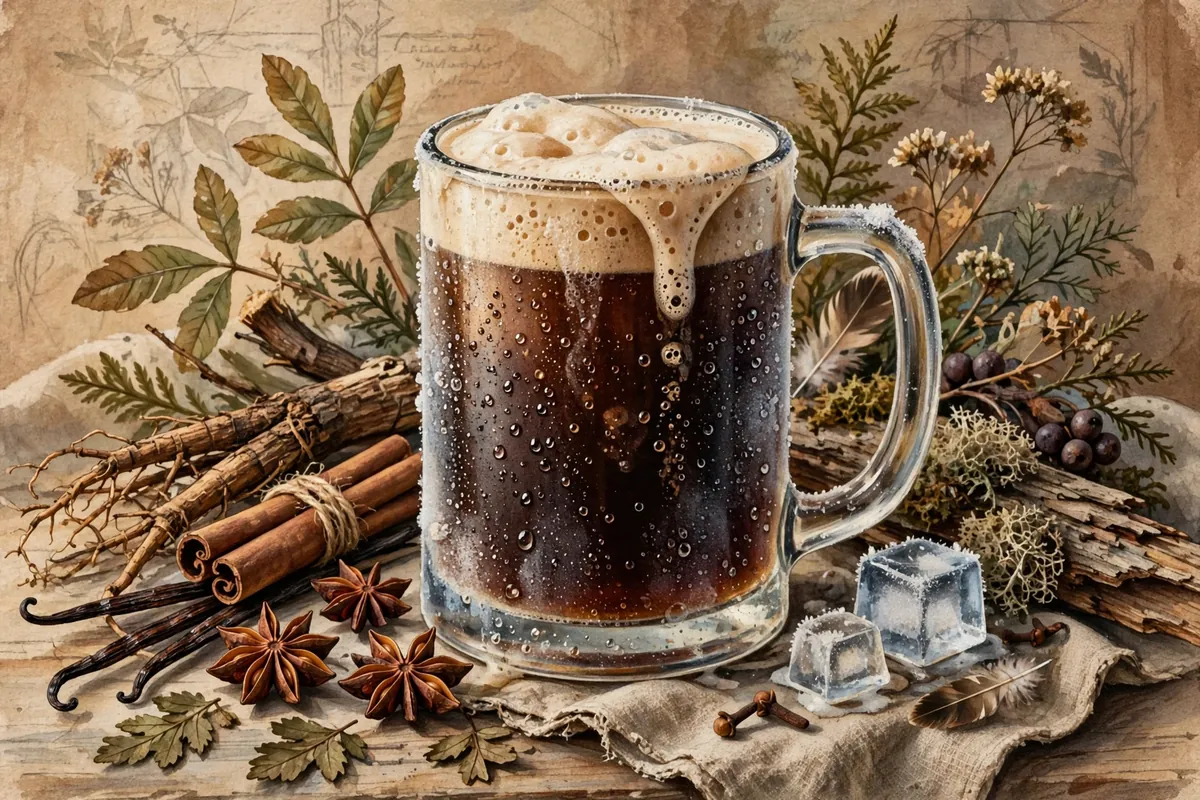
There's something wonderfully old-fashioned about a cold mug of root beer, especially with a scoop of vanilla ice cream floating on top. It tastes like summer and soda fountains. But root beer's roots, so to speak, go back much further than the corner drugstore.
Root beer started out as a homemade, lightly fermented drink. It was traditionally made using the root bark of the sassafras tree or the sarsaparilla vine, brewed with molasses and yeast much like a weak beer. Over time, it became the sweet, fizzy, alcohol-free soda most of us know today.
A Brew Made From Roots and Bark
Root beer has been drunk in what's now the United States since at least the 1700s. It began as a type of “small beer,” the low-alcohol brews that were popular in colonial North America.
One traditional recipe went like this: cook a syrup from molasses and water, let it cool for three hours, then add sassafras root, sassafras bark, and wintergreen. Yeast was added, and the mixture fermented for 12 hours before being strained and bottled to ferment a bit more. The result usually had 2 percent alcohol or less.
That famous foamy head? Sassafras had a natural, slippery quality that made a thick, long-lasting foam, which became a signature of the drink. Today, some makers use a little starch, soybean protein, or yucca to recreate that classic foam.
A Drink With a Medicine Cabinet Past
In the 1800s, root beer was often served hot and was frequently used as a kind of remedy. Both Native Americans and Europeans valued sassafras for its supposed health benefits, and druggists began selling root beer for its medicinal qualities.
Written root beer recipes date back to at least the 1830s, and it was sold in candy and confectionery stores by the 1840s. By the 1850s, it was being mixed with soda water, though back then it was usually sold as a syrup rather than a ready-to-drink beverage.
The Pharmacist Who Named It
The man who turned root beer into a national brand was a pharmacist named Charles Elmer Hires. He developed a sassafras “root tea” in 1875 and introduced a commercial version at the Philadelphia Centennial Exposition in 1876.
Here's the funny part. Hires didn't drink alcohol and wanted to call his product “root tea.” But he hoped to sell it to Pennsylvania coal miners, so he went with the heartier-sounding “root beer.” In 1886, he started bottling it, and by 1893 root beer was sold widely across the country. Alcohol-free versions did especially well during Prohibition.
Frosty Mugs and a Big Change
Competitors soon followed. Barq's began selling its sarsaparilla-based root beer in 1898. In 1919, Roy Allen opened a root beer stand in Lodi, California, that grew into A&W, and one of his clever touches was serving it in cold, frosty mugs.
Then came a major recipe change. In 1960, the U.S. Food and Drug Administration banned safrole, a key oil in sassafras, from mass-produced foods after lab animals given large doses developed liver damage or cancer. Since then, most commercial root beers have used artificial sassafras flavor or sassafras extract with the safrole removed.
So the next time you raise a frosty mug, give a nod to the colonists, druggists, and one teetotaling pharmacist who turned a backyard brew of roots and bark into an all-American treat.