Few vegetables have a worse reputation. For decades, Brussels sprouts were the classic example of a food kids refused to eat. Many adults still wrinkle their noses at the sight of them. Yet these days you'll find them roasted, crispy, and proudly featured on restaurant menus. So what's the story?
Here's the answer in two parts. First, Brussels sprouts contain natural bitter compounds, and older varieties had more of them. Second, people don't all taste bitterness the same way. Genes play a role in how strongly some of us sense bitter flavors. Put a bitter vegetable together with a sensitive tongue, and you get a lifelong sprout hater.
The Chemistry of Bitter
Brussels sprouts are actually a type of cabbage, grown for their small edible buds. Their group name, gemmifera, means "bud-bearing." Vegetables in the cabbage family, including broccoli, get their bitter edge from sulfur-containing compounds called glucosinolates and the substances they break down into.
In the 1990s, a Dutch scientist named Hans van Doorn pinpointed the specific chemicals that make Brussels sprouts bitter: sinigrin and progoitrin. That discovery let Dutch seed companies cross older, less bitter varieties with modern high-yield ones. Over time, the result was milder sprouts and a big jump in the vegetable's popularity.
The Overcooking Problem
Cooking matters too. Overcooked sprouts turn gray and soft and develop a strong flavor and smell that reminds some people of garlic or onions. That odor comes from sinigrin, one of the same sulfur compounds behind the bitterness.
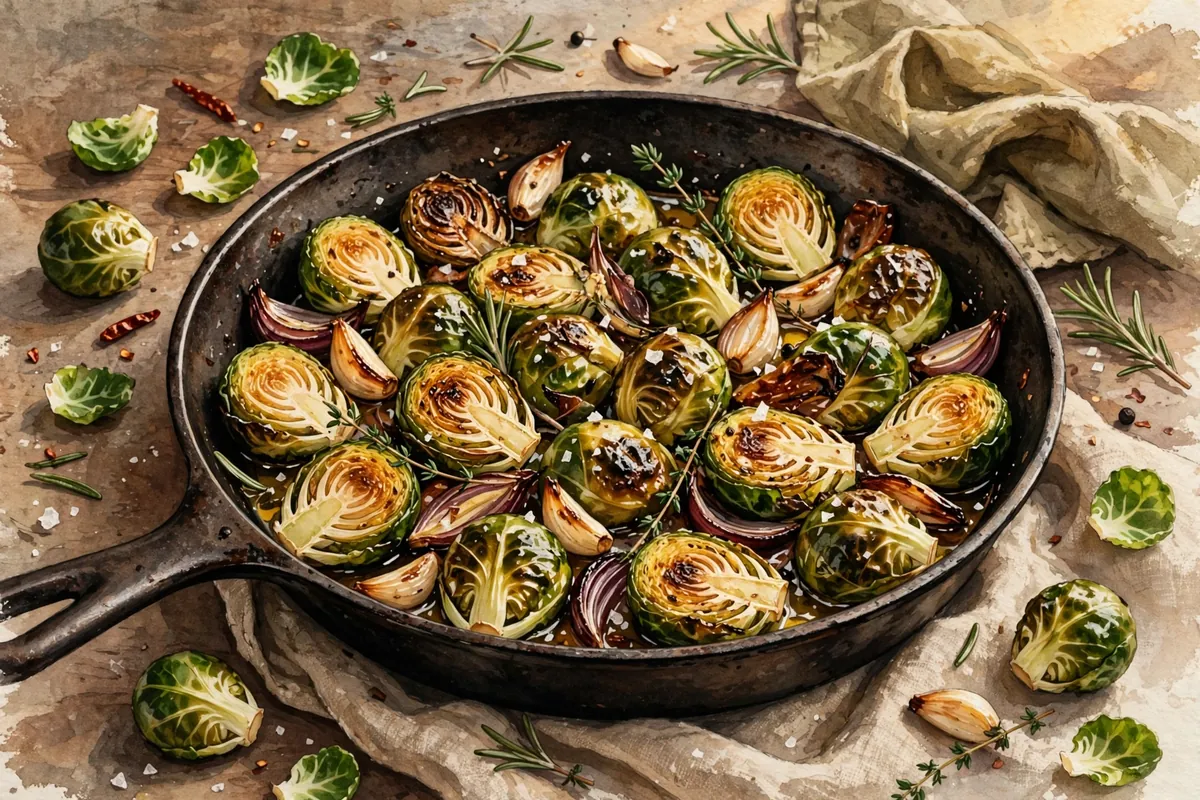
If you grew up with boiled-to-mush sprouts, you may have experienced them at their worst. Roasting is a popular way to bring out better flavor, often with toppings like Parmesan cheese and butter, balsamic vinegar, brown sugar, or chestnuts.
Your Tongue Might Be the Tiebreaker
Our sensitivity to bitterness varies a lot. The discovery happened by accident in 1931, when a DuPont chemist named Arthur Fox spilled some powder of a chemical called PTC. A nearby colleague complained it tasted bitter, but Fox, standing even closer, tasted nothing at all.
Researchers later found that the ability to taste PTC is inherited. About 70 percent of people can taste it. In 2003, scientists traced much of the difference to a bitter taste receptor gene called TAS2R38. Early research suggests this same gene may partly explain why some people find broccoli, a close cousin of the sprout, especially bitter.
Some people are even called supertasters. Research suggests about a quarter of the population falls into this group, with taste that's far more sensitive than average. For them, a bitter sprout can be genuinely unpleasant, not just a matter of being picky.
A Vegetable Worth Another Try
Brussels sprouts have a long history. They were grown near Brussels, Belgium, possibly as early as the 13th century, which is how they got their name. In the United States, commercial growing began in Louisiana in 1925, and most of the crop now comes from California's foggy Central Coast.
They're also packed with nutrition, with lots of vitamin C and vitamin K. So if you swore off sprouts decades ago, it might be time for a second chance. Today's milder varieties, roasted until golden, may surprise you. And if you still can't stand them after that, go easy on yourself. Your taste buds may simply be wired to notice bitterness more than most.