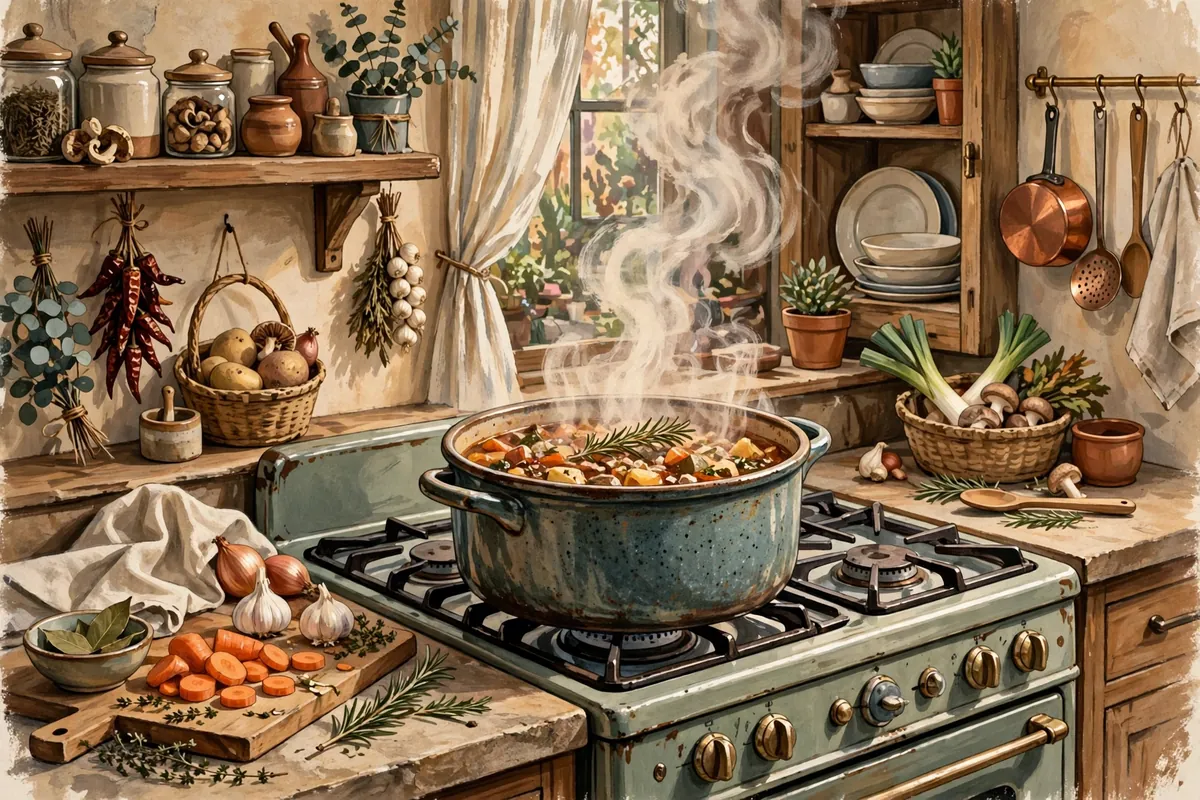
There's no alarm clock quite like the smell of bacon. Or fresh coffee. Or cinnamon rolls in the oven. One minute you're asleep upstairs, and the next, the whole house smells like breakfast. How does a smell travel so far, so fast, from one little pan?
Here's the short answer. A smell is made of tiny molecules floating in the air. Heat from cooking releases lots of them, and warm, rising air and drafts carry them through the house. Those moving air currents, not the slow drifting of the molecules themselves, do most of the work of spreading the aroma from room to room.
What a Smell Really Is
An odor is caused by chemical compounds that have turned into vapor, usually in very low amounts. When those molecules reach your nose, they bind to special receptors and send signals to your brain. Your brain then identifies the smell.
Cooking is a fantastic smell factory. When food browns, as with seared steak, toasted bread, cookies, or toasted marshmallows, a chemical process called the Maillard reaction takes place. Amino acids and sugars react to create a complex mix of molecules responsible for a wide range of aromas and flavors. It typically gets going quickly at around 280 to 330°F, which is why so many recipes call for a hot oven or pan.
Air Currents Do the Heavy Lifting
You might guess that smell molecules simply wander through the air on their own, a process called diffusion. But diffusion is only the main way things spread over tiny distances, from a millionth of a millimeter up to about a millimeter. Over longer distances, things are carried mainly by moving air or liquid, which scientists call convection.
Cooking creates its own little air engine. Warm air is less dense than cool air, so it rises, much like a hot air balloon. A hot stove sends a plume of warm, smell-filled air upward, and it spreads along ceilings, up stairways, and through doorways. Drafts, fans, and open windows help push it even farther.
Why the Cook Stops Smelling It
Here's the funny part. The person who has been standing over the stove for half an hour often notices the smell least of all. This is called olfactory fatigue, also known as odor fatigue or nose blindness.
After long exposure to a particular odor, your nose temporarily stops registering it well. It's the same reason a restaurant smells so strong when you first walk in, then seems to fade after a while. Your body tunes out steady signals so it can stay alert to anything new. Step outside for a few minutes, and your sense of smell resets.
A Nose Built for Memories
Our noses are more powerful than we often give them credit for. One study suggested the average person may be able to tell apart more than one trillion different odors, far more than older estimates of about 10,000.
Smell signals also travel to parts of the brain involved in memory and emotion. That may be why the aroma of a holiday roast or a grandmother's apple pie can bring back a flood of feelings.
So the next time the smell of dinner reaches you three rooms away, thank the heat, the rising air, and your hardworking nose. And if you're the cook, step out of the kitchen for a moment, then walk back in. You'll finally smell what everyone else has been enjoying.