"Fighting like cats and dogs" is one of the oldest ways to describe a bad relationship. Cartoons, movies, and proverbs all play up the rivalry. Yet plenty of homes have a cat and dog curled up on the same couch. So which is it?
The short answer: both. Their natural instincts tend to push cats and dogs toward conflict, partly because they communicate in very different ways and often misread each other. But when they're properly socialized, especially when raised together, cats and dogs can get along well, and some become genuine friends.
Lost in Translation
Cats and dogs use different signals to express themselves, and the other species can easily misinterpret them. A signal meant as friendship might be read as aggression, fear, or a challenge.
Tails are a classic example. For a dog, a broad, side-to-side wag usually means friendliness. For a cat, a tail held low and twitching quickly from side to side can signal irritation, the kind that comes right before a swipe or a bite. A happy, confident cat is more likely to hold its tail straight up.
The Chase Instinct
Dogs have a natural instinct to chase smaller animals that run away, and cats share that urge to chase. So when a cat bolts, a dog's instincts often kick in, and the chase is on.
Most cats flee from a dog. Others stand their ground, hissing, arching their backs, and swiping. Experience matters too. After being scratched or bitten by a cat, most dogs become wary of cats.
When They Become Friends
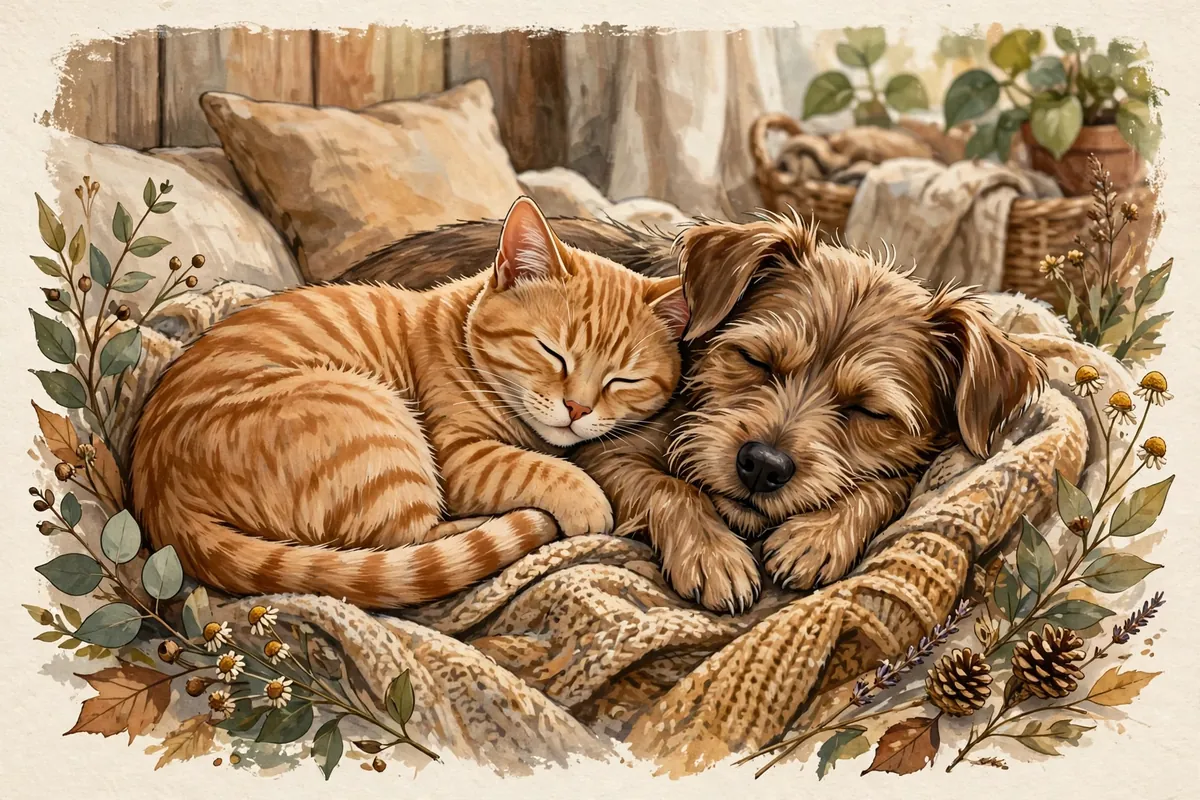
Here's the happier side. When cats and dogs are socialized appropriately, they can have relationships that aren't antagonistic at all. Dogs raised with cats may even prefer the company of cats over other dogs.
Cats and dogs that share close quarters often show real companionship. They may play together, sleep together, and groom each other. Many seem to learn each other's body language over time.
There's even a sweet sign of this learning. Cats and dogs that live together often greet each other with a nose-to-nose sniff. That's a greeting cats use, but it isn't normally seen between dogs. The dog may have picked it up from understanding the cat's signals.
Peace Isn't Guaranteed
Even cats and dogs that have always gotten along can sometimes turn on each other. Something outside the home, an illness, or play that gets too rough can set off an aggressive reaction. It's wise for owners to keep an eye on rough play and give each pet a safe space of its own.
A Rivalry Made Famous
People have been joking about the feud for generations. One old proverb says, "The cat and dog may kiss, but are none the better friends." Eugene Field's children's poem "The Duel" tells of a gingham dog and a calico cat who fought all night until they ate each other up.
Tom and Jerry cartoons pitted Tom the cat against Spike the bulldog. In 1949, Illinois Governor Adlai Stevenson even mentioned the age-old problem of dog versus cat while vetoing a bill about letting cats roam.
So if you're thinking about bringing a cat and dog under one roof, don't let the old sayings scare you off. With patience and good introductions, the two famous rivals may end up napping side by side.