Waiting on a big phone call? Hoping your team scores in the final seconds? Chances are, you've crossed your fingers. It's one of the most common gestures in America, and most of us learned it as kids without ever wondering where it came from.
The short answer: crossing your fingers is believed to have started as a tiny version of the Christian cross. Early Christians used the gesture to ask for the protection of the Holy Cross. Over time, it became a general way to wish for good luck, or to wish someone well, and the religious meaning faded for most people.
A Cross You Can Carry
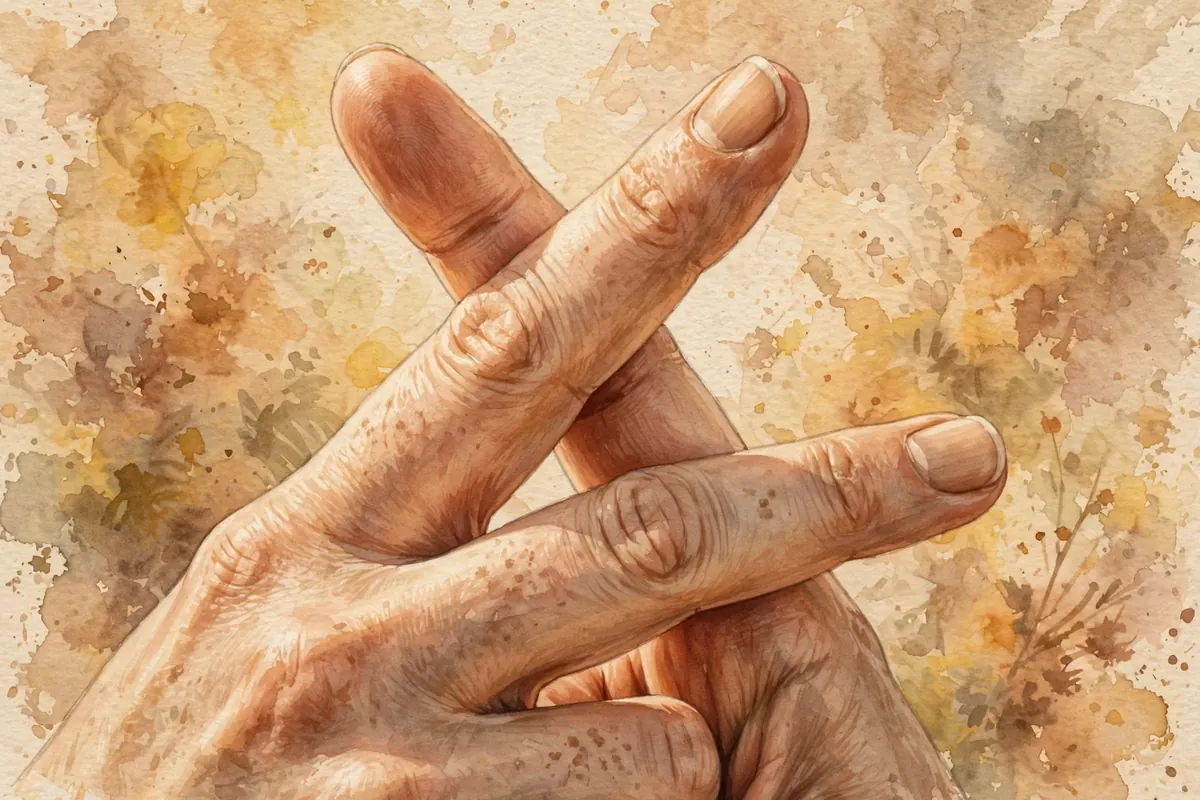
The gesture's shape is the clue. When you cross your middle finger over your index finger, the two form a small cross. Many Christians believed they could protect themselves from evil by making a cross with their fingers.
The habit became especially popular in 16th-century England, where people crossed their fingers to ward off evil and illness. In the past, the gesture often came with spoken words, such as "God spede you" or "God be with you." In that sense, crossing your fingers for a friend was a little like a blessing.
Today we usually just say "fingers crossed" or "keep your fingers crossed." Many people don't even bother with the gesture anymore. Saying the words is enough.
The Playground Loophole
Somewhere along the way, children gave the gesture a sneaky second job. Kids began crossing their fingers, often behind their backs, while telling a white lie. The idea grew into a popular belief that crossing your fingers cancels out a promise you're making.
It's an odd twist. A sign that once asked for divine protection became a way to dodge being held to your word. Ask any parent, and they'll tell you the trick is still alive and well on playgrounds.
Not Lucky Everywhere
If you travel, be careful where you cross your fingers. A gesture that seems friendly at home can send a very different message abroad. In Vietnam, crossing your fingers is considered rude, especially when aimed at another person.
In German-speaking countries, as well as Sweden and Latvia, crossed fingers are a sign of lying, not luck. People there wish each other luck by holding or pressing their thumbs instead. The same thumb gesture is used in many Slavic countries, including Poland, the Czech Republic, Slovakia, and Bulgaria. In South Africa, Afrikaans speakers have a phrase that means "holding thumbs tightly."
A Cousin Called Knock on Wood
Crossing fingers has a close relative in the world of superstition: knocking on wood. People tap a table or a door frame after making a hopeful prediction or a boast, so they don't "tempt fate."
Its origins are debated. Some point to ancient beliefs about trees and fate among the Germanic and Celtic peoples. Christians tie it to the wood of the cross. And one folklore researcher suggests the modern habit may come from a children's tag game called "Tiggy Touchwood," where players were safe as long as they touched wood.
Whether you believe in luck or not, there's something comforting about these little rituals. They let us feel like we're doing something when the outcome is out of our hands. So go ahead and cross your fingers. Just don't do it while making a promise.