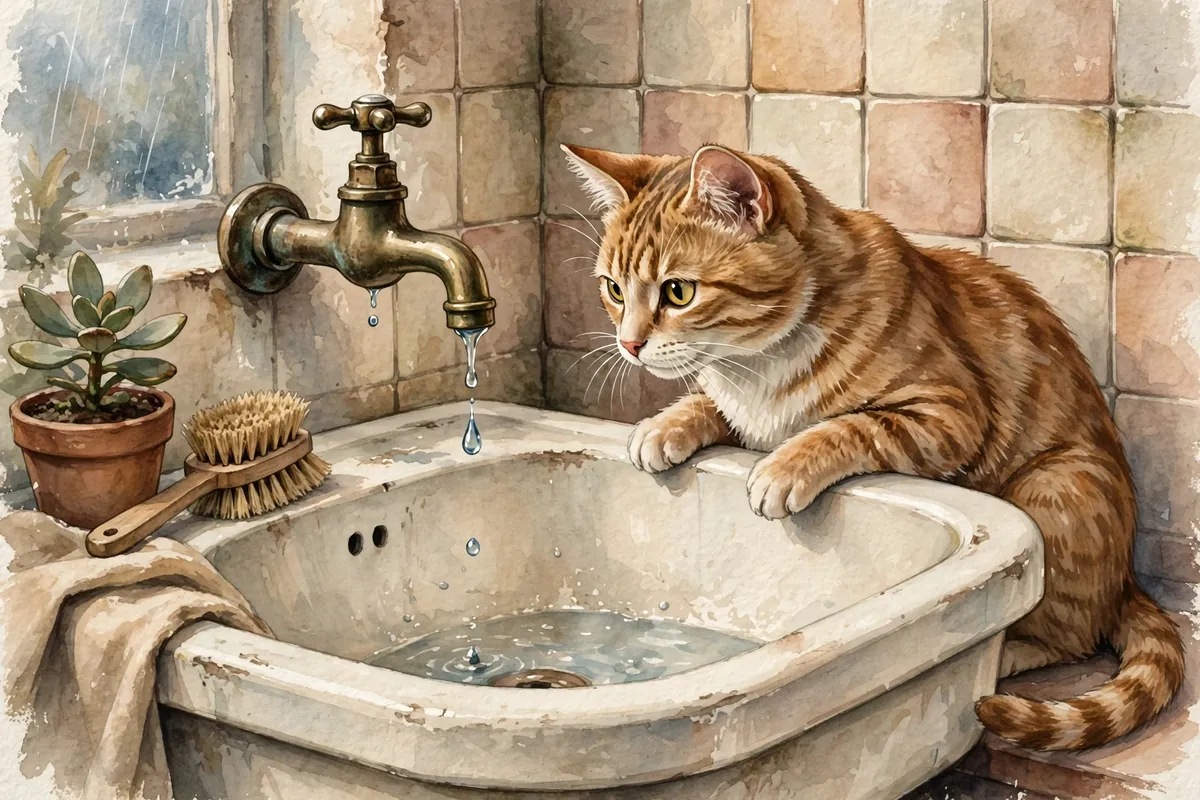
Few things make a house cat move faster than a splash of water. Mention bath time and many cats vanish under the bed. Yet the same cat might sit on the sink and stare at a dripping faucet for ages. So what's the deal?
The honest answer is that there's no single proven reason. Cats are known for disliking being wet, but plenty of cats, big and small, are perfectly comfortable in water. A common explanation looks back at where house cats came from: their wild ancestors lived mostly in dry country, not in rivers and swamps.
A Family Tree Rooted in Dry Land
Genetic research suggests the domestic cat descends from the African wildcat. That wild cat lives in landscapes ranging from deserts to savannas, shrublands, and grasslands, including areas around the Sahara.
Scientists think African wildcats were drawn to early farming villages in the Middle East by mice, and were gradually tamed. The oldest known sign of a tamed wildcat was found buried near a human grave on the island of Cyprus, dating back roughly 9,000 years.
Cats have changed only a little since then, in both body and behavior. They can still survive in the wild. So it's not surprising that a pet cat may carry some of the habits of its dry-country ancestors.
The Fussiest Groomers Around
Cats also spend a lot of time keeping their coats just so. A cat's tongue is covered in tiny backward-facing spines that work like a hairbrush, and cats lick their fur for long stretches every day.
That careful grooming is one reason cats are tidier than many other pets. A sudden soaking undoes all that work, which may be part of why so many cats object.
Cats That Love to Swim
Not every cat follows the rule. Tigers are powerful swimmers that can cross rivers as wide as five miles, and they like to soak in water on hot days.
The fishing cat of South and Southeast Asia lives near rivers, swamps, and mangroves and eats mostly fish. It's a strong swimmer that can travel long distances, even underwater.
Among pets, the Turkish Van is nicknamed the swimming cat. Its coat is unusually water-repellent and dries quickly. Some owners say these cats stir their water bowls or follow people into water, though some pet writers doubt the breed loves water more than other cats do. The Snowshoe breed is also said to enjoy running water and may sometimes swim.
The Faucet Mystery
So why might a cat that hates baths stare at a dripping tap? Cats are natural hunters, and moving things catch their eye. When prey is hard to reach, like in a small pool of water, cats use their paws to fish it out.
Cats are also neat drinkers. Their cheeks aren't built for sucking up liquid, so they lap about four times a second, flicking the tip of the tongue against the surface and pulling a little column of water up into the mouth.
A cat's dislike of water is even woven into folklore. In parts of Thailand and Cambodia, a traditional rain-making procession once carried a cat through the village, because cats dislike being wet and were linked with causing droughts.
So if your cat glares at you after a bath, try not to take it personally. It's just being a cat, with a few thousand years of dry-land history behind that grumpy look.