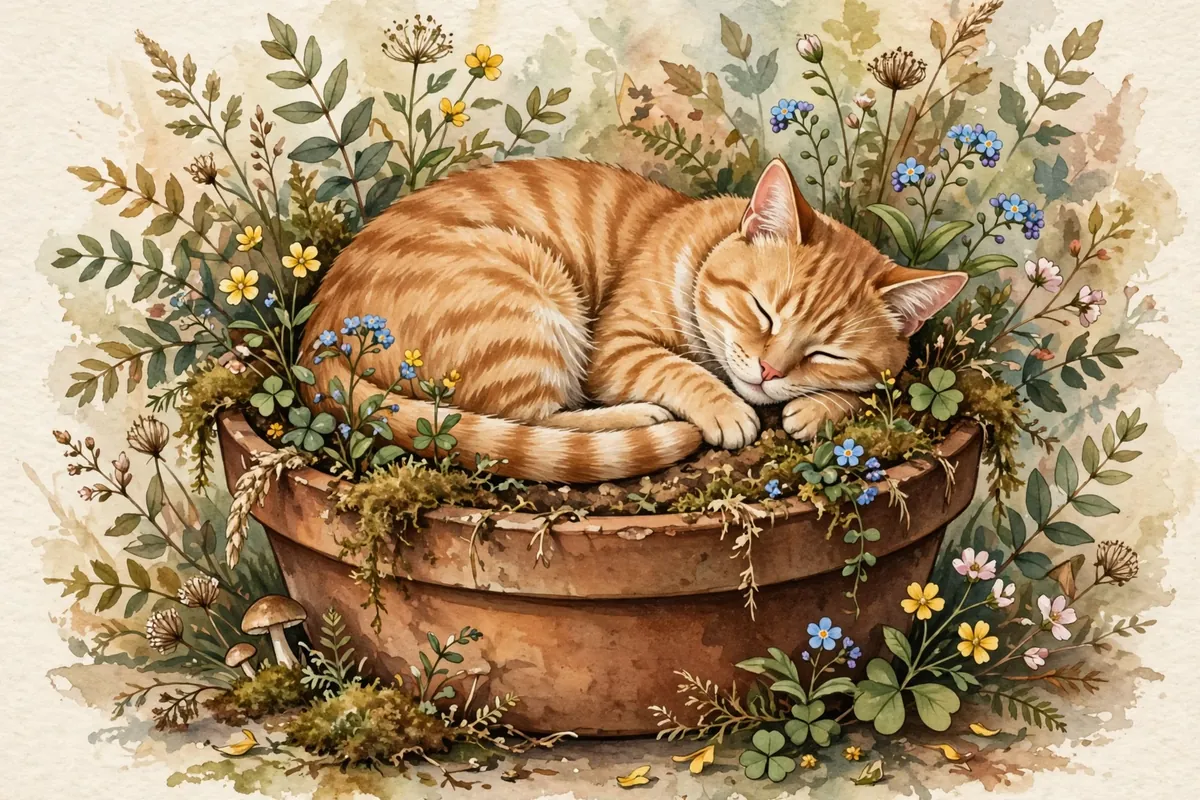
Every cat owner knows the scene. You buy a soft, expensive cat bed, and your cat ignores it completely. Instead, it squeezes into a flower pot, a cardboard box, a laundry basket, or the bathroom sink, and falls fast asleep. What's going on in that furry head?
Scientists haven't pinned down one single reason, but a few things help explain it. Cats sleep a huge amount, usually 12 to 16 hours a day, so they rotate through lots of napping spots. Many cats, especially shy ones, are drawn to hiding places and quiet corners. And domestic cats still carry many of the instincts of their wild ancestors, who needed safe, tucked-away places to rest.
Champion Sleepers
Cats sleep more than most animals, which helps them conserve energy. The average is about 13 to 14 hours a day, and some cats sleep as much as 20. More than half of cats sleep between 12 and 18 hours, and most sleep even more as they get older.
With that much snoozing to do, it's no wonder they spread it around the house. A sunny windowsill in the morning, a box in the afternoon, and your favorite chair in the evening can all be part of the routine.
Much of that sleep is light. The phrase cat nap comes from the cat's habit of dozing lightly for short stretches. During short periods of deeper REM sleep, cats often twitch, which suggests they may be dreaming.
Still Part Wild
Cats were domesticated starting around 7500 BC in the Near East, but they haven't changed much since. Their anatomy and behavior have shifted only slightly, and they're still capable of surviving in the wild.
Cats are low-light hunters, most active around dawn and dusk. One reasonable guess is that a small predator that sleeps this much would favor spots where it feels hidden. A box or a pot with walls on every side might feel like a snug little den.
Personality matters too. Researchers who study cat behavior note that shy, anxious, or easily stressed cats tend to like hiding places and quiet areas of the home. For those cats, a tight, enclosed spot may simply feel safer than an open bed in the middle of the room.
Following Your Schedule
House cats are also flexible sleepers. They can adapt to their owners' sleeping patterns to some extent, which may be why your cat seems to nap whenever you sit down to read. Sometimes the strangest place to sleep is right on top of whatever you're using, like a keyboard, a newspaper, or a freshly folded pile of laundry.
Before settling down, many cats knead with their paws, pressing in and out in a slow rhythm. Kneading often comes right before sleep, and it may be a leftover from kittenhood, when kittens knead while nursing. Many cats purr while they do it.
Let Sleeping Cats Lie
So that expensive cat bed may not be a waste after all. Your cat might use it someday, just on its own schedule. In the meantime, the flower pot, the box, and the sink are probably meeting some very catlike needs: a quiet, snug spot where a champion sleeper can doze in peace.
If your cat suddenly changes its sleeping habits, it's worth checking with your veterinarian. Otherwise, enjoy the show. Few things are as charming as a cat convinced that a tiny pot is the best bed in the house.