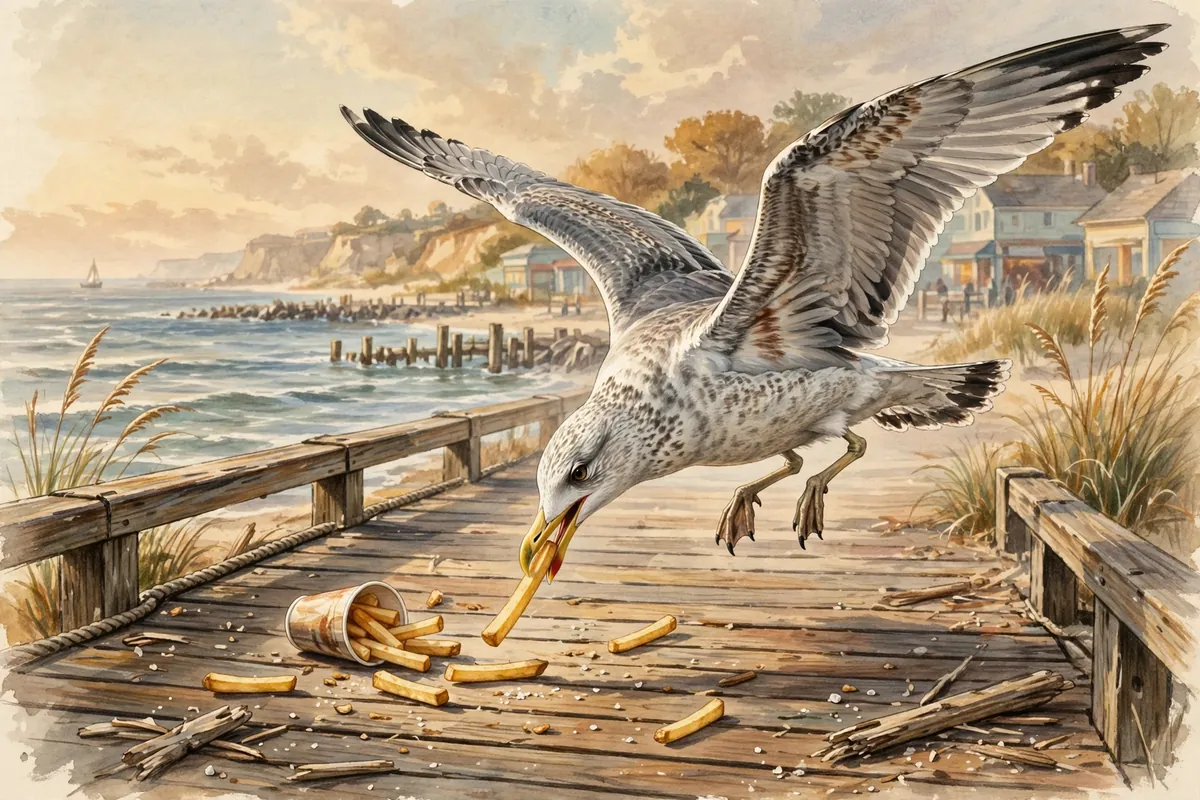
Anyone who has eaten lunch at the beach knows the scene. One gull lands nearby, then another, then a whole crowd, all watching your sandwich. Look away for a second and one swoops in, grabs a bite, and flies off squawking.
The short answer: gulls are intelligent, resourceful opportunists, and stealing food is a natural strategy for them. Scientists call it kleptoparasitism, which means taking food that another animal found or caught. Gulls do it to each other, to other birds, and, at seaside resorts, to people holding takeout food.
Thieves in the Bird World
Stealing food isn't unusual among birds. Some, like skuas and frigatebirds, rely heavily on chasing other seabirds to rob them. Others, including gulls, terns, raptors, and some ducks, steal whenever the opportunity comes along. Even bald eagles have been seen attacking ospreys to take their fish. And for some birds, theft really pays. Among roseate terns, parents that steal food are more successful at raising their chicks than parents that don't.
Gulls are both robbers and victims, especially during breeding season. Most often they steal from other gulls of the same species, but they also target smaller gulls and terns. Great black-backed gulls are especially skilled, stealing from other gulls and even from birds of prey.
Some gulls have a particularly sneaky trick. In the Americas, Heermann's gulls and laughing gulls lurk next to brown pelicans. When a pelican surfaces and drains the water from its bill, the gulls snatch any fish that slip out.
Smart, Bold, and Adaptable
Gulls are clever birds, the larger species especially. They have complex ways of communicating and a highly developed social life. Some herring gulls have even been seen using pieces of bread as bait to catch goldfish.
They're also great at living alongside people. Many species thrive in towns and cities. European herring gulls eat fish and crustaceans, but they also scavenge food left by humans or stolen from them.
Where people don't chase them off, herring gulls can become quite tame. Some have walked into buildings to get food, and a few have even taken to shoplifting, grabbing food from stores and making off with it.
Other Clever Tricks
Stealing isn't their only skill. European herring gulls sometimes drum their feet rhythmically on the ground, which looks a bit like a little dance. The vibrations seem to mimic a digging mole, tricking earthworms into coming to the surface, where the gull gobbles them up.
Gulls also have sharp senses. Herring gulls have keen daytime vision and can see ultraviolet light, and their sense of taste is especially responsive to salt. They work as a team, too. Many gull colonies mob predators and other intruders, attacking and harassing them until they back off.
Not Just Seagulls
Here's another surprise: there's no single bird called a seagull. It's an informal name for many gull species, and plenty of them live far from the sea. One species, the grey gull, even breeds in dry deserts. Inland cities such as Saint Paul, Minnesota, have gull populations too.
So the next time a gull eyes your french fries, remember you're dealing with one of the smartest opportunists on the beach. Hold your lunch close, keep one eye on the sky, and maybe save your fries for when you're back in the car.