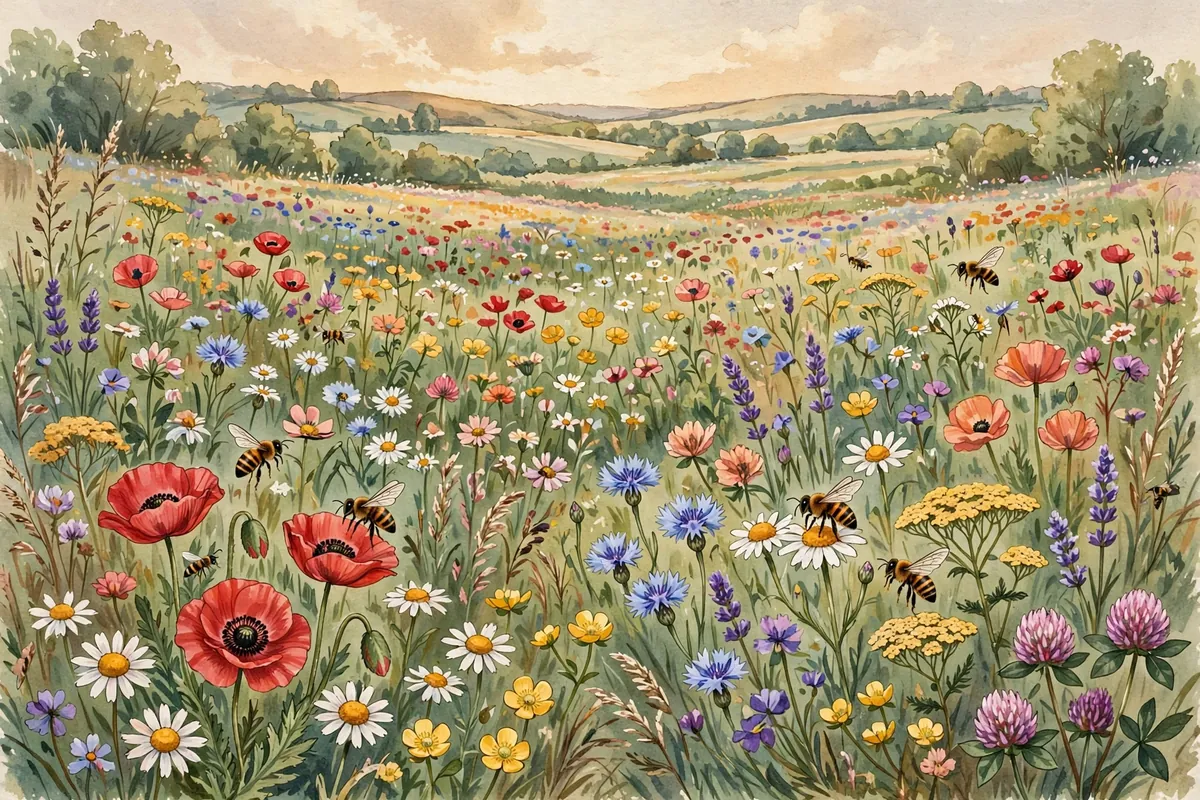
A summer meadow can look like someone spilled a box of crayons: red poppies, yellow buttercups, purple clover, white daisies. It's easy to think flowers are colorful just to be pretty. But plants don't do anything without a reason, and the reason has nothing to do with us.
Here's the answer. Flowers are colorful to attract pollinators. Plants can't walk over to each other, so many rely on animals like bees, butterflies, birds, and moths to carry pollen from flower to flower. Bright petals work like a sign that says "food here," and different colors tend to attract different visitors.
Petals as Advertisements
Pollen carries a plant's male sex cells. For many plants to make seeds, pollen has to travel from one flower to another, a process called pollination. Some plants use the wind or water. Many others depend on animals, and they pay for the delivery service with sweet nectar or protein-rich pollen.
Petals are often colored, shaped, or scented to encourage pollination. A flower's size, shape, color, scent, and pattern all work together to grab a pollinator's attention.
Different Colors for Different Customers
Over time, many flowers have evolved traits that suit particular pollinators. Scientists call these patterns pollination syndromes. They aren't perfect rules, but they're good rules of thumb. The classic patterns were first studied in the 19th century by the Italian botanist Federico Delpino. Even so, botanists caution that you can't always predict exactly who pollinates a plant just by looking at its flowers.
Some bee flowers tend to be yellow or blue. Butterfly flowers are often large and showy, pink or lavender, and come with a landing pad. Flowers built for nectar-loving birds tend to be red or orange tubes packed with nectar. Since birds don't respond strongly to scent, these flowers are usually odorless.
Night has its own style. Many moth-pollinated flowers are white, open at night, and give off a strong, sweet scent in the evening. Pale petals are easier to spot in the dark. And plants that use the wind don't need to impress anyone, so their flowers are often small, green, and plain.
The Colors We Can't See
Here's a surprise. Many petals carry ultraviolet patterns that are invisible to humans but visible to pollinators. About 25 to 35 percent of flowering plants use ultraviolet coloring.
These hidden markings can act like runway lights, guiding an insect straight to the nectar and pollen. That helps a flower stand out from the leafy background and makes the pollinator's visit more efficient for both sides.
Where the Color Comes From
The colors themselves come mostly from natural pigments. Anthocyanins can make petals red, pink, purple, or blue, depending on how acidic the cell sap is. Carotenoids give many yellows and oranges, and pigments called betalains add color to some other plants.
Some flowers even change color after they've been pollinated or as they age. Naturalist Fritz Müller noticed this in Lantana flowers in Brazil, and Charles Darwin passed his letter on to the journal Nature in 1877. Changing color may help steer pollinators toward the blossoms that still need them.
So the next time you admire a garden in full bloom, remember you're reading messages meant for someone else. We just get to enjoy the show while the bees take care of the real business.