There's a fun fact that pops up on trivia cards and cereal boxes: honey is the only food made by insects that humans eat. It sounds right. After all, nobody spreads ant jam on toast. But the world of insect-made foods turns out to be a lot bigger, and stranger, than that.
Here's the short answer: the claim isn't true. Honey is by far the most famous insect-made food, but it isn't the only one. Bumblebees, stingless bees, and even some wasps make honey too. Indigenous Australians have long eaten sweet treats made by honeypot ants and tiny sap-sucking bugs. And a resin made by an insect is used as a shiny glaze on some candies.
How Bees Make the Classic
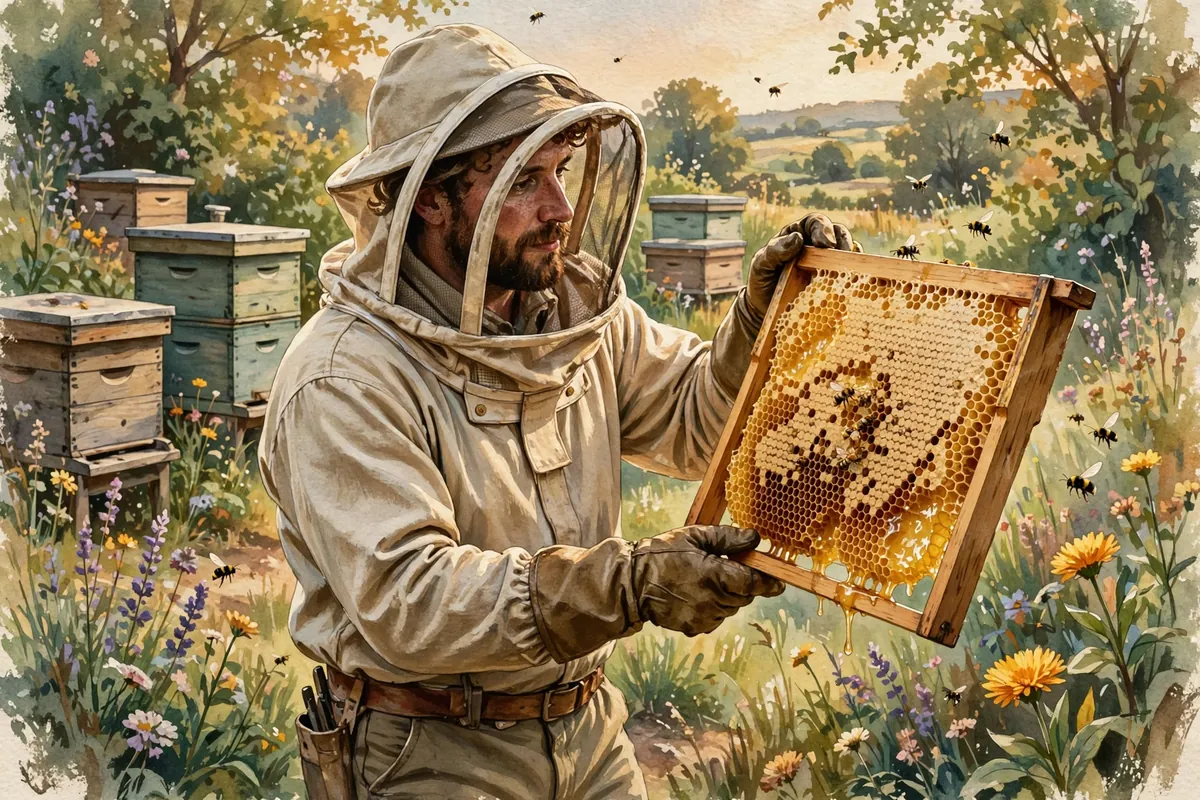
Honey bees gather sugary nectar from flowers, or sometimes the sweet honeydew left by aphids. Inside the bee and later in the hive, the liquid is refined with enzymes, and water evaporates until it becomes thick, golden honey. The bees store it to feed themselves and their young through lean times and cold weather. Foraging bees even burn part of the nectar they collect to fuel their flight muscles. The finished honey packs many times more energy than the nectar it came from.
But honey bees aren't alone. All non-parasitic bumblebees and stingless bees make honey. A few wasps in Central and South America feed on nectar and make honey of their own.
Living Pantries: Honeypot Ants
Honeypot ants have a remarkable trick. Certain workers, called repletes, are fed by their sisters until their abdomens swell into round, amber balls of sweet liquid. They hang in the nest as living storage jars. When food runs short, other ants stroke their antennae and the repletes bring some up to share.
These little honey pots are an important part of the culture of Australian Aboriginal people, who have traditionally gathered them as a sweet food.
Lerps and Manna
In Australia, the young of tiny insects called psyllids build protective covers out of crystallized honeydew. These are called lerps, from a word in the Wemba Wemba language. Lerps are rich in energy and are eaten by possums, birds, and flying foxes. Indigenous people traditionally ate them as well and could store them as dry balls.
Similar sweet crusts may explain one of history's most famous foods. A widespread modern theory identifies biblical manna as the dried honeydew of scale insects. One that feeds on tamarisk trees in the Sinai makes a sweet, honey-like substance, and around 1900 locals there sold it as heavenly manna.
The Insect in Your Candy Dish
Here's one you may have eaten without knowing. Shellac is a resin made by the female lac bug on trees in India and Thailand. Besides finishing furniture, it's used as a confectioner's glaze to give candies and pills a glossy shine, and to help preserve harvested citrus fruit.
Bees also make royal jelly, which is sold as a supplement. European food safety experts concluded in 2011 that the evidence doesn't support claims of health benefits, and it can cause allergic reactions, so talk to your doctor before trying it.
So honey may be the queen of insect-made foods, but it has company. From ant honey pots in the Australian desert to the glossy coating on a piece of candy, insects have been quietly stocking our pantries for a very long time.