Imagine being the tallest animal on the African savanna. You have a neck as long as a person is tall, legs built for striding, and a whole night ahead of you. You might expect a creature that big to need plenty of rest. Giraffes don't seem to agree.
Here's the short answer: giraffes are among the lightest sleepers of all mammals. Studies of giraffes in captivity found they sleep around 4.6 hours a day, broken into short pieces and mostly at night. Some estimates put it even lower, at about three to four hours. Their deepest sleep comes in very short bursts, sometimes just a few minutes at a time.
How a Giraffe Goes to Bed
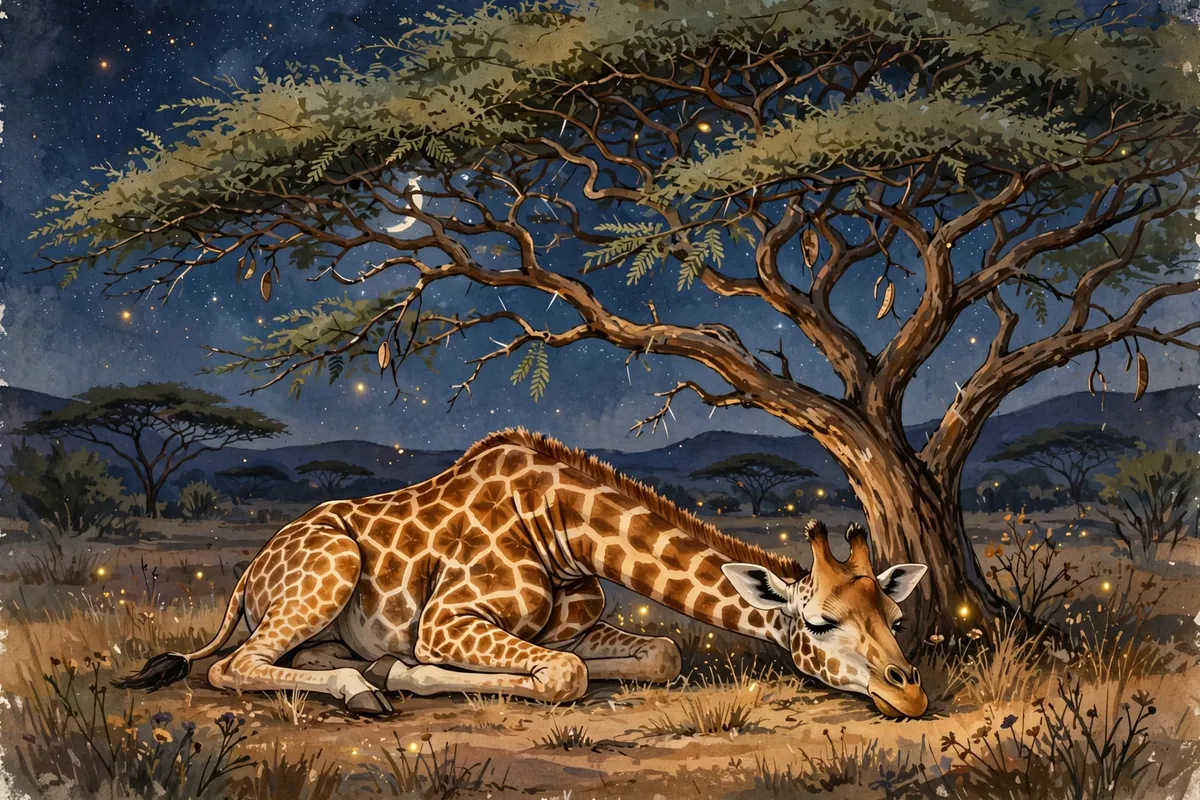
Lying down is a real production for a giraffe. It kneels on its front legs first, then lowers the rest of its body until it rests on top of its folded legs. Getting back up takes several steps, with the animal swinging its head for balance at each stage.
Giraffes usually sleep lying down, but they don't always bother. Standing sleep has been recorded too, especially in older giraffes. When a giraffe does slip into deep sleep while lying down, it does something charming. It bends its long neck backward and rests its head on its hip or thigh, like a curled-up question mark.
Why So Little Sleep?
Scientists don't have a single tidy answer, but they've spotted some strong patterns. Among plant-eating mammals, bigger animals tend to sleep less than smaller ones. Body size is thought to explain about a quarter of the difference in how much various mammals sleep. Giraffes are about as big as land animals get, so their short nights fit the trend.
Diet may play a part too. Giraffes are ruminants, like cows. They chew their leaves, swallow them, then bring the half-digested cud back up the neck to chew again. Many ruminants spend much of their waking time in a drowsy state, which could partly explain why they need less true sleep.
In fact, a giraffe's night isn't just sleep. Chewing cud is the main thing giraffes do after dark, and they mostly do it lying down. So a resting giraffe may be quietly digesting dinner rather than dozing.
A Big Animal With a Few Big Worries
Thanks to their size, sharp eyesight, and powerful kicks, adult giraffes are mostly safe from predators. Lions are their only major threat. Still, with all those steps needed to stand back up, a giraffe lying on the ground isn't ready for a quick getaway, so short naps make a lot of sense.
Calves have it harder. They can also be hunted by leopards, spotted hyenas, and wild dogs. Mothers sometimes leave their young in a group watched over by one female while they go off to eat and drink, a kind of giraffe daycare known as a calving pool. If a predator gets close, a mother will stand over her calf and kick.
Other Sleepy Record Holders
Giraffes sit at one end of the animal sleep scale. At the other end are bats, which can sleep 18 to 20 hours a day while hanging upside down. Horses and other hoofed animals can doze standing up, but like giraffes, they have to lie down for the deepest kind of sleep, called REM sleep, because that stage relaxes the muscles.
Measuring animal sleep is trickier than it sounds. Captive sloths were once reported to sleep nearly 16 hours a day. When researchers later used tiny recorders on wild sloths, they found the animals slept only about 9.6 hours.
So the next time you feel groggy after a short night, spare a thought for the giraffe. It gets by on a few hours, takes its deepest naps in minutes, and still manages to look elegant doing it. Not bad for an animal whose pillow is its own back leg.