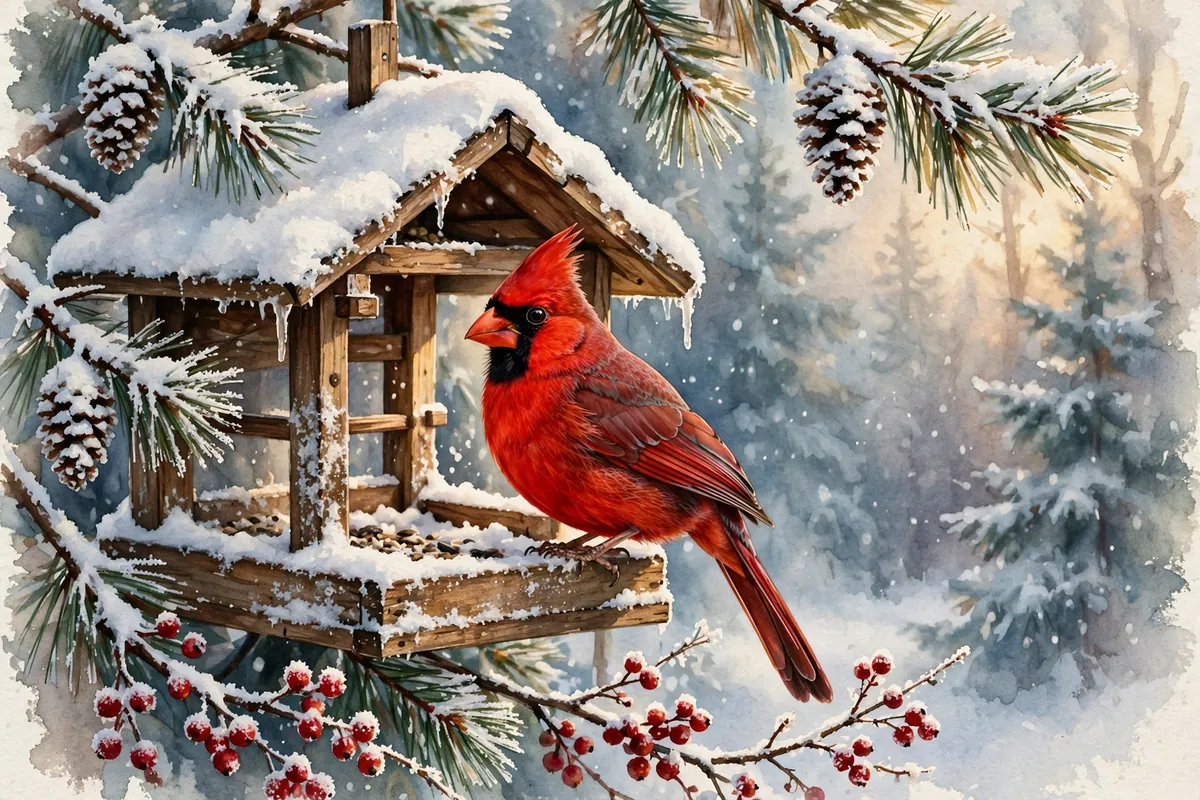
There's nothing quite like it. You look out on a gray winter morning, everything is white and still, and there on the feeder sits a brilliant red bird. Cardinals seem to show up just when the rest of the backyard has gone quiet. So why are they still around when so many other birds have disappeared?
The short answer: cardinals don't migrate. While most North American members of the cardinal family fly south for the winter, the northern cardinal stays put all year. It needs food to make it through the cold, and backyard feeders full of seeds are exactly what it likes to eat.
A Bird That Stays Home
The northern cardinal lives across the eastern United States, from Maine to Minnesota and down to Texas, plus parts of Canada, Mexico, and Central America. Its name even reflects its range, since it's the northernmost cardinal species known. Only it and a close desert cousin, the pyrrhuloxia, stick around year-round.
Cardinals are also homebodies in another way. Mated pairs generally stay together through the whole year and often travel together. So the pair you see in January may well be the same pair you see nesting in spring.
Why the Feeder Is So Tempting
Up to 90 percent of an adult cardinal's diet is weed seeds, grains, and fruit. In warmer months it also eats insects like beetles and grasshoppers. By winter, the bugs are long gone, and seeds become the main event.
That's where we come in. Feeders with sunflower and safflower seeds are especially good at attracting cardinals. Their thick, cone-shaped beaks are built for cracking seeds open. And because they're ground feeders by habit, you'll often spot them hopping around under the feeder, picking up what other birds dropped.
Our generosity has actually changed where cardinals live. The rise in backyard bird feeding has helped the species expand its range. Today there are an estimated 100 million northern cardinals, and their numbers appear stable or growing.
How They Survive the Cold
A cardinal weighs only about an ounce and a half, so staying warm is serious business. In winter, cardinals fluff up their down feathers to trap warm air next to their bodies. That's why they can look so round and puffy on a cold day.
They also shiver, tensing their breast muscles to make heat. Their thin, featherless legs and feet lose warmth quickly, which is one more reason a steady supply of food matters. In a pinch, a cardinal can even lower its body temperature by 3 to 6 degrees Fahrenheit to get through a bitter night.
Why They Seem to Be Everywhere in Winter
Part of the magic is simply visibility. With the leaves off the trees and snow on the ground, a red male stands out more than at any other time of year. Females are a softer brownish color with reddish hints on the wings, crest, and tail, so they're easier to miss.
That bright red comes from food, too. Male cardinals get their color from carotenoid pigments in their diet, which their bodies convert into red feathers. A few rare cardinals lack the ability to make that change and turn out yellow instead.
So if a cardinal is brightening up your snowy yard, take it as a compliment. It chose to stay through the hard months, and your feeder is part of how it gets by. Keep the sunflower seeds coming, and that splash of red may keep you company until spring.