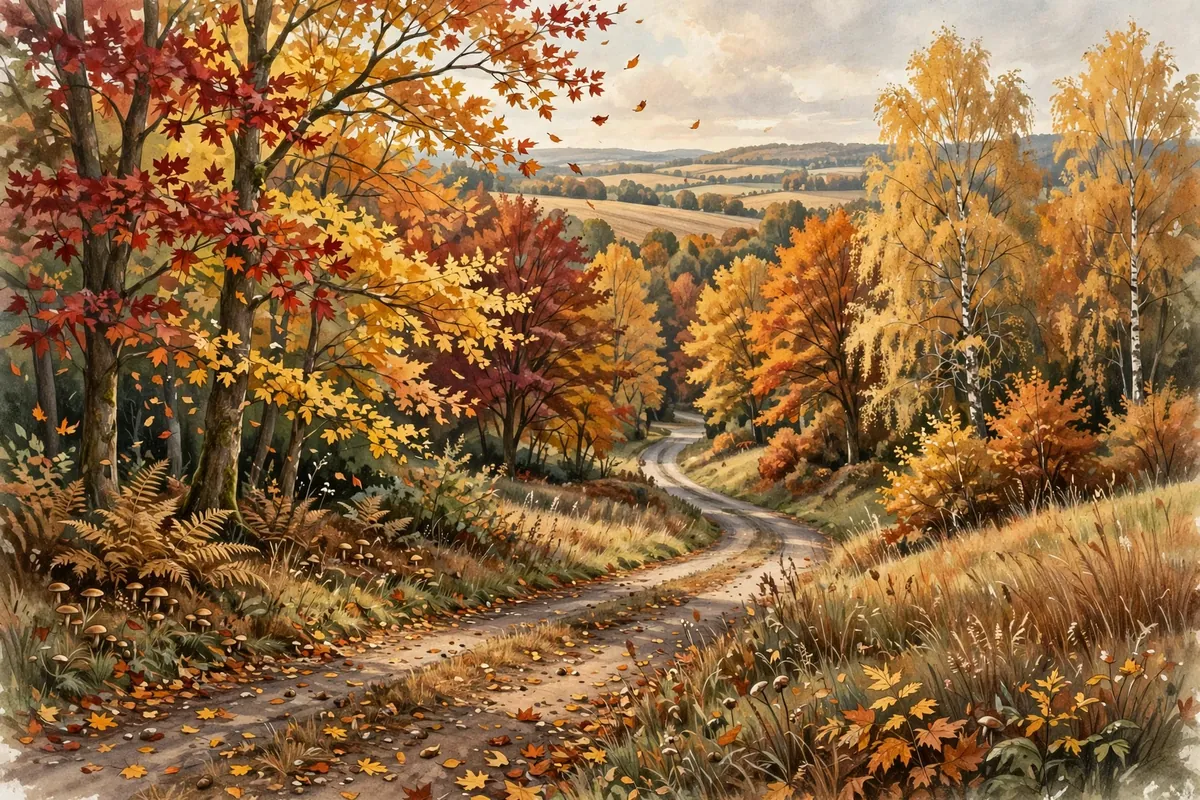
Every October, people drive for hours just to look at trees. Hillsides that were plain green a few weeks earlier explode into gold, orange, and scarlet. It feels like magic, but it's really chemistry happening inside every single leaf.
The short answer is that two things happen at once. The green pigment chlorophyll breaks down and fades away, revealing yellow and orange pigments that were in the leaf all along. At the same time, some trees start making brand-new red and purple pigments called anthocyanins.
Summer's Green Disguise
Leaves are green because of chlorophyll, the pigment that captures sunlight so the plant can turn water and carbon dioxide into sugars. Those sugars are the plant's main food for growing. During the growing season, there's so much chlorophyll that its green color hides everything else.
Chlorophyll wears out as it works, but in summer the tree keeps replacing it. In late summer, as days get shorter and temperatures cool, that changes. The tree begins reclaiming the nutrients it invested in its leaves, and chlorophyll is broken down faster than it's replaced.
The Yellows Were There All Along
Once the green fades, the hidden colors finally get their moment. Yellow and orange come from pigments called carotenoids, including yellow xanthophylls and orange beta-carotene. These are present in the leaf all year long, simply masked by the green.
Beta-carotene is the same kind of pigment that gives carrots their color. So in a way, the golden leaves of October were dressed in gold the whole time, just wearing a green coat over it.
The Reds Are Made Fresh
Reds, purples, and pinks are a different story. They come from anthocyanins, which are not in the leaf during the growing season. Trees actively make them toward the end of summer.
As fall arrives, phosphate and other nutrients move out of the leaf and into the stem. That changes how the leaf handles its leftover sugars, and in bright light, it starts producing anthocyanins. These are the same pigments that color cranberries, red apples, blueberries, cherries, strawberries, and plums.
Why would a tree bother making new pigment in leaves it's about to drop? One leading idea, the photoprotection theory, says the red pigments shield the leaf from light damage in cold weather. That helps the tree pull nutrients, especially nitrogen, back out of the leaf more efficiently before it falls.
Why Some Autumns Are Brighter
Weather plays a big role in how spectacular the show gets. The brightest colors usually develop when fall days are bright and cool and nights are chilly but not freezing. More sunshine means more anthocyanins and more brilliant reds.
Location matters too. Only about 10% of tree species in temperate regions produce anthocyanins. But in some places, most famously northern New England, up to 70% of tree species can make them. That's a big reason New England's fall foliage is so famous.
Brown leaves have their own explanation. They can come from leftover green mixing with red early in the season, or from chemical changes as the leaf's cells die. Either way, brown usually means the leaf's show is nearly over.
So the next time you crunch through a pile of red and gold leaves, remember the story behind them: hidden colors revealed and new ones painted fresh. It's nature's way of putting on one last show before winter.