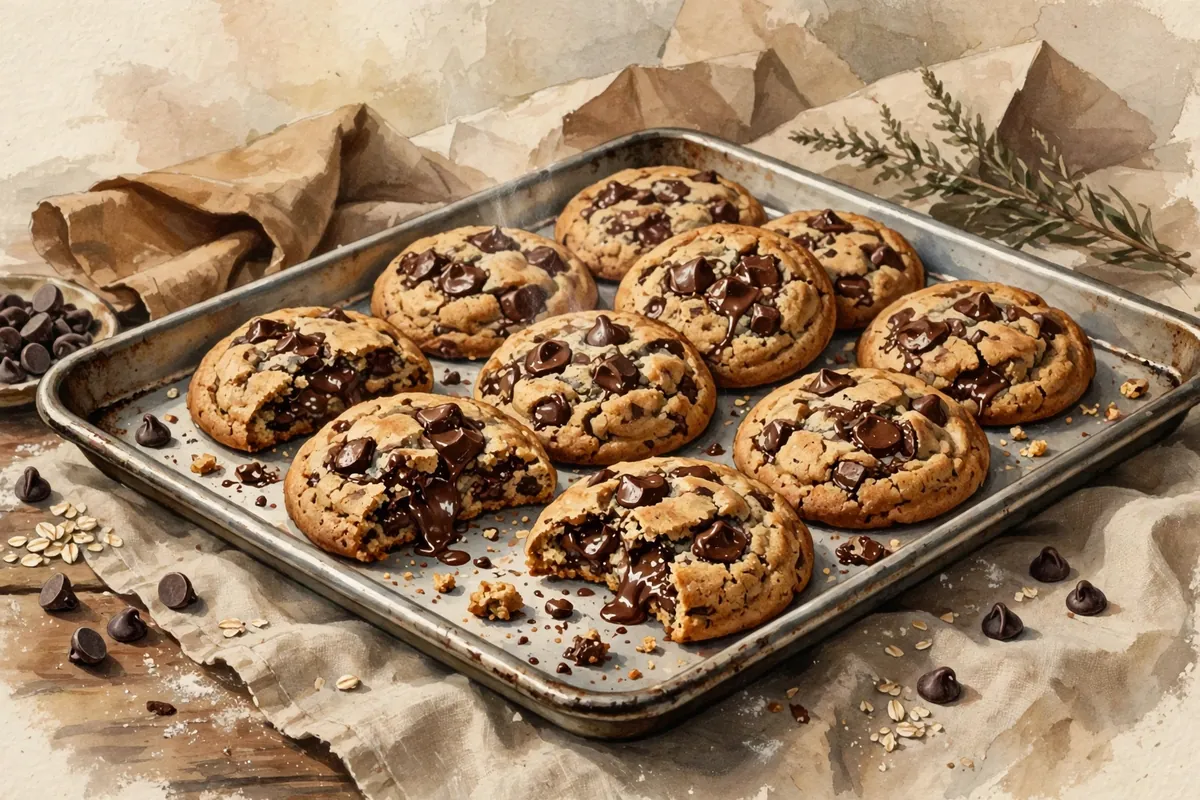
It's one of America's favorite kitchen stories. A busy innkeeper in Massachusetts is baking cookies, discovers she's out of an ingredient, and grabs a chocolate bar instead. She expects it to melt, but the chunks hold their shape, and the chocolate chip cookie is born by happy accident.
It's a charming tale, but it probably isn't true. The cookie is credited to Ruth Graves Wakefield in the 1930s. Many older accounts describe an accident, but modern food writers think that's unlikely. Wakefield was trained in home economics and ran a well-organized kitchen, and when she finally talked about it, she described creating the recipe on purpose.
The Accident Stories
Wakefield and her husband, Kenneth, ran the Toll House Inn, a well-known hotel and restaurant in Whitman, Massachusetts. Over the years, several versions of the "accident" spread. The most popular says she ran out of nuts, perhaps because of Depression-era shortages, and chopped up chocolate as a substitute.
Other versions say she was out of butter, or was trying to use up extra chocolate, or hoped the chocolate would melt into the dough because she didn't have time to melt it first. One former employee even claimed that vibrations from a mixer knocked chocolate into the dough.
What Ruth Wakefield Actually Said
Wakefield didn't comment on how she created the recipe until the 1970s. Then she explained that the inn had been serving a thin butterscotch nut cookie with ice cream. Everyone loved it, but she wanted to give guests something different. "So I came up with Toll House cookie," she said.
She told other reporters that she developed the recipe while returning from a trip to Egypt. She broke up a Nestlé semi-sweet chocolate bar with an ice pick and added it to a brown sugar dough. She was inspired by her college classes in food chemistry and had help from the inn's pastry chef, Sue Brides.
Chocolate Cookies Came Before
Chocolate had shown up in cookies long before Wakefield. In the late 1800s, Americans loved a cookie called a jumble, made by dropping unshaped dough onto a pan. Bakers flavored them with whatever they had, and by the 1870s, chocolate jumbles were a popular treat. But those used grated or melted chocolate. Wakefield's big idea was distinct pieces of chocolate.
How a Recipe Swept the Nation
By 1939, chocolate sales in New England were rising, and chocolate makers wanted Wakefield's endorsement. She made a deal to put the Toll House recipe on chocolate wrappers, and a year later Nestlé agreed to feature it on all its chocolate packaging. Wakefield said she was promised a dollar for it, and some stories say she also got a lifetime supply of chocolate.
Nestlé then had a problem: you didn't need its chocolate to make the cookies. So it began selling bars scored into 160 little pieces, and the next year it introduced small, teardrop-shaped morsels. During World War II, the Toll House Inn sent cookies to soldiers, and troops from all over the country spread the word.
Massachusetts named the chocolate chip cookie its official state cookie in 1997. Whether it came from a slip of the hand or careful planning, the result is the same: a warm cookie that tastes like home. But it's nice to give Ruth Wakefield credit for what she likely was, a skilled cook who knew exactly what she was doing.