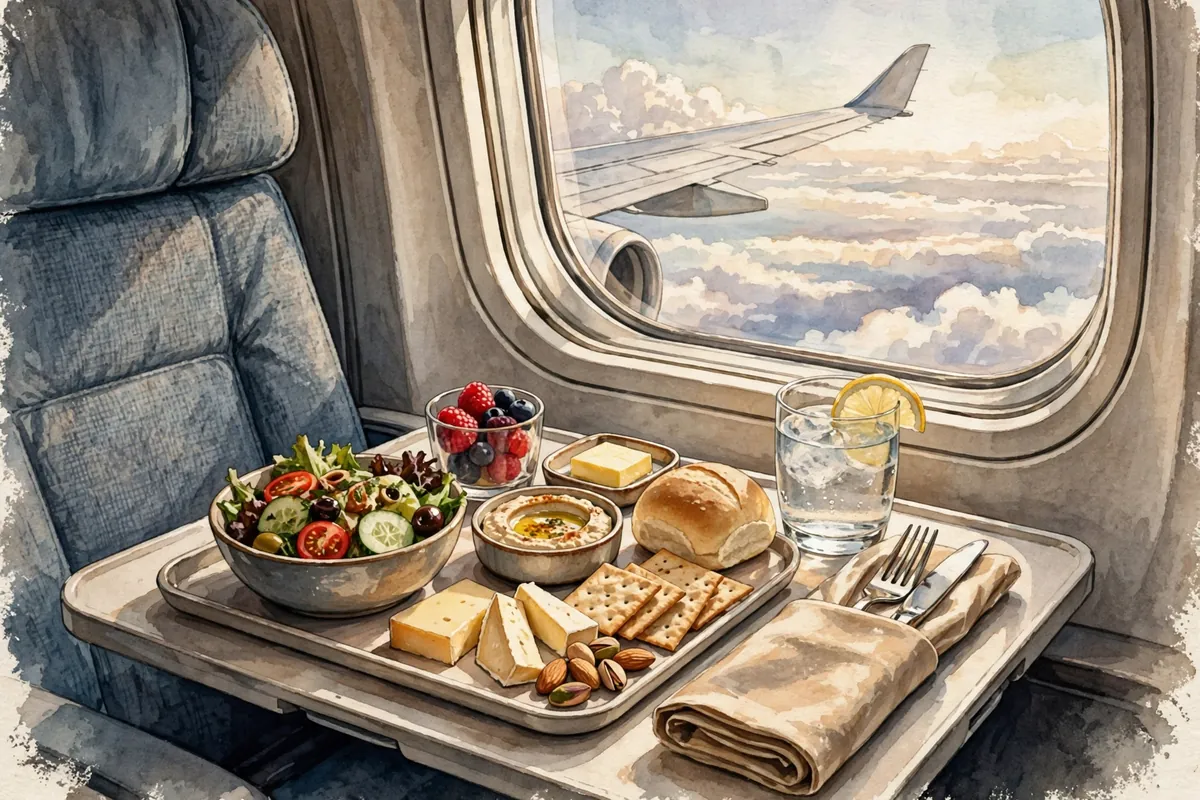
Airline food has been the punchline of comedy routines for decades. The chicken is dry, the pasta is limp, and everything seems to taste like, well, not much. It's easy to blame the cooks. But part of the problem isn't the food at all. It's what happens to your senses at 35,000 feet.
The short answer: the dry, pressurized air inside an airplane cabin dulls your senses. Low humidity dries out your nose, and smell is a huge part of flavor. Tests have shown that our perception of saltiness and sweetness drops by about 30 percent at high altitudes. So airlines often season their meals more heavily just to make them taste normal.
Flavor Is Mostly in Your Nose
We tend to think of taste as something that happens on the tongue. But the basic tastes, like sweet, salty, sour, and bitter, are only part of the story. Flavor is a team effort between taste buds, smell, and sensations like texture and temperature.
Smell does a lot of the heavy lifting. That's why food seems so dull when you have a stuffy nose. On an airplane, the very low humidity in the cabin dries out the inside of your nose, which weakens the smell sensors that are essential for tasting flavor.
What Altitude Does to Your Taste Buds
Food historian Guillaume de Syon, who has written about the history of airline meals, explains that higher altitudes change the way food tastes and how taste buds work. Food may come across as "dry and flavorless" because of cabin pressurization.
Pressurization can also make passengers thirsty. And de Syon noted that thirsty travelers sometimes reach for alcohol when they really should be drinking water. Between the dry air and the thirst, your mouth and nose simply aren't working at full strength.
How Airlines Fought Back
Airlines noticed the problem once jets began flying higher. Caterers realized passengers' taste buds were less sensitive, so they started creating menus with stronger-tasting food and drinks. One surprising discovery: cheaper wines were found to taste better than expensive ones at cruising altitude.
In 1973, the French airline UTA became the first airline to hire a chef to improve its in-flight menu. Chef Raymond Oliver reworked the recipes with the altitude in mind. He increased the amount of salt, sugar, and oil, and the taste improved almost immediately.
Today, airline meals tend to be more thoroughly seasoned than food on the ground. Most are prepared in kitchens before takeoff and then reheated in flight, although some are prepared at cruising altitude.
From Sandwiches to Full Dinners
Airline food has come a long way. The first airline meals were served in October 1919 by Handley Page Transport on its London to Paris route. Passengers could pick from a selection of sandwiches and fruit. Back then, menus rarely changed, because people flew so seldom that they weren't likely to notice.
In the 1950s, Japan Airlines served American dishes like roast chicken and pineapple salad on its Tokyo to San Francisco flights, along with a few Japanese specialties, to suit the tastes of foreign passengers.
So the next time your in-flight meal tastes a little flat, go easy on the flight crew. Drink plenty of water, enjoy the view, and save your judgment for the ground. That same dish might taste a lot better back at sea level.