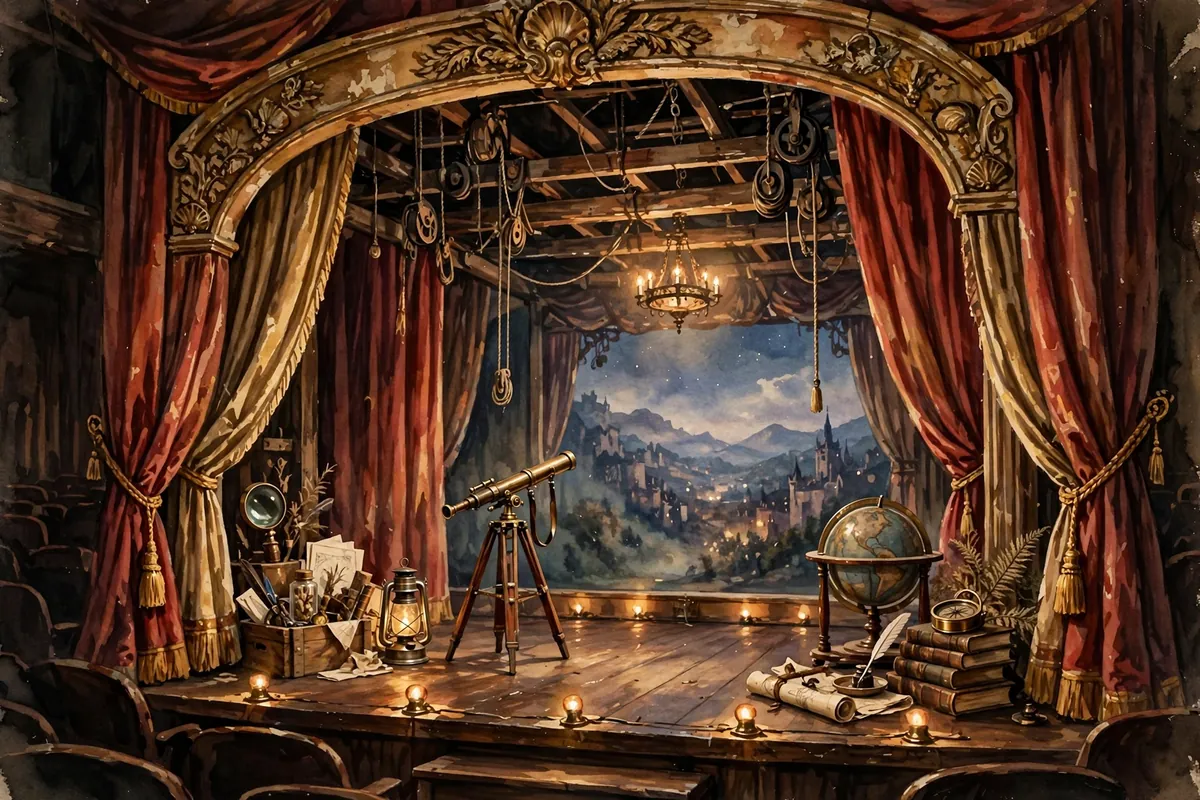
Backstage, minutes before the curtain goes up, the cast huddles together. Nerves are high. Then someone says the magic words, not good luck but break a leg. Everybody smiles, and out they go. It's a strange way to wish someone well, so where did it come from?
Here's the honest answer: nobody knows for certain. Break a leg is a theater idiom meaning good luck, and its origin is uncertain. The best-supported explanation is superstition. Wishing a performer good luck directly was thought to bring bad luck, so people said the opposite instead. Why a leg, specifically, remains a mystery.
A Superstitious Business
Some of the earliest written evidence comes from 1921. Irish writer Robert Wilson Lynd, in an article called A Defence of Superstition, called the stage perhaps the most superstitious institution in England after the racecourse. At the races, he explained, wishing a man luck was considered unlucky, so you should say something insulting instead, such as may you break your leg.
Clear theater examples appear a bit later. In her 1939 autobiography, the American writer Edna Ferber described understudies sitting in the back row politely wishing the stars would break a leg. A 1948 theater handbook explained that actors never wish each other good luck, but say I hope you break a leg.
A Possible German Connection
Another theory points to Germany. Around the time of the world wars, German aviators reportedly wished each other luck with Hals- und Beinbruch, meaning roughly may you break your neck and leg.
Where that phrase came from is also a mystery. One idea is that it's a playful twist on a Yiddish blessing that sounds similar and means success and blessing. If the English and German phrases are related, the saying may have traveled to American theaters with German-speaking Jewish immigrants who entered the entertainment business after World War I.
Popular Stories That Don't Hold Up
A famous story links the phrase to John Wilkes Booth, the actor who assassinated Abraham Lincoln in 1865. After the shooting, Booth leaped to the stage of Ford's Theatre and broke his leg. But actors didn't start using the phrase until the 1920s at the earliest, more than 50 years later, so this is an unlikely source.
Other theories are even shakier. One says it refers to bending a leg to bow. Another involves the leg line, the edge of the stage hidden by curtains called legs, which an understudy would cross if they finally got to perform. Some even claim ancient audiences banged chair legs to applaud. None has solid evidence behind it.
How Other Performers Say It
Different corners of show business have their own odd good-luck phrases. Professional dancers don't say break a leg. They say merde, a rude French word for dung, and theater people sometimes borrow it. In Spanish, the phrase is mucha mierda. One explanation is that lots of horse droppings outside a theater once meant many carriages had dropped off an audience.
Opera singers say toi toi toi, sometimes while knocking on wood or imitating the sound of spitting, an old way of warding off bad luck.
So the next time a grandchild heads off to a school play, go ahead and tell them to break a leg. You'll be joining a century-old tradition, and you won't jinx a thing.