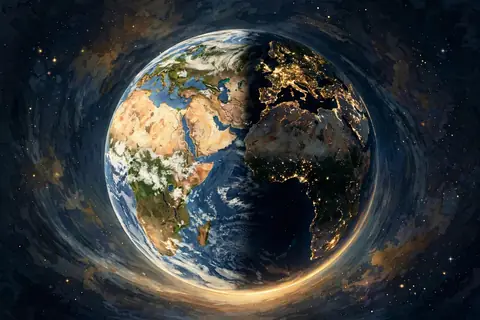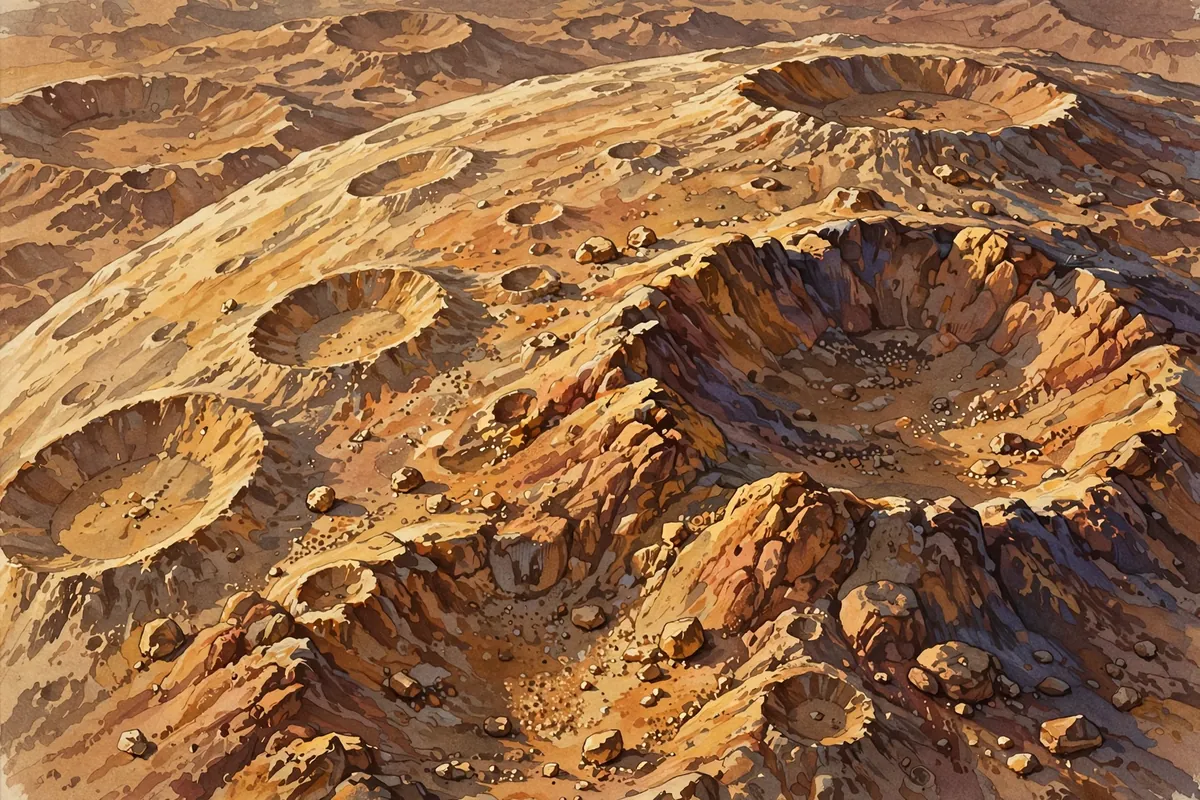
On a clear night, even a cheap pair of binoculars shows the Moon's face is covered in round scars. Craters overlap craters, big and small, as far as you can see. Earth and the Moon travel through space together, so you'd expect our planet to look just as battered. But try to find a crater on your next road trip and you'll probably come up empty.
Here's the answer. Earth has been hit plenty, but it erases the evidence. Our planet's surface is constantly being worn down, buried, and recycled by wind, water, moving continents, and volcanoes. The Moon has almost none of that activity, and only a minuscule atmosphere, so its craters stay put for billions of years.
The Moon Keeps Its Scars
On the Moon, every crater was made by an impact. The International Astronomical Union recognizes more than 9,000 of them, and researchers keep finding more. In 2018, a computer program helped identify around 7,000 previously unlisted lunar craters.
With no rain, no rivers, and no shifting continents, a crater on the Moon can stay sharp for an extremely long time. The oldest surfaces even preserve a record of a period of intense bombardment in the inner solar system around 3.9 billion years ago.
Even the Moon has hidden a few. It was volcanically active until about 1.2 billion years ago. Lava flooded some ancient craters and cooled into the dark plains we see today, called maria, or "seas."
Earth Covers Its Tracks
Earth is a much busier place. On worlds with active surfaces, like Earth, visible craters become eroded, buried, or transformed by tectonic and volcanic activity over time. Wind and water wear down crater rims. Sediment fills the bowls. Plate movements and lava can bury or destroy them completely.
Even so, Earth still gets hit. On average, our planet takes one to three impacts every million years big enough to leave a crater about 12 miles across. That rate suggests there should be far more young craters on Earth than scientists have found so far.
Our Air Is a Shield
Earth's atmosphere also helps. Small space rocks slow down dramatically as they plunge through the air, especially in the lowest few miles, where most of the atmosphere's mass is packed. Meteors weighing up to about 7,000 kilograms lose all of their cosmic speed to air drag before falling the rest of the way under gravity.
Truly huge objects aren't slowed much at all. But for the many smaller rocks, the air turns what would be a crater-making blast into a much gentler fall.
The Craters We Can Still Find
Despite all that, about 190 impact craters have been identified on Earth. They range from a few dozen yards wide to about 190 miles across. Arizona's Meteor Crater, formed about 50,000 years ago, is one of the best known.
The most famous crater is one you can't see at all. The Chicxulub crater, about 120 miles wide, lies buried under the Yucatán Peninsula in Mexico. It formed more than 66 million years ago when an asteroid about six miles wide struck Earth, and the impact is widely accepted as the main cause of the extinction of the dinosaurs.
So the next time you admire the craters on the Moon, remember that Earth has its own collection. Ours are just tucked away under forests, oceans, farmland, and time.