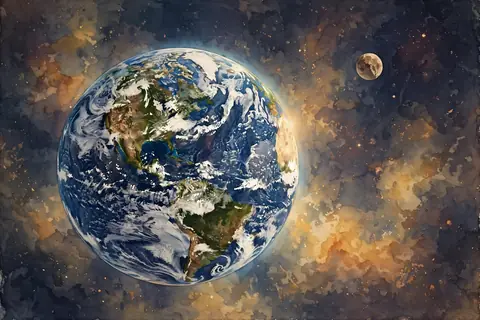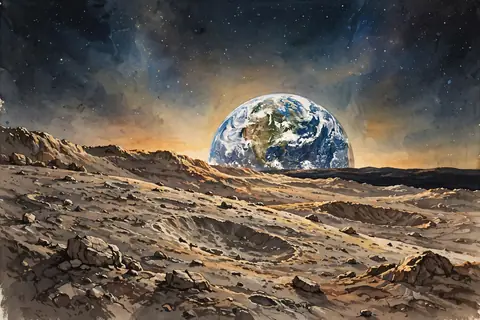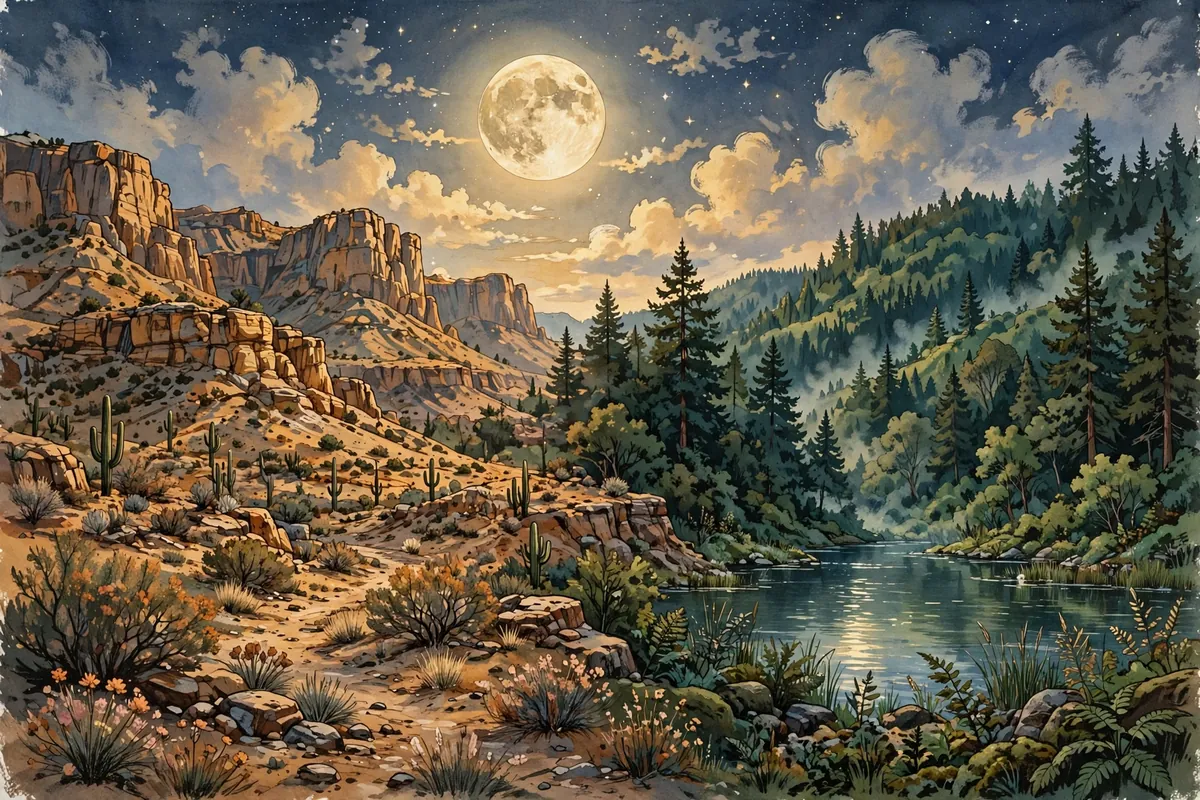
Picture two friends on the phone, one in Ohio and one in Australia, both looking up at the Moon on the same night. They're seeing the very same Moon, with the very same craters and dark patches. Yet if they each drew what they saw, their pictures wouldn't match.
The reason is simple once you think about it. People in the Southern Hemisphere view the Moon from a perspective that's flipped, or rotated 180 degrees, compared with people in the Northern Hemisphere. To a northerner, the southern view looks upside down. That also means the Moon's bright side seems to grow and shrink from opposite directions in the two halves of the world.
Same Face, Different Angle
Everyone on Earth sees the same side of the Moon. That's because the Moon is tidally locked, meaning it spins exactly once for every trip around our planet. As a result, it always keeps nearly the same face turned toward us. That side is called the near side.
So the difference isn't in what we see, but how we're standing when we see it. Imagine two people on opposite sides of a table, looking down at the same photo. One sees it right side up, the other sees it upside down. Earth is round, so people far north and far south of the equator are, in effect, looking at the Moon from opposite sides.
Waxing and Waning Flip Too
This flip changes how the phases look. In the Northern Hemisphere, a Moon that's lit on the right side is waxing, or growing toward full. A Moon lit on the left side is waning, shrinking back toward new.
In the Southern Hemisphere, it's the opposite. The same waxing Moon appears lit on the left side, and the waning Moon is lit on the right. So a rule of thumb for telling a growing Moon from a shrinking one in one hemisphere gets it backward in the other.
Things get even more interesting near the equator. There, the line between the Moon's light and dark sides can appear horizontal in the morning and evening. As you move toward the tropics, the Moon appears rotated compared with how it looks at higher latitudes.
Where Did the Man in the Moon Go?
In many cultures, people see a human face in the full Moon, made by the dark patches called maria and the lighter highlands. In a common Western version, the eyes are two dark plains, and the mouth is another pair.
That face can be seen in the Northern Hemisphere and in tropical regions on both sides of the equator. But head toward the South Pole, and the Moon is seen in that familiar orientation less and less often, until eventually not at all.
Other cultures see entirely different figures. In East Asian folklore, the dark markings form a rabbit pounding with a mortar and pestle. In Chinese tradition, the rabbit is a companion of the Moon goddess Chang'e.
One Moon, Many Views
The Moon's cycle of phases takes about 29.5 days on average, and everyone on Earth goes through it together. A full Moon in Ohio is a full Moon in Australia. It just looks like it's been gently turned around.
So if you ever travel south of the equator, take a moment to look up. The Moon will feel like an old friend standing on its head, a lovely reminder that we're all looking at the same sky from a round little planet.