You've probably heard it said that without bees, plants would die. It's a powerful message, and it's close to something true. But it isn't quite right. A plant won't wilt and die just because no bee comes to visit. So what exactly do bees do for plants?
Here's the clearer answer. Bees don't keep plants alive. They help many plants reproduce. When a bee visits flowers, it carries pollen from one bloom to another, a process called pollination. That's what allows many plants to make seeds and fruit. Without pollinators, a lot of plants would keep living but fail to produce the next generation, and many of our favorite foods would become scarce.
What Pollination Actually Does
Pollination is the transfer of pollen from the male part of a flower, the anther, to the female part, the stigma. That allows fertilization, which leads to seeds. For many plants, the fruit grows around those seeds.
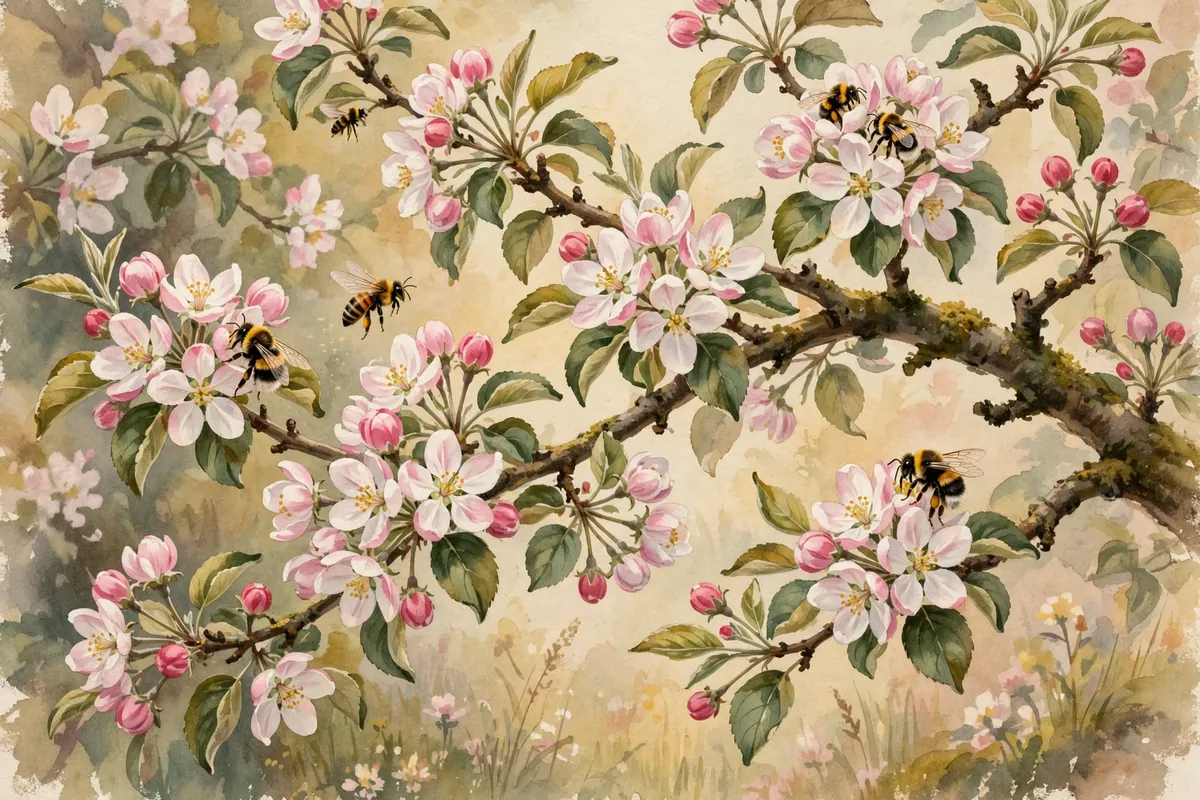
Bees are perfect for the job. As they travel from flower to flower collecting nectar and pollen, grains of pollen stick to their fuzzy bodies and get dropped off at the next bloom. Honey bees and bumblebees also tend to stick with one kind of flower at a time, which means pollen is more likely to reach the right plant.
Take the apple tree. Apples can't pollinate themselves; they need pollen from a different variety to develop fruit. That's why apple growers often bring in honey bees during blooming season, along with orchard mason bees as helpers.
Not Every Plant Needs Bees
Here's a surprise. Some of the world's most important crops don't need bees at all. Rice, corn, wheat, rye, barley, and oats are pollinated by the wind. So are many oaks, pecans, pines, spruces, and firs. Their pollen is light and smooth, made to drift on the breeze. Some plants can even pollinate themselves within a single flower.
Other animals pitch in too. Beetles, butterflies, moths, flies, birds, and bats all carry pollen. One study found that non-bee insects made 38 percent of the visits to crop flowers.
Why Bees Still Matter So Much
Even so, pollinators are a very big deal. At least 80 percent of the world's crop species require pollination to set seed. A 2021 study estimated that without pollinators, about a third of all wild plant species would fail to produce any seeds at all.
In the United States alone, honey bee pollination adds more than $15 billion in value to crops each year. Beekeepers rent out millions of hives to farmers, making honey bees by far the most important commercial pollinators.
The Bumblebee's Secret Buzz
Some flowers lock their pollen away tightly. Tomato flowers are a good example. Bumblebees and some solitary bees have a clever trick called buzz pollination. They grab the flower and vibrate their flight muscles, shaking the pollen loose. Honey bees, interestingly, can't do this trick. About 9 percent of the world's flowers are pollinated mainly this way.
Greenhouse growers around the world now use bumblebee colonies to pollinate tomatoes, with up to 50 colonies per hectare during the growing season. It's become a business worth millions.
So the next time you bite into an apple or slice a tomato, thank a bee. They may not keep plants alive, but they help make sure there's fruit on the tree, seeds in the ground, and food on our plates.