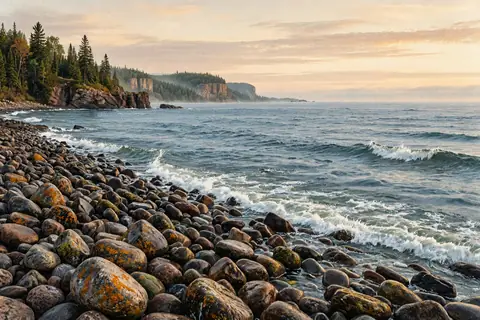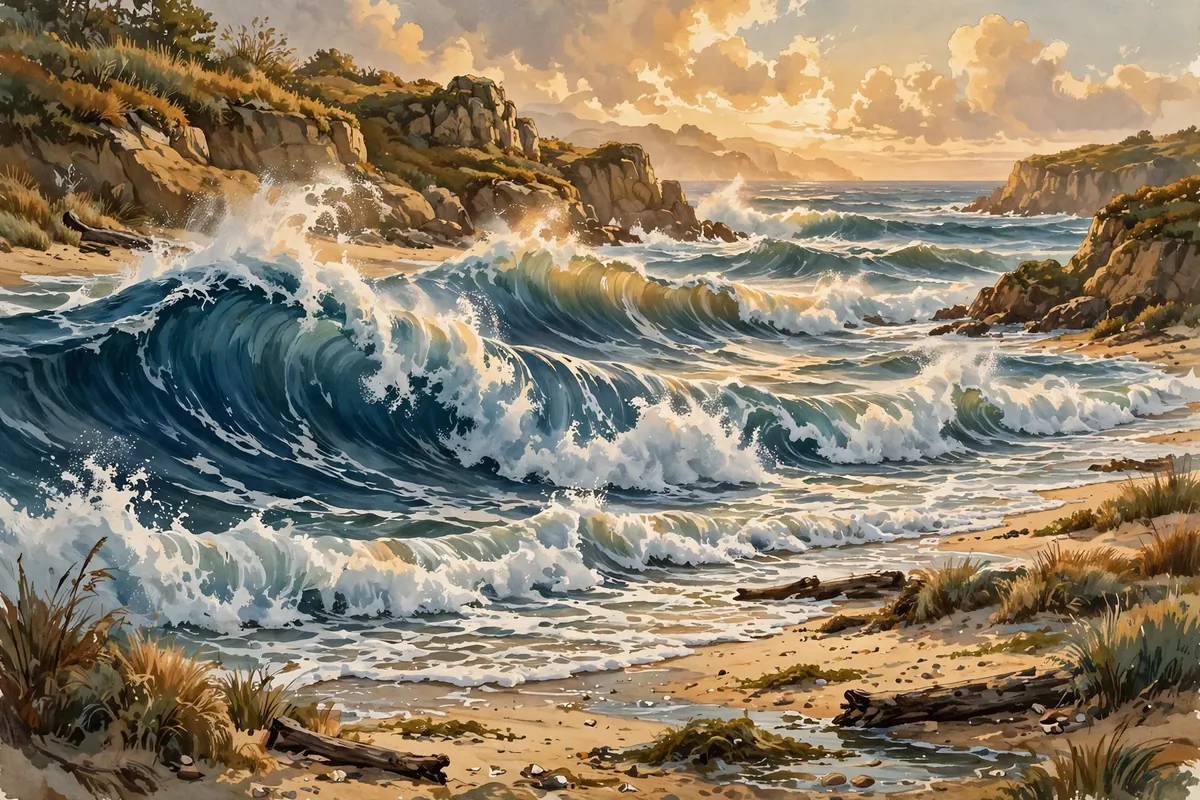
There's something hypnotic about waves. They roll in, curl, crash, and roll in again, endlessly. Even on a calm, sunny day, the ocean is rarely flat. So where does all that motion come from?
The short answer: most ocean waves are made by wind. As wind blows across the surface of the water, it pushes it into ripples that can grow into large waves. Once formed, those waves can travel thousands of miles before they reach land and break on a beach.
Three Things That Make a Wave Big
Wind waves range from tiny ripples to giants over 100 feet tall. How big they get depends mostly on three things: how fast the wind blows, how long it keeps blowing, and how far it travels over open water. That stretch of open water is called the fetch.
Water depth matters too. Given enough wind, time, and distance, the sea reaches its maximum wave size for that wind. Past that point, extra energy is lost as the wave tops break into whitecaps.
Waves That Cross an Ocean
While the wind is still blowing on them, waves are called a wind sea. Once they leave the area where they were made, they become swells, and swells are amazing travelers.
One famous example: strong winds south of Tasmania can create swells that cross the entire Pacific Ocean and arrive in southern California, giving surfers great waves. So the surf at your local beach could be the leftover energy of a storm on the far side of the world.
The Water Isn't Really Traveling
Here's a surprise. When a wave crosses the deep ocean, the water itself doesn't travel along with it. Instead, bits of water near the surface move in circles, forward at the top and backward at the bottom, then return close to where they started. What travels is the energy.
That circular motion fades quickly with depth. At a depth of half the wave's length, it has shrunk to less than 5 percent of what it is at the surface. So even when the surface is rough, the water a good distance below can be fairly calm.
Why Waves Break at the Beach
Waves can break anywhere if they get tall enough, even in the middle of the ocean. But they break most often near shore. As a wave moves into shallow water, it slows down and grows taller. The water near the top starts moving faster than the wave shape can support, and the crest topples over.
If a wave hits the shallows at an angle, it breaks bit by bit along its length, creating the curling tube that surfers love. If it hits straight on, it can break all at once, which surfers call closing out.
Not Every Wave Comes From Wind
Some waves have other causes. Tides come from the gravitational pull of the Moon and Sun. Tsunamis are caused by underwater earthquakes or landslides. These waves are much longer than wind waves.
And now and then, a rogue wave appears, much taller than the waves around it. The famous Draupner wave reached 82 feet, more than twice as tall as the sea's typical big waves at the time. The tallest wind waves ever recorded, about 95 feet, were measured aboard a research ship in an extreme storm.
So the next time you watch the surf roll in, think of the wind that started it, maybe days ago and far across the sea. Every wave is a message from somewhere else.